Many people assume they might still move or even walk after a knee injury. We often see patients who try to walk it off before realising something is not right. A knee joint dislocation is not a minor injury.
When patients ask whether they can walk with a dislocated knee, the concern is entirely understandable. The honest answer is: in very rare cases involving partial displacement or a kneecap dislocation or minor knee dislocation, some limited movement may seem possible. However, when we are talking about a true tibiofemoral knee joint dislocation where the shinbone and thighbone have completely separated, walking is almost always impossible, and attempting it places vital blood vessels and nerves at immediate risk.
This article explains the difference between a true tibiofemoral knee joint dislocation and other knee injuries, what happens to the body if you try to walk on it, and why rapid specialist assessment is always essential regardless of how manageable the pain may initially seem.
What is a Knee Joint Dislocation and Why it is Serious?
The knee is the largest joint in the body, stabilised by four major ligaments, two menisci, the surrounding joint capsule, and an extensive network of muscles and tendons. A true knee joint dislocation is defined as a complete loss of contact between the distal femur and the proximal tibia. For this to occur, at least two major ligaments must be completely disrupted. In most cases three or four are damaged simultaneously.
Because the forces required to cause this injury are enormous, surrounding structures including the popliteal artery, the peroneal nerve, the joint capsule, and the menisci are frequently injured at the same time. This multi-structure damage is what makes a knee joint dislocation so significantly different from a simple ligament sprain or a kneecap dislocation.
Why Knee Joint Dislocation is a Medical Emergency
A knee joint dislocation is considered a medical emergency because it can affect more than ligaments. The most serious risk involves the popliteal artery, which supplies blood to the lower leg. If this artery is damaged, it can reduce blood flow and may become limb-threatening if not treated quickly.
Large population-based studies report that popliteal artery injury occurs in approximately 3.4% to 8.2% of all knee dislocations overall. In high-energy trauma such as motor vehicle accidents, rates may be considerably higher.
Nerves around the knee may also be affected, which can lead to numbness or weakness in the foot. If blood supply to the lower leg is disrupted and not restored within approximately eight hours, the risk of requiring an amputation increases dramatically. This is why a knee joint dislocation must always be treated as a surgical emergency, regardless of whether the knee has already relocated to a more normal-looking position.
Why Nerve Damage is also a Serious Concern
The peroneal nerve, which runs along the outer side of the knee, is often affected in a knee dislocation. Injury to this nerve can lead to foot drop, where the front of the foot cannot be lifted properly, affecting walking.
Nerve damage occurs in a significant number of cases and recovery is often slow. In some patients, full recovery may not happen. Unlike blood vessel injuries, nerve damage is harder to treat with surgery, so early diagnosis and specialist care are important.
Types of Knee Joint Dislocation
| Type | Key Features |
|---|---|
| Anterior Dislocation | Most common type — 30 to 50% of all knee dislocations. Caused by hyperextension of the knee. Highest rate of peroneal nerve injury. Vascular injury typically causes an arterial intimal tear from traction rather than full transection. |
| Posterior Dislocation | Second most common — 30 to 40% of cases. Caused by axial loading to a flexed knee, as in a dashboard injury. Carries the highest rate of popliteal artery transection and is the type most associated with complete arterial rupture. |
| Lateral Dislocation | Approximately 13% of cases. Caused by varus or valgus force. Usually involves ACL and PCL injury simultaneously. |
| Medial Dislocation | Less common. Associated with significant soft tissue damage to the medial structures of the knee. |
| Rotational Dislocation | Caused by twisting displacement. Posterolateral rotational dislocation is particularly complex and may result in an irreducible dislocation requiring open surgical reduction. |
Posterior dislocations are particularly serious due to the risk of blood vessel injury.
How Common is Knee Joint Dislocation
A true tibiofemoral knee joint dislocation is rare, representing between 0.001% and 0.013% of all orthopaedic injuries. However, its incidence is likely underreported because a significant number of dislocations reduce spontaneously before the patient reaches hospital and are therefore either misdiagnosed or not documented as dislocations at all.
Because it is uncommon, many patients and even some non-specialist clinicians may initially underestimate the severity of the injury. This is one of the reasons specialist knee assessment is essential. The consequences of a missed diagnosis can include permanent disability and limb loss.
Could You Walk With Knee Joint Dislocation
Walking with a knee joint dislocation is rarely possible and is not safe.
Why Some People Think They Can Still Walk (Minor Knee Dislocation Cases)
In some cases, including a minor knee dislocation, the knee may briefly move back into position. This is known as spontaneous reduction. Pain levels can vary, which may give a false sense of reassurance. This leads many people to believe they can walk with a dislocated knee, but the joint remains unstable.
Important Warning
Trying to walk can worsen ligament damage and increase the risk of complications. Even if it feels possible, it is unsafe.
What Happens If You Try to Walk on a Dislocated Knee
Walking on an unstable knee can worsen injuries to key ligaments. This includes cases where patients later require knee ligament damage surgery. Increased Ligament Damage Leading to Knee Ligament Torn Surgery or Knee Ligament Damage Surgery
Risk to Blood Vessels and Nerves
Movement can affect circulation and nerve function. Damage to the popliteal artery can reduce blood flow, which is a serious complication.
Long Term Complications
- Chronic instability
- Reduced mobility
- Ongoing discomfort
These issues can affect daily life and long-term joint health.

Common Causes of Dislocation Knee Joint
Sports Injuries: High-impact sports can place sudden force on the knee.
Road Traffic Accidents: These often involve strong impact and are a common cause of severe knee trauma.
Falls or High Impact Trauma: Direct force to the knee can lead to dislocation.
Knee Dislocation Symptoms
At the Moment of Injury
Most patients report a sudden, severe pain at the moment of dislocation. Many describe hearing or feeling a loud pop, snap, or crunch — the sound of ligaments tearing and the joint separating. The knee may appear visibly deformed, with the bones clearly out of their normal alignment.
The leg may feel completely unable to support any weight and the joint may appear to ‘give way’ entirely beneath the patient.
Visible Deformity or Swelling
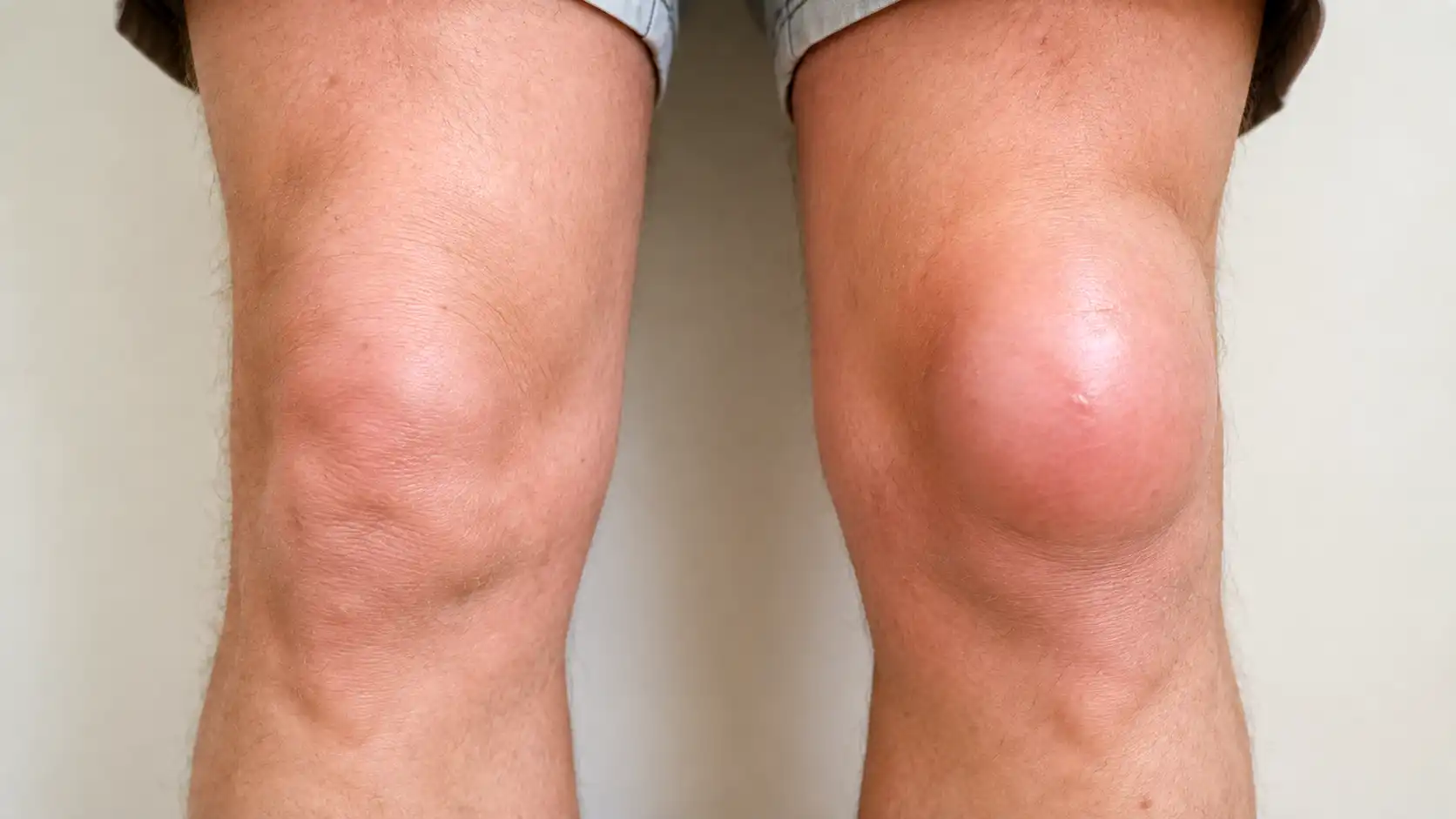
Immediately after the injury, the knee typically swells rapidly and dramatically. This swelling is caused by haemarthrosis bleeding into the joint from torn ligaments and damaged blood vessels. The knee may appear grossly deformed, or may look surprisingly normal if spontaneous reduction has occurred.
Severe Pain or Instability
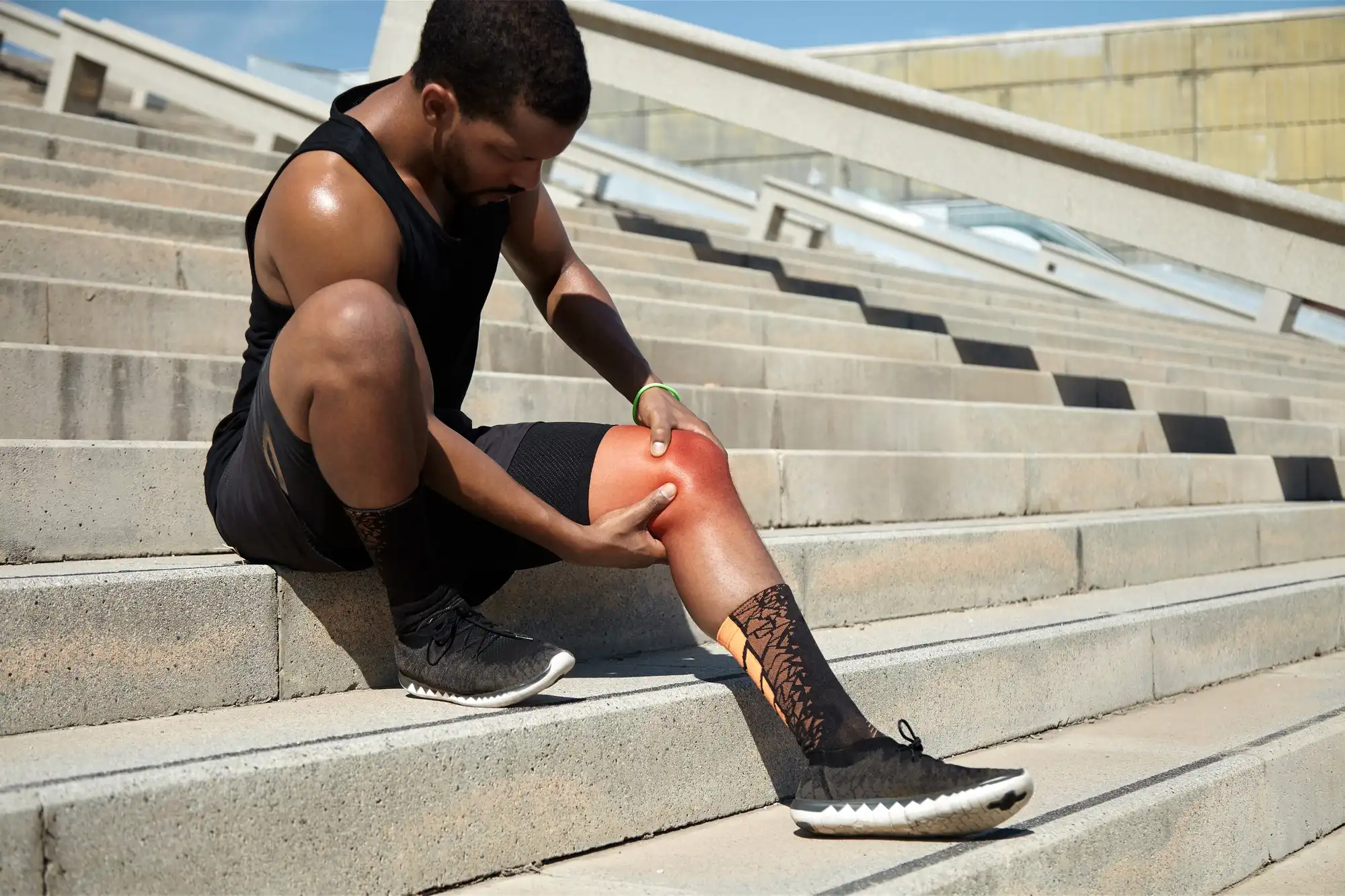
The pain is usually immediate, intense, and disabling. The knee feels profoundly unstable as though there is nothing holding the joint together. Most patients find it impossible to straighten or bend the knee. In some cases, particularly when spontaneous reduction has occurred, pain levels may temporarily reduce but this is a false reassurance, not a sign of recovery.
Difficulty Moving or Bearing Weight
The vast majority of patients with a true knee joint dislocation cannot stand, bear weight, or walk at all. Any attempt to do so is extremely painful and structurally impossible in the absence of ligament stability.
Signs of Vascular or Nerve Injury
- Cold or pale foot or lower leg
- Weak or absent pulse in the foot
- Foot or lower leg that appears dusky, grey, or mottled
- Numbness or tingling in the foot or toes
- Inability to move the foot
- Severe calf pain disproportionate to the visible injury
These symptoms require urgent medical attention.
Signs of Peroneal Nerve Injury
- Numbness or altered sensation along the outer lower leg and top of the foot
- Weakness when attempting to lift the front of the foot (foot drop)
- Difficulty performing a heel-to-toe walking pattern
- A sensation of the foot dragging when walking
What to do Immediately after a Knee Joint Dislocation
If you suspect a knee joint dislocation, act quickly.
- Do not attempt to walk or bear weight on the injured leg under any circumstances
- Keep the leg still and supported
- Seek emergency medical care immediately
- Avoid putting weight on the leg
- Do not drive yourself to hospital the leg must not be used or flexed
- While waiting, you may apply ice wrapped in a cloth to reduce swelling, but do not apply pressure
Early action helps reduce complications.
How Knee Joint Dislocation is Diagnosed
Emergency Clinical Assessment
When you arrive, the first step is a full clinical assessment. Our team will check the stability of your knee, how the injury happened, and most importantly, the blood flow and nerve function in your leg. We assess:
- Pedal pulses in the foot
- Skin colour and temperature
- Sensation and movement
These checks are repeated over time because vascular problems can develop even after the initial assessment.
Imaging Investigations
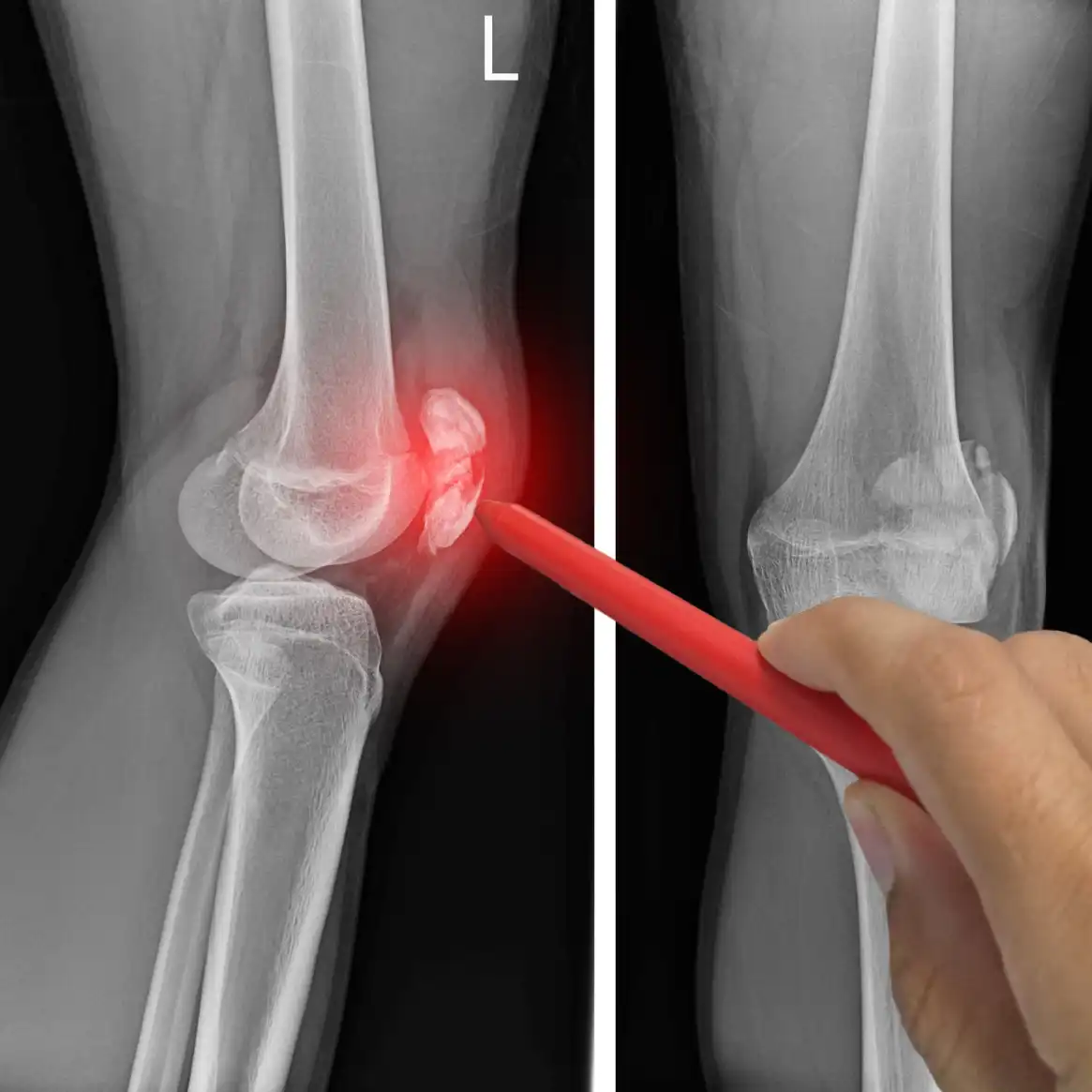
X-rays are taken from different angles to confirm the dislocation, identify any fractures, and check joint alignment after the knee is repositioned. In some cases, fractures of the tibial plateau or femoral condyles may also be present. These can affect treatment planning.
An MRI scan is then used to assess:
- Ligament damage
- Meniscus injury
- Cartilage damage
- Bone bruising
MRI gives a detailed view of the injury and helps guide the next steps in treatment.
Vascular Assessment, CT Angiography
CT angiography is the most reliable test to check for injury to the popliteal artery after a knee dislocation. It shows blood flow clearly and can detect any blockage or damage. A Doppler ultrasound may be used as an initial check, but CT angiography provides more detailed and accurate results.
It is important to understand that even if a pulse is felt in the foot, this does not rule out a vascular injury. Blood flow can appear normal due to surrounding vessels, even when there is serious damage.
Because of this, CT angiography is often required if there is any concern about blood flow.
Treatment Options for Knee Joint Dislocation
Emergency Reduction
The first step is to safely move your knee back into position. We ensure this is done in a controlled medical setting with proper pain relief. This is not something you should attempt yourself. After this, we stabilise your knee and arrange imaging to assess any further damage.
Vascular Repair
If there is damage to a blood vessel, we act quickly to restore blood flow to your leg. This is treated as a priority to reduce the risk of serious complications. In some cases, we may use temporary stabilisation to protect your knee while this is managed.
Surgical Ligament Reconstruction
Most patients with a knee joint dislocation will need surgery to restore stability. We may recommend ligament reconstruction using grafts, depending on the damage. We plan the timing carefully to give you the best possible outcome
Arthroscopic Keyhole Surgery
We often use keyhole surgery to look inside your knee and treat associated damage. This allows us to repair cartilage or meniscus injuries with smaller incisions and a more controlled recovery.
Peroneal Nerve Management
If there is nerve involvement, we assess the severity and guide you on the best approach. Some injuries improve with time and physiotherapy. In more complex cases, we may discuss further treatment options. We support you through this process and explain what to expect.
Non-Surgical Management
In selected cases, we may manage your condition without surgery. This usually involves bracing and physiotherapy. We will only recommend this if your knee is stable and it is safe to do so.
Who May Need Surgery and Who May Not
Surgery is often required when there is major ligament damage or instability. Stable injuries may be managed without surgery in some cases.
Long-Term Effects of an Untreated or Poorly Managed Knee Joint Dislocation
If a dislocated knee is not treated properly, it can lead to:
- Chronic instability
- Reduced range of motion
- Early joint degeneration
- Ongoing pain
This is why early care is important.
Joint Dislocation vs Subluxation
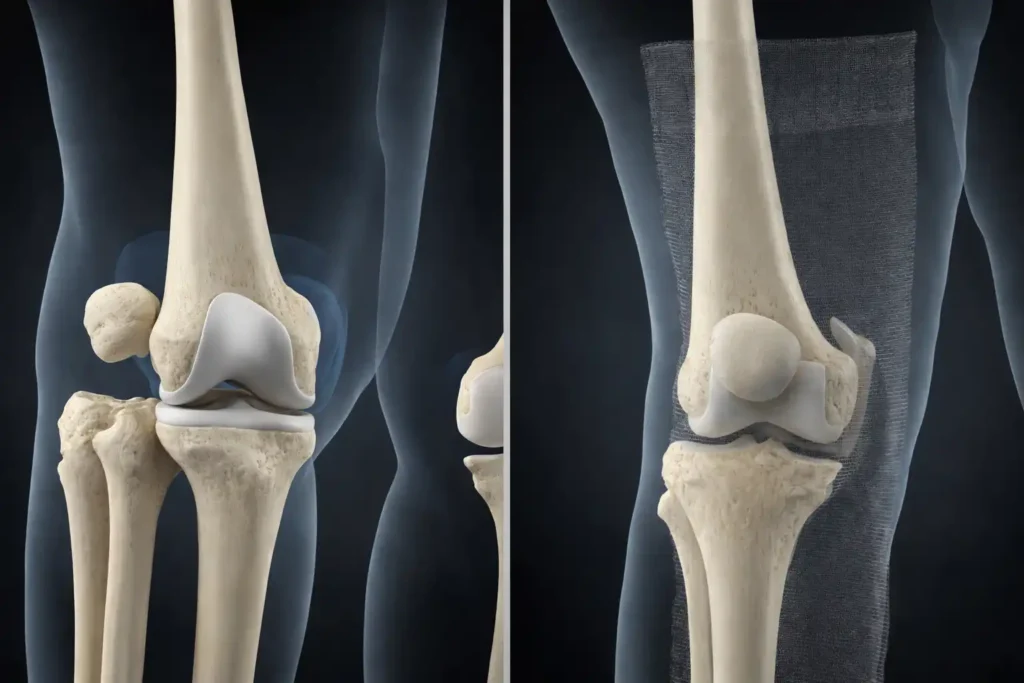
A full knee joint dislocation means the joint is completely out of place. A joint dislocation vs subluxation difference is that subluxation is a partial displacement. It may appear less severe but can still cause instability.
When Should You Seek Medical Advice? Knee Dislocation Support
- You should seek urgent medical advice or call 999 if any of the following apply:
- You cannot bear weight on the affected leg
- The knee looks visibly deformed or grossly swollen
- Pain is severe or the knee feels completely unstable
- The foot or lower leg is cold, pale, numb, or discoloured
- You are unable to feel or move your foot normally
- You heard a loud pop or snap at the time of injury followed by immediate instability
- The knee appeared to ‘jump out of place’ and then relocated
Do not wait to see if symptoms improve. With a knee joint dislocation, time is genuinely critical. The window for safe vascular repair narrows with each passing hour, and the difference between prompt and delayed treatment can be the difference between full recovery and permanent disability.
Frequently Asked Questions About Knee Joint Dislocation
What does a dislocated knee feel like?
It often feels unstable, painful, and difficult to control. Many people notice a sudden shift in the joint.
How long does a dislocated knee take to heal?
Recovery varies depending on severity. Many cases take several months, especially if surgery is required.
How to treat a dislocated knee?
Treatment includes emergency repositioning, imaging, and either surgical or non-surgical care depending on the injury.
Can you walk with a dislocated knee?
Walking is usually not possible and is not safe, even if it feels manageable at first.
How painful is a dislocated knee?
Pain is usually severe at the time of injury, although it can vary between individuals.
What happens if a dislocated knee goes untreated?
Untreated injuries can lead to long-term instability, reduced mobility, and serious complications.
Why does my knee keep dislocating?
Repeated dislocation may be linked to ligament weakness or previous injury
See a Knee Specialist in London
If you are worried about a possible knee joint dislocation, it is important not to wait or guess what is happening. These injuries can look manageable at first but may involve deeper damage that is not always obvious. We assess your knee properly, check for ligament, nerve, and circulation issues, and explain clearly what this means for you. You will leave knowing exactly where you stand and what needs to be done next.
Book Your Knee Assessment With Us
If your knee feels unstable, painful, or “not right,” the safest next step is to have it assessed without delay. When you come to us, we focus on giving you clarity and direction from the start.
- We assess your knee quickly and thoroughly
- We explain your diagnosis in simple, clear terms
- We guide you on the most suitable treatment for your condition
- We help you understand recovery and what to expect
You will receive a clear diagnosis and structured treatment plan. We are here to guide you step by step and help you understand exactly what is happening with your knee. You can book your appointment through our contact us page. Book your consultation today and get clear answers about your knee.