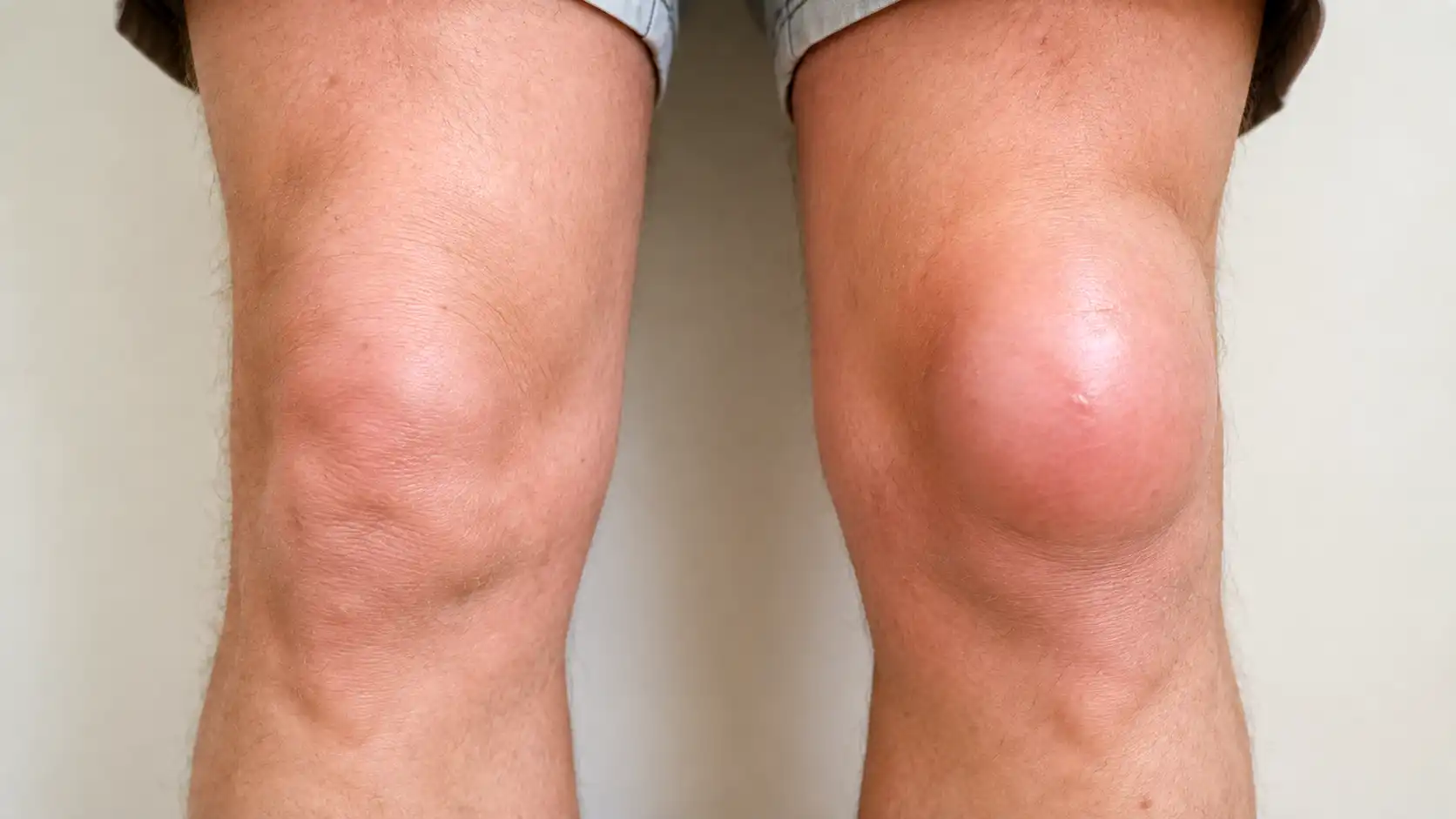
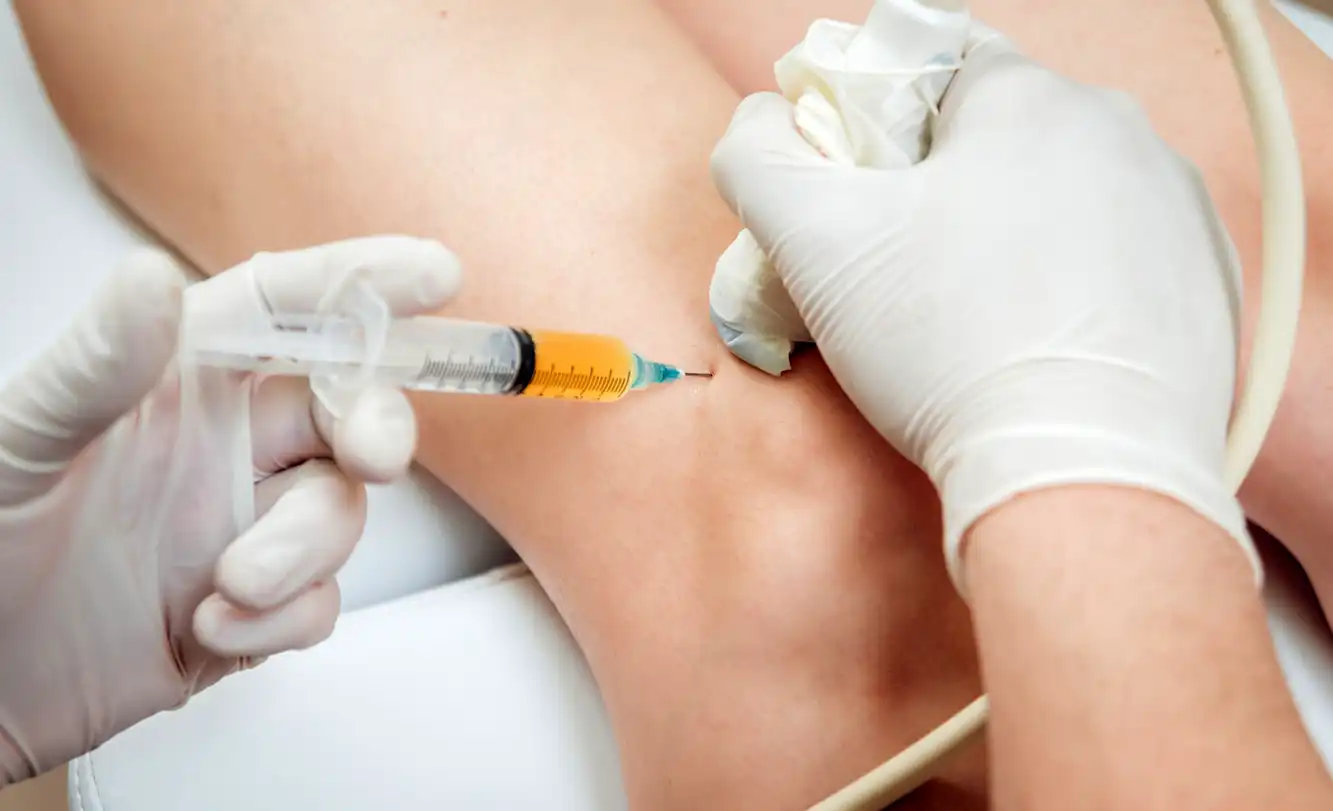
If you have been living with persistent knee pain, you have probably tried at least one type of injection. Perhaps a cortisone shot gave you a few weeks of comfort before the aching crept back. Maybe gel shots for bad knees helped for a while, but the results faded faster than you hoped. You are not alone and more importantly, this frustration is one of the most common things knee specialists hear from patients across London every week.
The good news is that knee injection therapy has moved on. There is now a longer-lasting option for people who are tired of chasing short-term relief with repeat injections. This article explains what the different shots for knee joint pain actually do, why some only offer temporary results, and why a hydrogel knee injection called Arthrosamid® is changing the way knee osteoarthritis is treated in private clinics across the UK.
Why Knee Pain Keeps Coming Back After Injections
To understand why some shots wear off, it helps to know what is actually happening inside a painful knee.
In knee osteoarthritis, the cartilage that cushions the joint gradually breaks down. This places more stress on the synovium. The thin tissue that lines the inside of the joint. When the synovium becomes irritated, it triggers low-grade inflammation, produces excess fluid, and sends pain signals to the brain. This is known as the synovial pain cycle, and it is the main reason why many people with osteoarthritis experience painful flare-ups even during periods of otherwise manageable discomfort.
Most traditional injections work by temporarily interrupting this cycle. Cortisone shots reduce inflammation quickly but typically wear off within six to twelve weeks. Hyaluronic acid (HA) injections, also known as gel injections into the knee, help lubricate the joint and can provide relief for several months. Both have an important role in managing knee arthritis, but neither addresses the synovial lining itself in any lasting way.
When the effects wear off, the inflammation cycle restarts and the pain returns.
What the Different Shots for Knee Joint Pain Actually Do
Before exploring the newer option, it is worth understanding the treatment landscape. Patients often arrive at a consultation having already received one or more of the following:
Corticosteroid (cortisone) injections work by suppressing inflammation inside the joint. They act quickly, often bringing noticeable relief within a few days. For many people, they are a valuable tool particularly during a severe flare-up when pain is stopping them from sleeping or moving comfortably. The limitation is that their effects are temporary. Repeated use over time can also have a negative impact on the cartilage, so most specialists recommend limiting the frequency of steroid injections.
Hyaluronic acid (gel) injections replace the natural joint fluid that osteoarthritis depletes. Healthy knees contain synovial fluid rich in hyaluronic acid, which acts as a shock absorber and lubricant. In arthritic knees, this fluid becomes thinner and less effective. Gel shots for bad knees can restore some of this cushioning function and are generally better tolerated over the longer term than steroids. Relief can last anywhere from six months to a year, though results vary considerably between patients.
Both are legitimate, evidence-based treatments. For many patients, they form an important part of a knee pain management plan particularly in the earlier stages of osteoarthritis. The challenge arises when patients have already tried these options and found them insufficient, but are not yet ready for surgery.
This is exactly the gap that Arthrosamid® was designed to fill.
What Is a Hydrogel Knee Injection and How Is Arthrosamid® Different?
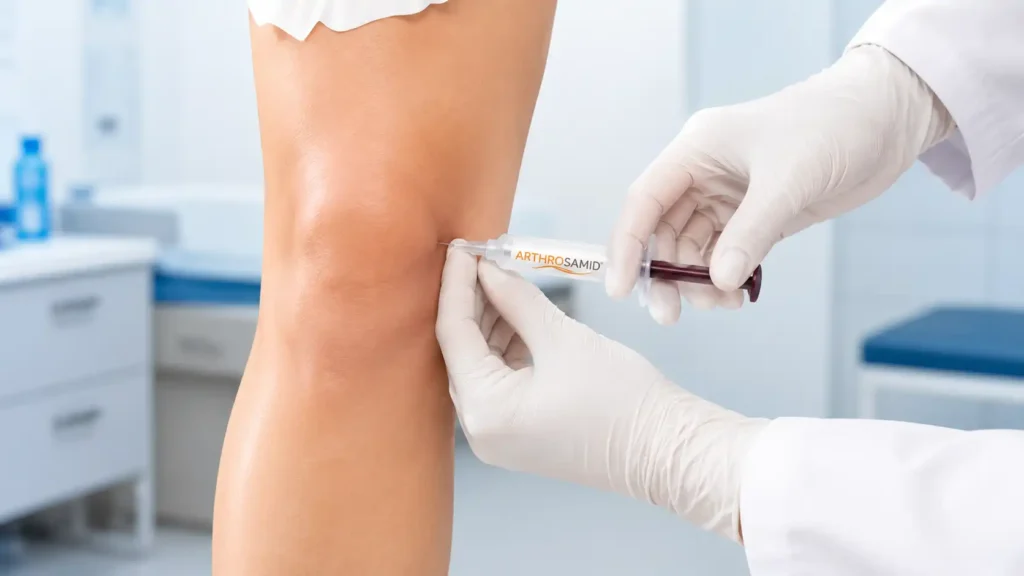
Arthrosamid® is a non-biodegradable polyacrylamide hydrogel — a soft, flexible gel composed of 97.5% water. Unlike cortisone or hyaluronic acid, it is not absorbed by the body. Instead, once injected into the knee joint under ultrasound guidance, it integrates into the synovial lining and remains there.
This is the key distinction. Arthrosamid® does not simply coat the cartilage or suppress inflammation temporarily. It forms a physical scaffold within the synovial tissue, helping to reduce the irritation and inflammatory signalling that drives persistent knee pain. Because the hydrogel is non-biodegradable, it does not break down over time in the way that other injections do.
Clinical studies have shown that symptom relief from Arthrosamid® can last between two and five years in appropriately selected patients — significantly longer than either cortisone or hyaluronic acid injections. A 2024 study published in the Journal of Orthopaedic Surgery and Research found that patients receiving a single injection of polyacrylamide hydrogel maintained meaningful improvements in pain and function at the 12-month mark, with a five-year extension study confirming sustained benefit in many cases.
It is also important to be clear about what Arthrosamid® does not do. It does not regenerate cartilage, and it does not reverse osteoarthritis. It is not a cure. However, for patients with mild to moderate knee osteoarthritis who have not responded adequately to other non-surgical treatments, it can offer a meaningful reduction in pain, improved mobility, and a genuine opportunity to delay or avoid knee replacement surgery.
How to Relieve Pain in an Arthritic Knee Without Surgery: Who Is This Injection For?
Arthrosamid® is not the right first step for everyone. A specialist will usually consider it for patients who:
- Have been diagnosed with mild to moderate knee osteoarthritis
- Continue to experience significant pain and flare-ups despite physiotherapy and exercise
- Have tried cortisone or gel injections with limited or short-lived results
- Are not yet suitable candidates for knee replacement surgery, or wish to delay it
- Do not have severe end-stage, bone-on-bone arthritis
It is also worth noting that Arthrosamid® is classified as a medical implant rather than a standard injection, because the hydrogel does not break down inside the body. This means a single oral antibiotic is usually taken before the procedure as a precautionary measure. The procedure itself is straightforward, performed as a day appointment under local anaesthetic with ultrasound guidance to ensure accurate placement.
Most patients return home the same day. Some mild swelling or stiffness may occur in the first few days, which is a normal response. Improvement tends to develop gradually over several weeks rather than immediately, as the hydrogel integrates into the synovial tissue.
Knee Pain Relief Without Surgery: What Results Can Patients Realistically Expect?
It would be misleading to suggest that Arthrosamid® works for everyone. Around five to ten per cent of patients see little benefit. However, clinical data and real-world experience in private practice suggest that the majority of patients with suitable osteoarthritis see meaningful improvement.
Studies report that a significant proportion of patients experience clinically important reductions in pain and improvements in daily function. Many describe being able to walk further, sleep better, manage stairs more comfortably, and reduce their reliance on pain medication. For patients who were previously managing with repeated cortisone shots every few months, the prospect of longer-lasting knee pain relief without surgery is a significant change in quality of life.
The treatment works best when combined with a structured rehabilitation programme. Strengthening the muscles around the kne particularly the quadriceps and hamstrings, reduces the load going through the joint and helps the injection to work more effectively over time. An injection alone is rarely the complete answer; it is most effective when integrated into a broader plan for knee pain treatment without operation.
Arthrosamid® Injection in London at London Knee Care
At London Knee Care, Arthrosamid® is offered as part of a comprehensive, non-surgical treatment pathway for patients with knee osteoarthritis. Every injection is performed by Mr Raghbir Khakha, a consultant orthopaedic surgeon with over 15 years of specialist experience in knee conditions and joint preservation.
Mr Khakha takes a thorough approach to every patient’s assessment, reviewing imaging, discussing treatment history, and carefully considering whether Arthrosamid® is the most appropriate option. Not every patient will be suitable, and where it is not the right fit, he will discuss the full range of alternatives from hyaluronic acid injections and physiotherapy-led rehabilitation, to keyhole surgery or knee replacement when the time is right.
The clinic operates from London with appointments available Monday to Friday. Patients travel from across the UK and internationally to receive treatment, drawn by Mr Khakha’s reputation for precision, honest clinical advice, and patient-centred care.
Ready to Talk to a Knee Specialist in London?
If you have been managing knee pain with repeat injections that keep wearing off, or you are looking for a knee pain treatment without operation that offers longer-lasting results, it may be time to explore whether Arthrosamid® is right for you.
At London Knee Care, Mr Raghbir Khakha offers expert assessment and personalised treatment planning for patients with knee osteoarthritis and complex knee conditions. With over 5,000 procedures performed and a 4.9-star patient rating, the clinic is trusted by patients across London and the UK who want clarity, honesty, and effective treatment.
To learn more about Mr Khakha’s approach and experience, visit the About Mr Raghbir Khakha page, or explore the full range of knee treatments available at the clinic.
To book a consultation or ask about Arthrosamid® availability, visit the Contact Us page or call 020 7046 8008. The team is available Monday to Friday, 9am to 8pm, and can guide you through the next steps towards better knee health.
Frequently Asked Questions About Shots for Knee Joint Pain
What is a knee pain injection?
A knee pain injection is a procedure where medication or a therapeutic substance is delivered directly into the knee joint to reduce pain and improve mobility. Common types include cortisone shots, hyaluronic acid gel injections, and hydrogel injections such as Arthrosamid®. The right type depends on your diagnosis and treatment history.
How long do gel injections into knees last?
Hyaluronic acid gel injections typically provide relief for six to twelve months, though this varies. Arthrosamid® hydrogel injections are designed to last significantly longer, with clinical evidence supporting benefit for two to five years in suitable patients.
Which knee injection lasts the longest?
Of the currently available non-surgical injection options, Arthrosamid® has the longest documented duration of effect, owing to its non-biodegradable composition and integration into the synovial lining.
Is there a shot for knee pain that does not wear off?
No injection offers permanent results, but Arthrosamid® is the longest-lasting option currently available for knee osteoarthritis. Unlike cortisone or hyaluronic acid, it is not absorbed by the body and does not break down over time.
Is there a shot for knee pain that does not wear off?
No injection offers permanent results, but Arthrosamid® is the longest-lasting option currently available for knee osteoarthritis. Unlike cortisone or hyaluronic acid, it is not absorbed by the body and does not break down over time.
How many cortisone shots can you have in your knee?
Most specialists recommend limiting cortisone injections to two to three per year to avoid potential damage to the joint cartilage over time.
How long does recovery take after a cortisone knee injection?
Most patients recover within 24 to 48 hours after a cortisone knee injection. Some mild soreness at the injection site is normal during this time. Light daily activities can usually resume the same day.
Why does my knee pain feel worse after a cortisone injection?
A short-term pain flare after a cortisone injection is common and usually settles within 48 hours. This happens because the steroid can briefly irritate the joint lining before reducing inflammation. Resting and applying ice generally helps during this period.
My cortisone shot in the knee still hurts after two weeks — is this normal?
If pain persists beyond two weeks, it may indicate that cortisone is not the right treatment for your level of joint involvement. This is a good time to speak to a knee specialist, as longer-lasting options such as gel or hydrogel injections may be more suitable for you.
What is a gel knee injection?
A gel knee injection delivers hyaluronic acid directly into the knee joint to restore natural lubrication and cushioning. It is commonly used for knee osteoarthritis when the joint fluid has thinned and is no longer providing adequate shock absorption. Relief typically develops over a few weeks and can last several months.
Which is the best hyaluronic acid injection for the knee?
Several hyaluronic acid products are available, including Durolane, Synvisc, and Ostenil. The best option depends on your individual condition, the severity of your osteoarthritis, and your specialist’s clinical assessment. A single-injection product may suit some patients, while others benefit from a course of injections given weekly.
What is the best pain relief for osteoarthritis of the knee?
Pain relief for knee osteoarthritis depends on the stage of the condition. Physiotherapy, weight management, and anti-inflammatory medication are usually the first steps. When these are insufficient, knee injections such as cortisone, hyaluronic acid, or Arthrosamid® offer effective non-surgical options for longer-lasting relief.
What can be done for knee pain without surgery?
There are several effective non-surgical options for knee pain, including physiotherapy, exercise programmes, weight management, and knee injections. Newer treatments like Arthrosamid®, a hydrogel knee injection, can provide relief lasting two to five years in suitable patients, making surgery avoidable for many people.