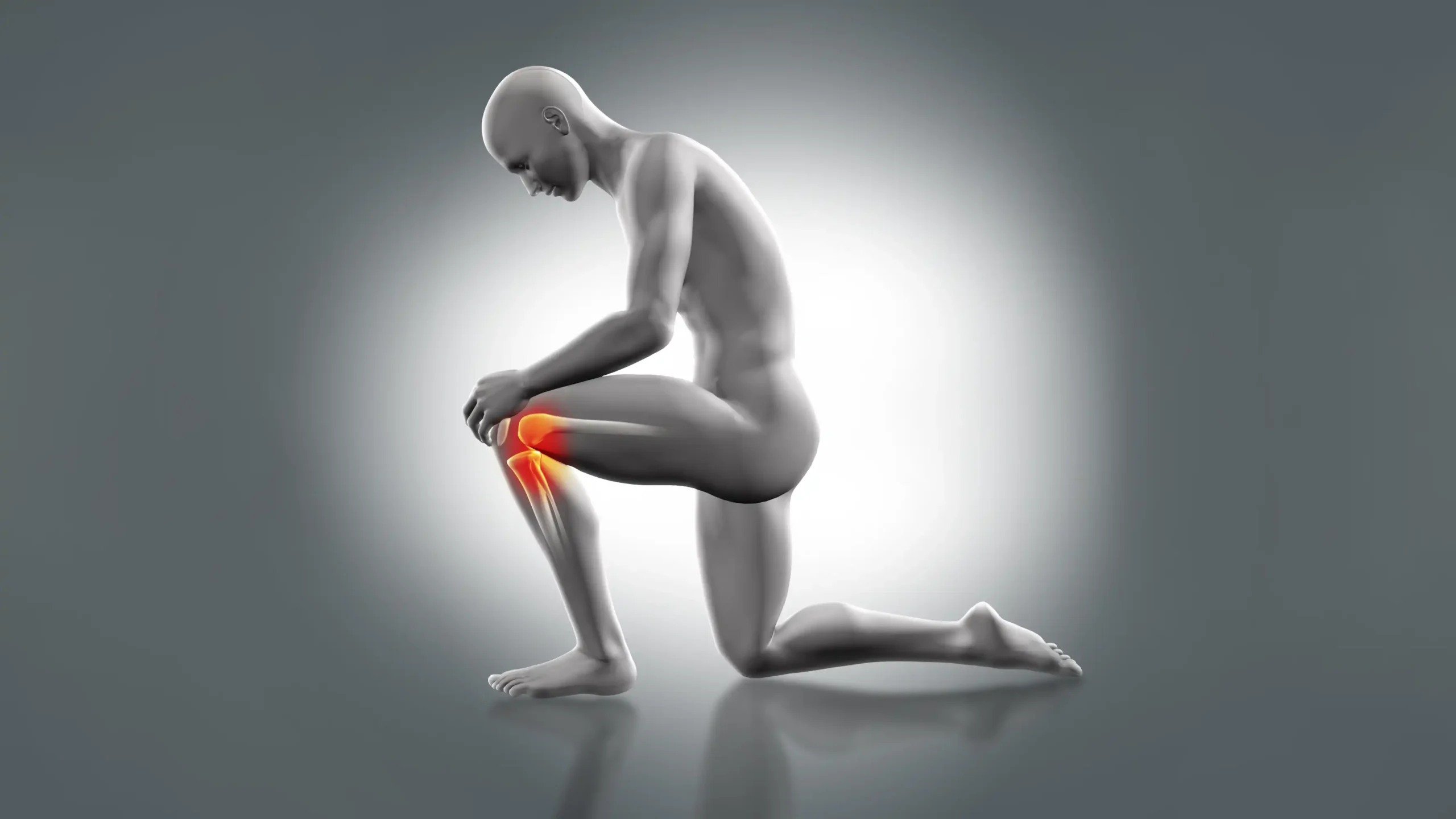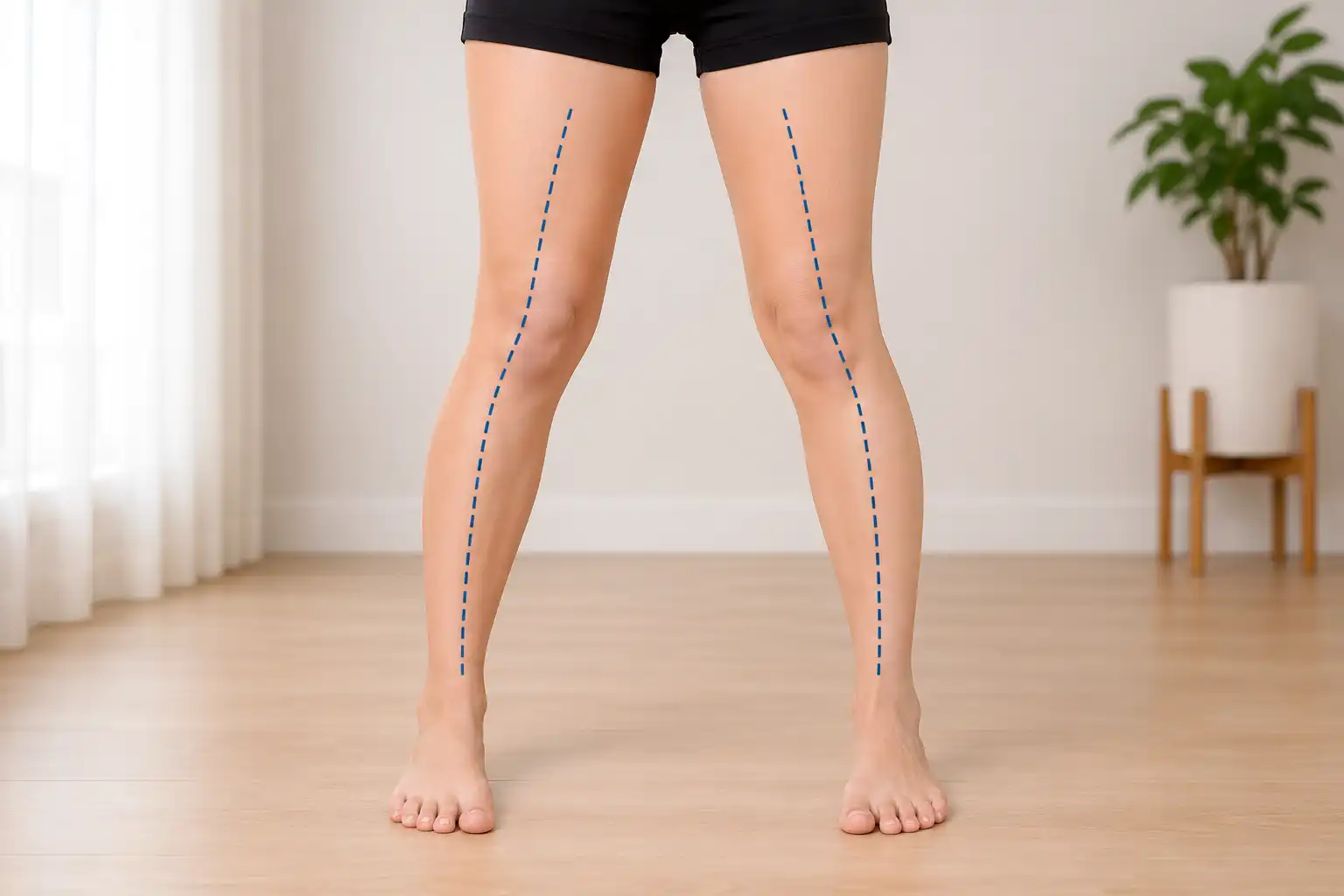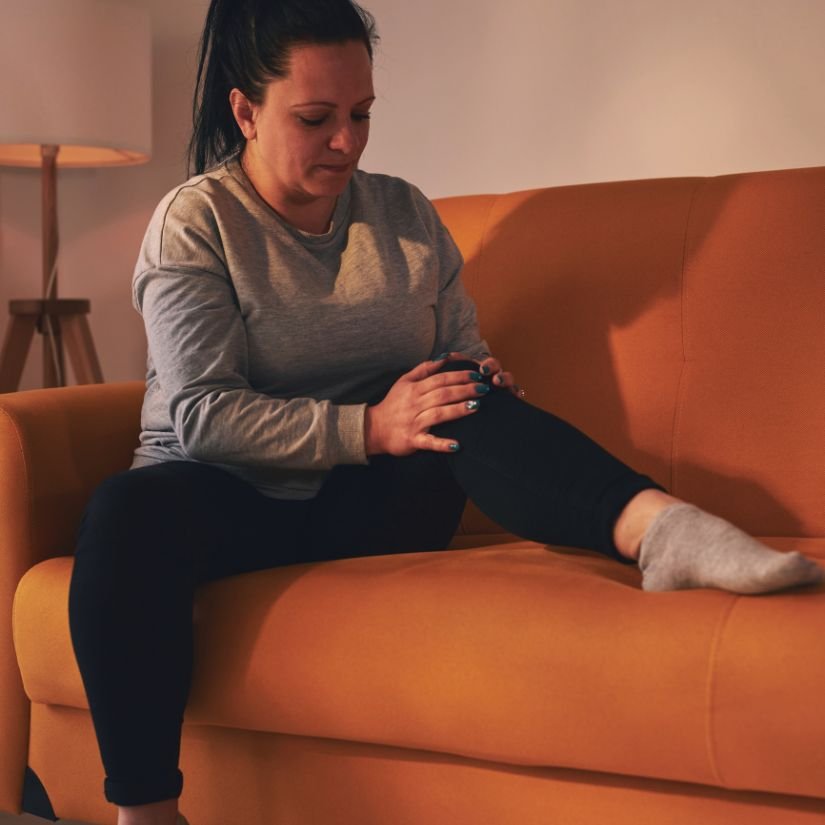

There are many types of knee joint injuries, and knowing which one you’re dealing with is usually the first step towards feeling less worried and more in control. Injuries of knee joint tissue range from a mild ligament sprain that settles in days, through to a complete rupture, a shattered kneecap, or a bucket handle meniscal tear needing urgent surgery. The most common injury of knee joint structures overall tends to be a ligament sprain or a meniscal tear, though the most common knee injuries we see vary depending on age and activity level.
The knee is made up of five distinct tissue types, and each one is injured, diagnosed and treated differently. Understanding what each injury type feels like is genuinely useful, not just for reassurance, but because the wrong approach for the wrong injury can slow recovery.
How Many Types of Knee Injury Are There
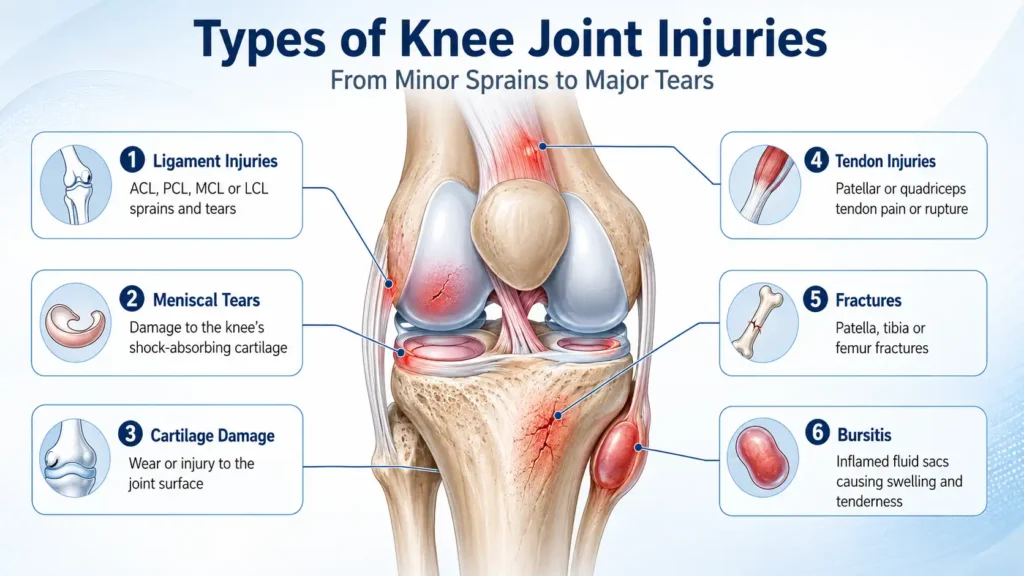
To answer how many types of knee injury there are, it helps to start with knee joint anatomy rather than counting named conditions. The structures of the knee joint fall into five groups.
- Ligaments of the knee, the ACL, PCL, MCL and LCL, connecting bone to bone for stability
- Cartilage in the knee, the meniscus, which cushions the joint, and the smooth articular surface over the bone ends
- Tendons of the knee, mainly the patellar and quadriceps tendons
- Bones of the knee joint, chiefly the patella, femur and tibia
- Bursae, small fluid filled sacs that reduce friction around the joint
Each structure can be injured in its own way, which is why understanding meniscus knee anatomy or ligament anatomy specifically helps explain why some injuries heal well and others need surgery.
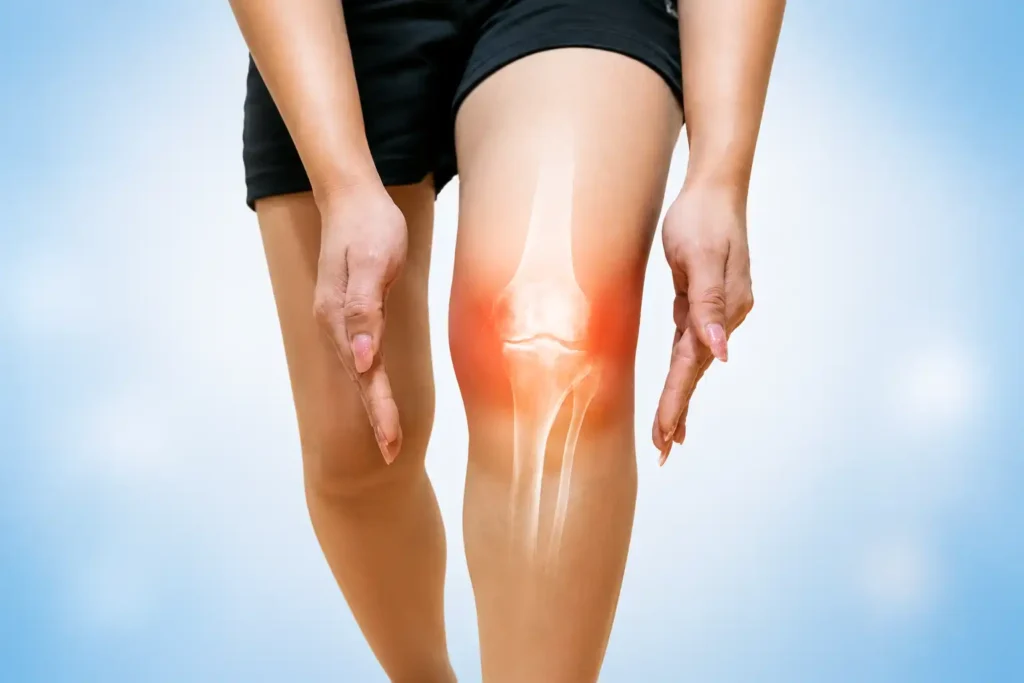
Types of Knee Injury and Symptoms
Knee Ligament Injuries From Sprain to Tear
A torn knee ligament, or knee ligament sprain, is described using knee injury grades that range from one to three.
- Grade 1 knee injury, a minor knee injury where the ligament is stretched but intact
- Grade 2 knee injury, a moderate knee injury with partial tearing and some instability
- Grade 3 knee injury, a severe knee injury involving complete rupture
Common minor knee injuries in this category are grade one sprains, which usually settle within two to three weeks with structured physiotherapy. Knowing the difference in knee sprain vs tear matters because a sprain means stretched fibres, while a full knee ligament tear means the fibres have actually broken. The most common knee ligament injury in sports overall is an ACL injury, particularly in football, netball and skiing, typically from pivoting or landing awkwardly, with rapid swelling and a feeling the knee is giving way. An MCL injury usually follows a direct blow to the outer knee. A PCL injury needs a direct blow to the front of a bent knee, such as in a car accident, and an LCL injury is less common since it takes greater force to damage.
Meniscal Tears From Sudden Injury to Wear
A torn meniscus, or meniscus injury, is one of the most frequently diagnosed knee problems. A medial meniscus tear causes inner joint line pain, while a lateral meniscus tear causes pain on the outer side. A bucket handle meniscus tear, where a large fragment flips into the joint, can lock the knee completely and is a surgical emergency. In patients over 40, tears often develop gradually with minimal injury, simply from years of wear.
Cartilage Damage From Wear to Full Thickness Loss
Knee cartilage damage, sometimes called an articular cartilage injury or chondral damage knee condition, can develop silently for years since cartilage has no nerve supply. A knee cartilage tear only becomes painful once it affects joint mechanics or triggers inflammation. In younger patients this often follows a specific injury, while in older adults it’s usually part of osteoarthritis. A related but distinct problem is an osteochondral defect knee injury, where a segment of bone and cartilage separates together, more common in teenagers.
Tendon Injuries From Irritation to Rupture
A patellar tendon injury, commonly known as jumper’s knee or patellar tendinopathy, causes pain below the kneecap during jumping and running. A knee tendon tear or full rupture is far more serious, producing sudden pain and an inability to straighten the leg. A quadriceps tendon injury above the kneecap typically affects men over 40.
Knee Fractures and Bursitis
Any knee bone fracture, whether to the patella, tibia or femur, needs prompt imaging to guide treatment. A patella fracture, or kneecap fracture, produces severe pain, swelling and an inability to bear weight, usually from a fall or direct blow. A tibial plateau fracture affects the top of the shin bone and is more common in older adults with lower bone density. Knee bursitis, including prepatellar bursitis, housemaid’s knee, and infrapatellar bursitis, causes localised knee swelling bursitis around the front of the joint from kneeling or direct impact.
Types of Knee Injuries After a Fall
Falls are one of the most common causes of knee injury across all ages. In younger people, a fall onto a bent knee often causes a patella fracture or a kneecap dislocation, while a twisting fall can tear the meniscus or a ligament at the same time. In older adults with lower bone density, even a relatively minor fall can cause a tibial plateau fracture, which is why any fall causing immediate inability to bear weight or visible deformity should be assessed the same day rather than waited out at home.
Common Knee Injuries by Activity and Age
Why are knee injuries common in football? The combination of contact, rapid direction changes and unpredictable surfaces makes football the leading cause of significant knee injuries in the UK, with ACL tears especially common in female players. Common knee injuries in women overall are led by ACL tears, occurring at far higher rates than in men, partly due to anatomical differences. Common knee problems in young athletes include Osgood-Schlatter disease and osteochondritis dissecans, while common knee problems in men often centre on ACL and PCL injuries from contact sport.
Common knee injuries from jumping and common knee injuries dancers face both centre heavily on patellar tendinopathy, alongside meniscal tears from rotational movement. Common knee injuries from biking are typically overuse patterns like patellofemoral pain, while common knee injuries from lunges include tendinopathy and meniscal irritation from deep flexion.
Common knee problems in older adults shift towards degenerative conditions. Knee osteoarthritis is the single most common knee condition after 50, and common knee problems with age are not inevitable, strong muscles and healthy weight meaningfully reduce risk at any stage of life.
How Is a Knee Injury Diagnosed
How is knee injury diagnosed properly starts with a thorough knee injury physical examination, checking movement, stability and swelling patterns. Imaging often follows, a knee injury X-ray to rule out fracture, or a knee injury MRI to assess soft tissue detail. Many UK emergency departments apply the Ottawa knee rules to decide who genuinely needs an X-ray, helping avoid unnecessary scans for straightforward injuries.
Knee Injuries Treatments
Knee injuries treatments vary enormously by tissue and severity, and there’s no universal knee injury treatment that suits everyone. Many grade one and two ligament sprains respond well to knee injury without surgery, using physiotherapy for knee injury and a supportive knee injury brace. Grade three tears in active patients usually need knee injury surgery to restore stability and function properly. The types of knee operations for ligament injuries include arthroscopic reconstruction, most often for ACL tears.
Meniscal tears are managed by type and location, sometimes healing conservatively, sometimes needing keyhole surgery. Cartilage damage ranges from physiotherapy through to microfracture or, for advanced osteoarthritis, knee replacement surgery. Tendon injuries respond to progressive loading, while acute ruptures need urgent surgical repair.
The RICE method knee injury advice of rest, ice, compression and elevation has largely been replaced by the POLICE method knee injury framework, protection, optimal loading, ice, compression and elevation, since some loading tends to produce better outcomes than complete rest.
When Your Knee Injury Needs Specialist Assessment
Knowing when to see a doctor for knee injury symptoms matters because early assessment prevents small problems becoming complicated. Book an assessment if your knee injury not healing as expected after two weeks, or if pain, swelling or instability are getting worse rather than better.
Knee injury red flags that need same day attention include the following.
- Visible deformity after a fall or collision
- Complete inability to bear any weight
- A hot, red, swollen knee alongside fever
- Numbness, tingling or coldness in the lower leg
If you’re wondering should I go to A and E for knee injury symptoms, these red flags are your guide. Outside of them, a routine specialist appointment is the right next step.
Expert Knee Injury Assessment and Treatment at London Knee Care
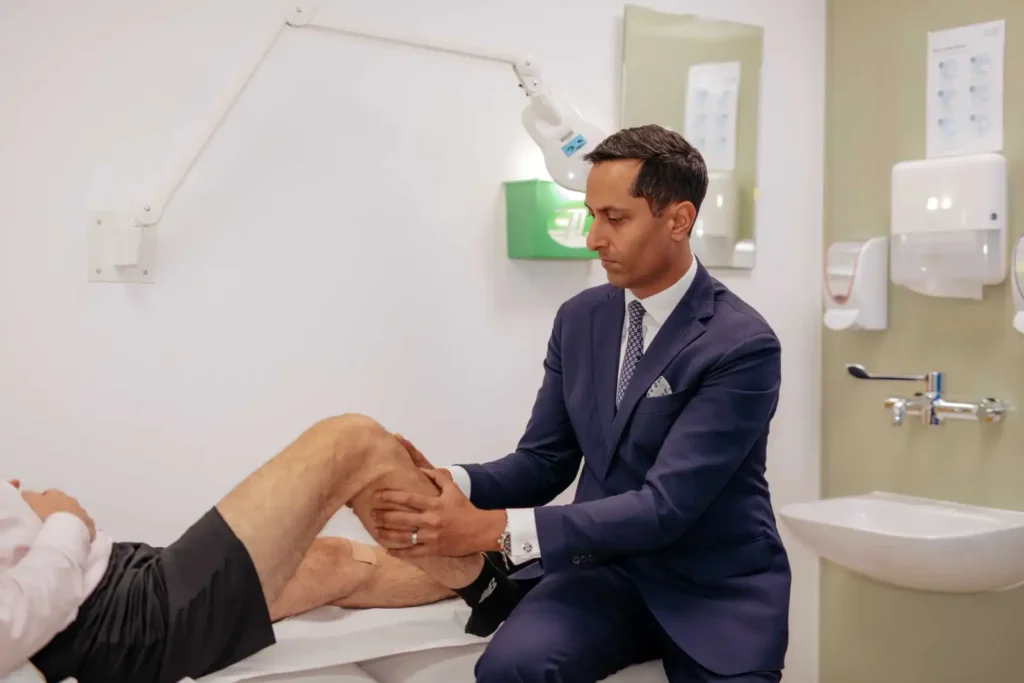
If you’ve been searching for a knee injury specialist London patients recommend, we’re here to help. We provide thorough knee injury assessment London wide and knee injury treatment London patients can rely on, led personally by Mr Khakha, a private knee specialist London residents have trusted for over fifteen years.
We see every type of knee joint injury, from minor ligament sprains through to complex reconstructions, always starting with proper assessment and the right imaging before any treatment decision. Read more about Mr Khakha’s background and our approach to knee sports injuries.
You can book a consultation directly through our booking page.
London Knee Care
45 Queen Anne Street, London W1G 9JF
Call us on 0207 046 8008
Email us at rk@os.clinic
Or visit our contact page
Frequently Asked Questions
What is the most common knee injury?
Ligament sprains and meniscal tears are the most common knee injuries overall, with ACL tears and MCL sprains leading in sporting populations, and degenerative meniscal tears more common after 40.
Can you walk with a knee injury?
Sometimes. Mild sprains often allow walking with discomfort, but if your knee gives way, locks, or you cannot bear weight at all, that points towards a more significant injury needing prompt assessment.
What are the signs of a serious knee injury and how do I know if my knee injury is serious?
A pop at the moment of injury, rapid swelling within two hours, instability, or inability to straighten the knee are all signs of a more serious injury that should not be managed at home alone.
What happens if a knee injury is left untreated?
Can knee injuries heal on their own? Minor sprains sometimes do, but complete tears and fractures usually need proper treatment to heal correctly. Left untreated, some injuries settle fine, but others cause ongoing instability or accelerated joint wear. Can knee injuries cause long term damage? Yes, particularly untreated ligament tears and meniscal damage, which is why assessment matters.
Which knee injury takes longest to heal?
Recovery time varies widely. Minor sprains often improve within two to six weeks, but ACL reconstruction and return to sport after knee injury can take nine to twelve months, and cartilage repair longer still. Knee injury recovery time always depends on the specific diagnosis, so how long does knee injury take to heal is never a one size fits all answer.
What is the difference between a sprain and a tear?
A sprain means the ligament fibres are stretched but intact. A tear means the fibres have broken, partially in a grade two injury or completely in a grade three. If you’re ever unsure which applies to you, our team is just a call away on 0207 046 8008.