If you have been told you have knee joint cartilage damage, or you are experiencing grinding, clicking, or deep aching in your knee that will not settle, you are not alone in wondering what this actually means for you. Knee cartilage damage is one of the most common reasons people come to see us, and it covers a wide range of experiences, from mild wear that barely affects daily life to more significant chondral damage in the knee that can limit movement and cause ongoing pain. Articular cartilage injury, cartilage loss, and general knee cartilage wear all sit under this same broad heading, and the way they are managed depends heavily on catching them early rather than waiting to see if they resolve on their own.
In this guide, we want to explain what articular cartilage actually does, why damage tends to get worse when it is ignored, and what your realistic options are, whether that is physiotherapy, injections, or surgery. Our goal is to give you clear, honest information so you can make sense of your own knee rather than feeling lost in medical terminology.
What Is Articular Cartilage Damage
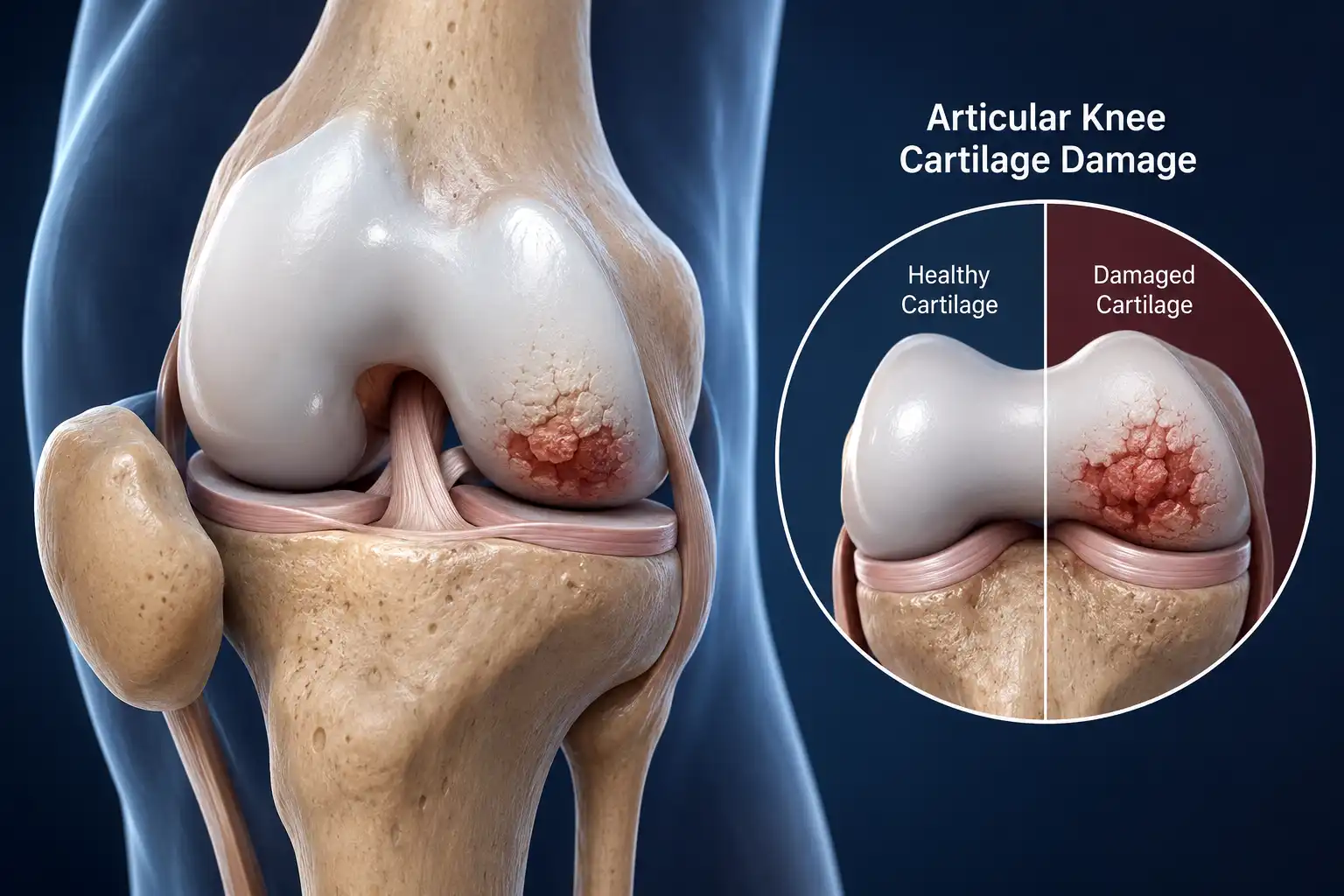
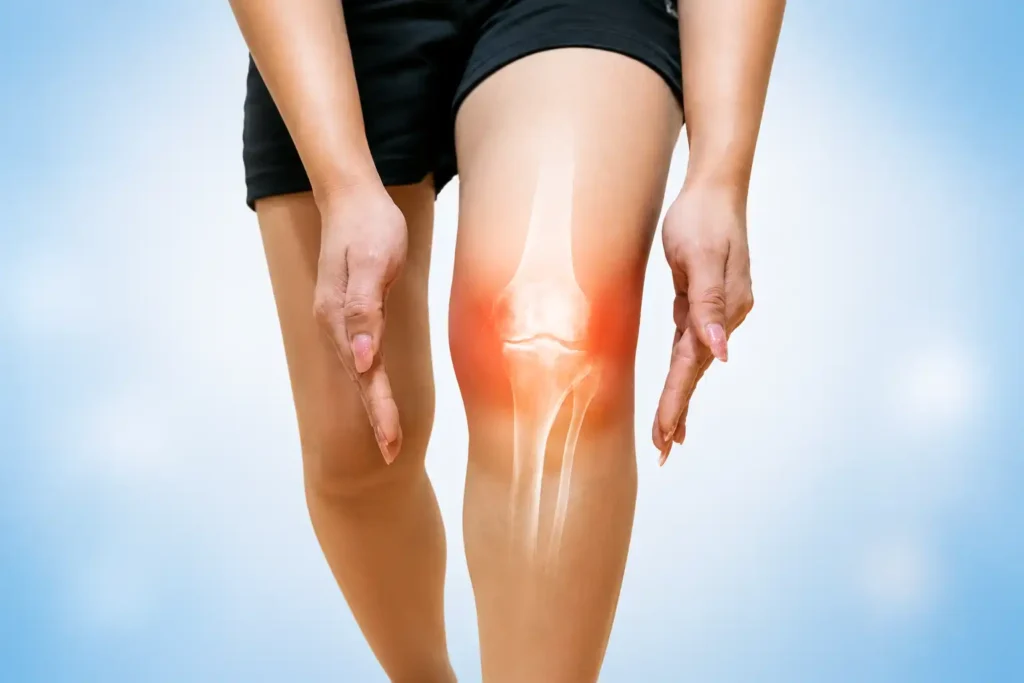
Articular cartilage is the smooth, glassy tissue that covers the ends of the bones inside your knee joint. Its job is to let your bones glide against each other with almost no friction, while also absorbing shock every time you walk, run, or climb stairs. This type of tissue is known as hyaline cartilage, and unlike many other tissues in your body, it has a very limited blood supply, which is part of why it heals so slowly when it becomes damaged.
Knee joint cartilage function relies on this tissue staying smooth and intact. When it becomes worn, thinned, or torn, the surfaces of the bones no longer move as smoothly against each other, which is what leads to the grinding, catching, or discomfort many patients describe to us. Articular cartilage damage can range from a small, localised area of wear to more widespread loss affecting a larger part of the joint surface.
Where Is the Cartilage in the Knee
Articular cartilage sits at the end of the thigh bone, the top of the shin bone, and behind the kneecap, wherever bone meets bone within the joint. It is worth understanding the difference between articular cartilage and the meniscus, since patients often use these terms interchangeably. The meniscus is a separate, tougher, C-shaped piece of cartilage that acts more like a cushion between the bones, whereas articular cartilage is the thin coating directly on the bone surface itself. Both can be damaged independently, and sometimes together, which is why a thorough assessment matters.
Knee Cartilage Damage Signs and Symptoms
Knee cartilage damage signs can be subtle at first, which is part of why so many people delay getting it checked. Cartilage itself has no nerve endings, so the tissue cannot directly signal pain the way skin or muscle does. Instead, cartilage damage knee pain usually comes from surrounding structures reacting to the changes happening within the joint.
Common symptoms we see include:
- A grinding or crunching sensation, particularly when bending or straightening the knee
- Clicking that feels different from ordinary joint noise
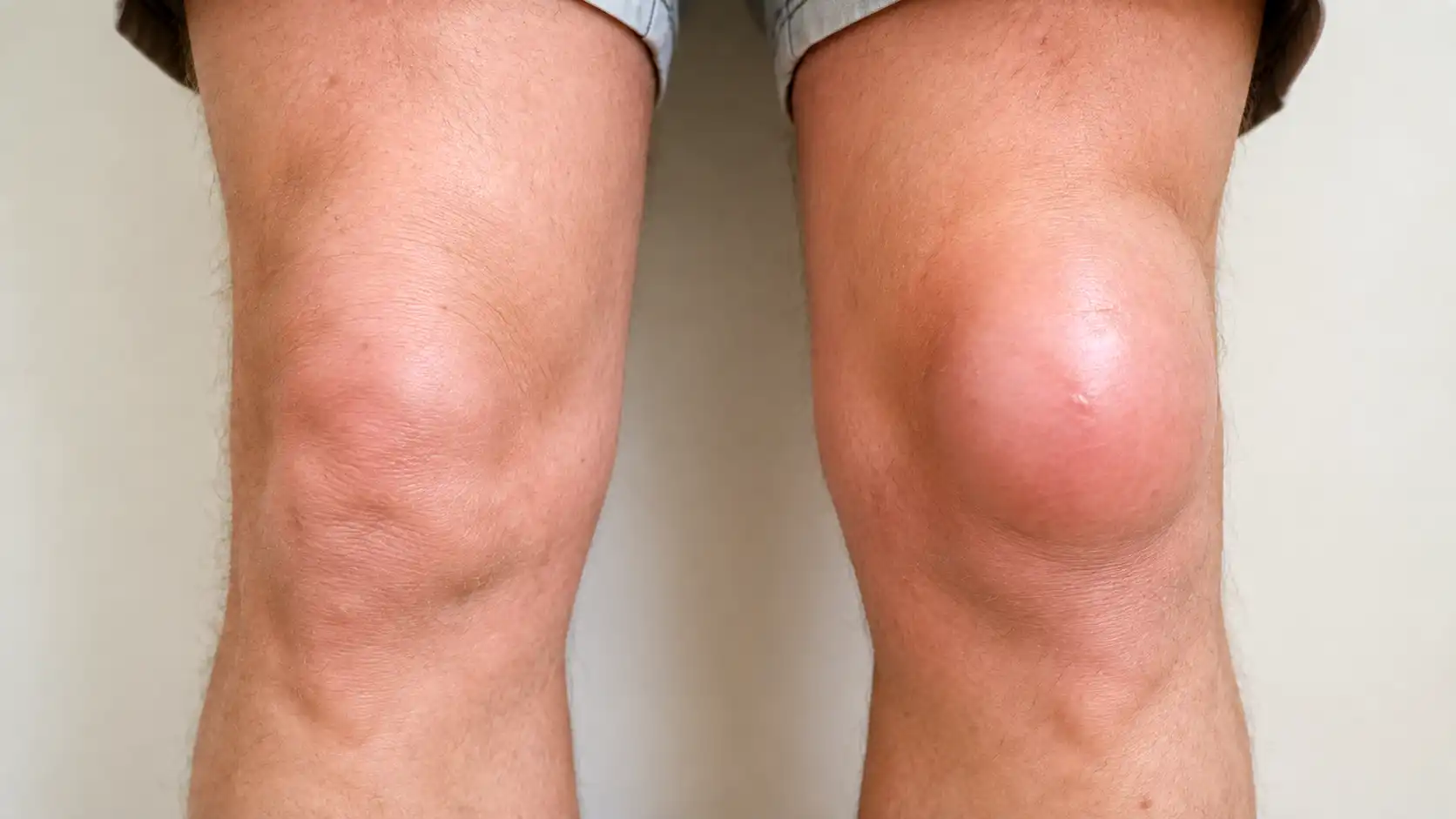
- Swelling that develops after activity or by the end of the day
- A feeling that the knee is giving way or feels unstable
- Occasional locking, where the knee catches or feels stuck for a moment
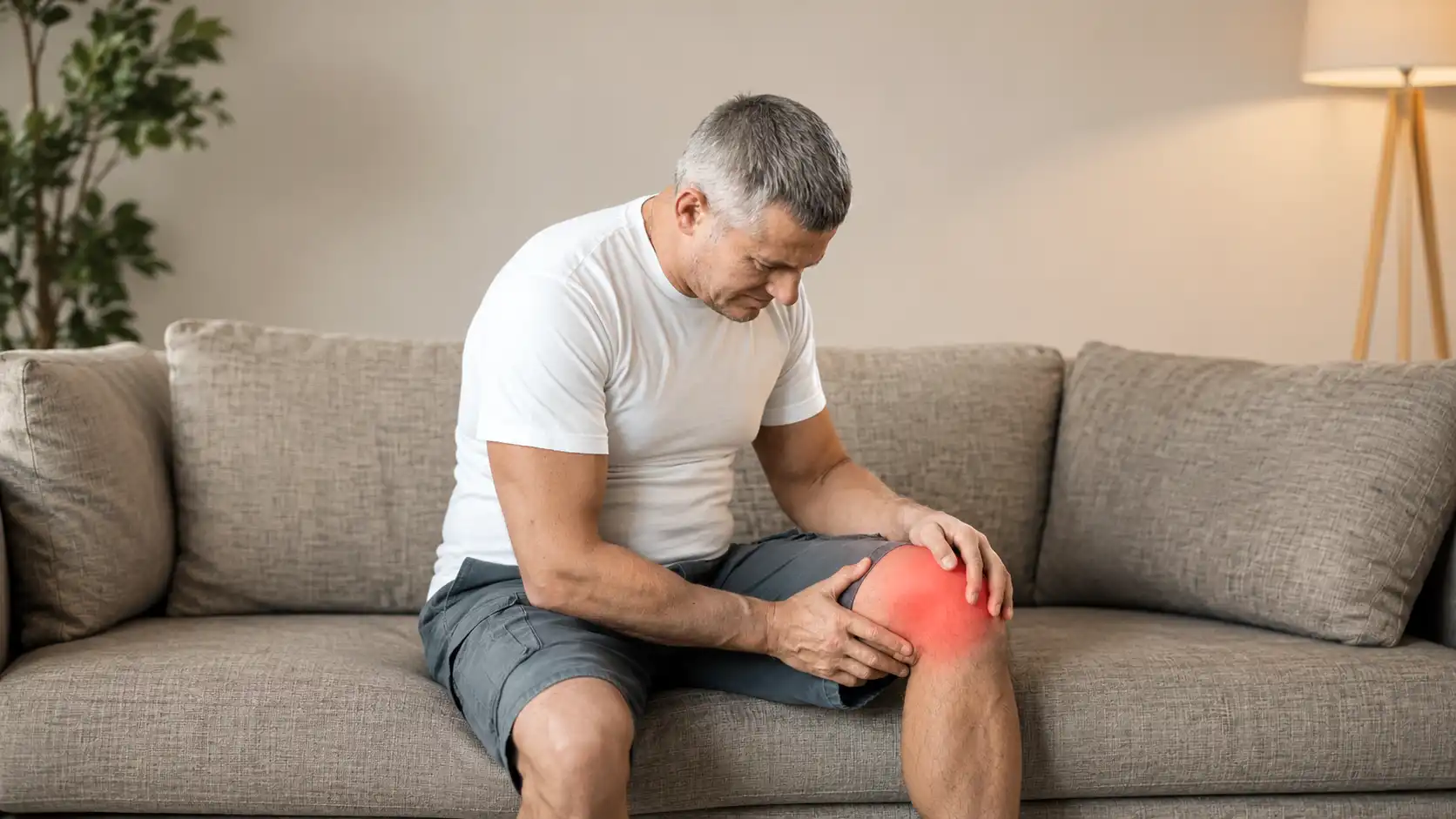
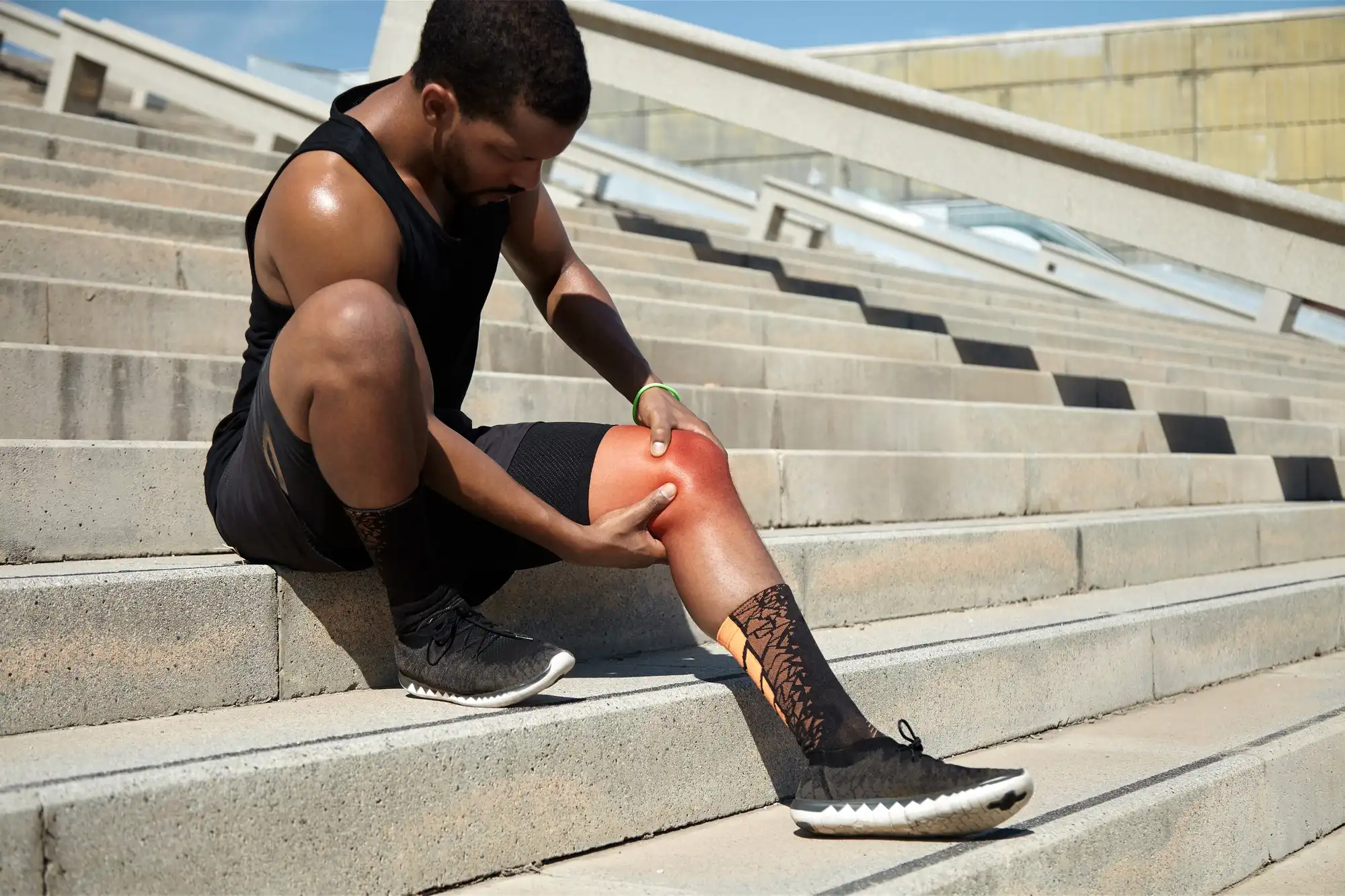
- Deep, aching pain that tends to worsen after exercise rather than during it
Not everyone experiences every symptom, and the severity does not always match how much damage is present, which is exactly why an accurate assessment matters more than trying to self diagnose based on symptoms alone.
Knee Cartilage Damage Causes
Knee cartilage damage causes generally fall into a few broad categories, and understanding which applies to you can help guide the right treatment approach. Articular cartilage wear and tear often develops gradually over years, particularly in people who have had previous knee injuries, repetitive high impact activity, or a naturally uneven distribution of weight through the joint.
What causes cartilage loss in knees can include sudden trauma, such as a twisting sports injury that damages the cartilage in a single moment rather than through gradual wear. Knee cartilage damage from running and other repetitive impact sports is also common, especially where training load increases quickly without enough recovery time. In younger patients, a condition called osteochondritis dissecans can cause a piece of cartilage and the bone beneath it to lose its blood supply and become unstable. In older patients, knee cartilage damage and osteoarthritis are often closely linked, since general wear over time gradually thins the cartilage layer throughout the joint.
How Severe Is Your Cartilage Damage
Cartilage damage is typically described using a grading system, which helps us understand how far the damage has progressed and what treatment options are realistic. Grade 1 cartilage damage involves softening of the surface without any visible break in the tissue. Grade 2 involves shallow cracks or fraying that does not go all the way through the cartilage. Grade 3 cartilage damage involves deeper cracks that extend further into the tissue, though some healthy cartilage remains. Grade 4 is the most advanced, often referred to as full thickness cartilage loss, where the cartilage has worn away completely and the underlying bone is exposed.
A chondral defect refers to a specific area of damage rather than the joint as a whole, and knee cartilage worn away in this way can sometimes be quite localised even when overall knee health is otherwise reasonable. Understanding your grade is one of the most useful pieces of information when it comes to deciding between conservative management and surgical treatment.
Cartilage Damage in the Knee Cap
Cartilage damage in the knee cap, also called patellofemoral cartilage damage, is a particularly common pattern we see, especially in younger and more active patients. Because the kneecap moves across the thigh bone with every bend of the knee, this area experiences a significant amount of repeated pressure, which can make it more prone to wear over time. Symptoms often include pain when climbing stairs, kneeling, or sitting for long periods with the knee bent, sometimes referred to as theatre sign.
What Happens When Articular Cartilage Becomes Damaged
What happens if the articular cartilage becomes damaged depends largely on how it is managed from this point onward. Because cartilage has such a limited blood supply, it does not repair itself in the same way skin or bone does. Left untreated, damaged areas can gradually worsen, and the altered mechanics within the joint can place additional strain on the surrounding cartilage, increasing the risk that healthy areas become damaged too.
Does knee cartilage damage lead to arthritis is a question we are asked often, and the honest answer is that it can, particularly when damage is left unaddressed over a long period. This does not mean cartilage damage always progresses to arthritis, but it is one of the reasons early assessment and appropriate management matter, rather than waiting until symptoms become severe enough to significantly affect daily life.
How We Diagnose Knee Cartilage Damage
Diagnosing cartilage damage accurately starts with a detailed conversation about your symptoms, followed by a physical examination of the knee to assess movement, stability, and areas of tenderness. From there, imaging plays an important role. Knee cartilage damage MRI scans are typically the most useful tool, since they allow us to see the cartilage layer directly and assess both the location and depth of any damage. X-rays are sometimes used alongside this, particularly to check for any narrowing of the joint space that might suggest more widespread wear.
In some cases, arthroscopy, a minimally invasive procedure using a small camera inserted into the joint, allows for the most direct assessment of a chondral defect, and can occasionally be combined with treatment during the same procedure. We always aim to use the least invasive method necessary to get a clear picture before recommending any next steps.
Cartilage Knee Damage Treatment Options
Cartilage knee damage treatment is not one size fits all, and the right approach depends on your age, activity level, the grade of damage, and how much your symptoms are affecting your daily life. Articular cartilage damage treatment can range from conservative management through to surgical repair, and we always start by discussing the least invasive appropriate option with you.
For milder cases, physiotherapy for knee cartilage damage can help strengthen the muscles supporting the knee, improving how weight is distributed through the joint and reducing strain on damaged areas. Some patients also benefit from knee cartilage repair without surgery approaches, including activity modification and targeted exercise programmes. Arthrosamid injections are another option we sometimes discuss with patients, particularly where inflammation and discomfort are significant factors, although this is generally more suited to broader joint wear rather than repairing cartilage itself.
How to treat cartilage damage in knee cases that are more advanced, or where conservative treatment has not provided enough improvement, often involves considering surgical options.
Cartilage Tear Knee Surgery and Surgical Options
Cartilage tear knee surgery covers several different procedures, and which one is appropriate depends heavily on the size, depth, and location of the damage. Chondroplasty involves smoothing damaged cartilage to reduce irritation within the joint. Microfracture surgery creates small holes in the underlying bone to stimulate a healing response, encouraging new tissue to form over the damaged area. Autologous chondrocyte implantation involves growing a patient’s own cartilage cells in a laboratory before implanting them into the damaged area, generally reserved for larger, well defined defects. The OATS procedure, along with mosaicplasty, involves transferring small plugs of healthy cartilage and bone from a less weight bearing part of the joint into the damaged area.
Each of these options carries its own benefits and limitations, and none of them recreate cartilage identical to your original tissue, which is an important and honest point to understand before considering surgery.
Can Cartilage Damage Be Repaired
Can cartilage damage be repaired is one of the most common questions we are asked, and the answer depends on the type and extent of the damage. Will a torn cartilage heal itself is unlikely in most cases, since articular cartilage has very little capacity for natural repair due to its limited blood supply. Can knee cartilage damage heal on its own is generally not something we would rely on, particularly for anything beyond very minor wear.
That said, can knee cartilage damage be reversed through treatment is a more nuanced question. Surgical techniques can encourage the formation of repair tissue or replace damaged cartilage in certain cases, but this repair tissue is often not quite as durable as your original cartilage. This is why we always aim to set realistic expectations rather than suggesting any treatment offers a complete return to how your knee was before the damage occurred.
Knee Cartilage Damage Recovery
Knee cartilage damage recovery time varies considerably depending on the treatment approach. Recovery from physiotherapy based management is often ongoing and gradual, focused on building strength and reducing symptoms over several months. How long does knee cartilage take to heal after surgical procedures depends on the specific technique used, but generally ranges from several weeks for less invasive procedures to many months for more complex cartilage repair recovery involving techniques like autologous chondrocyte implantation.
Return to sport after knee cartilage surgery is typically a gradual process, guided by physiotherapy milestones rather than a fixed timeline, since everyone heals at a different pace. We always encourage patients to follow their individual recovery plan rather than comparing their progress to others, since factors like the size of the damaged area and overall joint health significantly affect how recovery unfolds.
How to Protect Your Knee Cartilage Going Forward
How to prevent knee cartilage damage, or slow further wear if damage is already present, often comes down to a few consistent habits. Protecting knee cartilage generally involves maintaining a healthy weight to reduce load through the joint, building strength in the muscles surrounding the knee, and avoiding sudden increases in high impact activity without adequate conditioning.
Exercises for knee cartilage health tend to focus on low impact strengthening, such as cycling or swimming, alongside targeted work for the quadriceps and hip muscles, which play a significant role in how forces are distributed through the knee. Knee cartilage damage prevention is rarely about avoiding activity altogether, and more about building the right support around the joint so it can tolerate everyday movement more comfortably.
Expert Cartilage Damage Care at London Knee Care
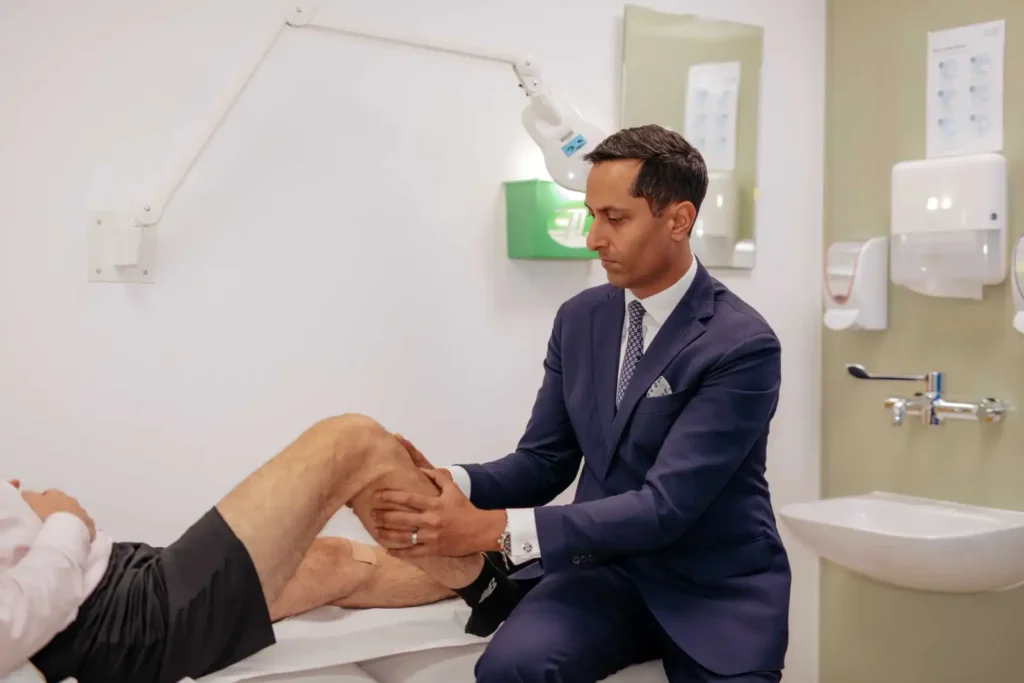
We understand that being told you have cartilage damage can feel worrying, particularly with so much information and terminology to take in. Led by Mr Raghbir Khakha, our approach focuses on giving you a clear, honest assessment of your knee, followed by treatment options that genuinely reflect the extent of your damage rather than jumping straight to the most invasive choice. You can read more about our approach to diagnosing and treating knee cartilage injuries here, including the full range of options we offer.
If you are dealing with ongoing knee pain, clicking, or swelling that has not improved, we would encourage you to get in touch with our team so we can talk through your symptoms and, where appropriate, arrange the right imaging and next steps.
Frequently Asked Questions
What Is Articular Cartilage Damage?
Articular cartilage damage refers to wear, thinning, or tearing of the smooth tissue covering the ends of the bones within the knee joint. It can range from mild softening to more significant loss affecting how the joint moves.
Will a Torn Cartilage Heal Itself?
In most cases, torn articular cartilage does not heal fully on its own due to its limited blood supply. Some very minor wear may not progress significantly, but noticeable tears generally benefit from assessment and treatment.
Can Cartilage Damage Be Repaired?
Certain surgical techniques can encourage repair tissue to form or replace damaged areas, particularly for well defined defects. This repair is not always identical to original cartilage, so outcomes vary depending on the extent of damage.
What to Do When Knee Cartilage Is Gone?
When cartilage has worn away completely, treatment usually shifts towards managing symptoms and protecting the joint, which may include injections, activity modification, or in more advanced cases, surgical options.
Is Cartilage Damage Painful?
Cartilage itself has no nerve endings, so pain typically comes from surrounding tissue reacting to changes within the joint. Many people do experience discomfort, though the level of pain does not always match the severity of damage.
Is Knee Cartilage Damage Serious?
Severity varies widely, from minor wear with little impact on daily life to more significant damage affecting movement and comfort. Getting an accurate assessment helps determine how serious your particular case is.
What Happens if Knee Cartilage Damage Is Left Untreated?
Left untreated, cartilage damage can gradually worsen, and altered joint mechanics may place additional strain on surrounding areas. This is why early assessment is generally recommended rather than waiting for symptoms to worsen.
Does Knee Cartilage Damage Lead to Arthritis?
It can, particularly if damage progresses over time without appropriate management. This is not the case for everyone, but it is one of the reasons timely treatment is often recommended.
Can You Walk With Knee Cartilage Damage?
Many people continue to walk and stay active with cartilage damage, particularly in milder cases. Symptoms such as pain or instability may affect comfort, which is where treatment and strengthening can help.
How Do I Know if I Have Knee Cartilage Damage?
Common signs include grinding, clicking, swelling after activity, and deep aching pain. An accurate diagnosis generally requires a physical examination alongside imaging such as an MRI.
Is Knee Cartilage Repair Worth It?
This depends on your individual circumstances, including age, activity level, and the extent of damage. We always discuss the realistic benefits and limitations of each option so you can make an informed decision.
What Is the Best Treatment for Knee Cartilage Damage?
There is no single best treatment, since the right approach depends on the grade and location of damage along with your personal goals. Options range from physiotherapy through to various surgical techniques.
In Summary
Articular knee cartilage damage is a common condition that tends to get worse when it is left unaddressed, largely because cartilage has such a limited ability to repair itself naturally. Understanding your symptoms, getting an accurate diagnosis, and exploring the right treatment option for your specific situation can make a meaningful difference to how your knee feels and functions over time.
If you have been experiencing grinding, swelling, or ongoing knee pain and would like an expert assessment, we would encourage you to contact us to arrange a consultation with Mr Raghbir Khakha and our team.