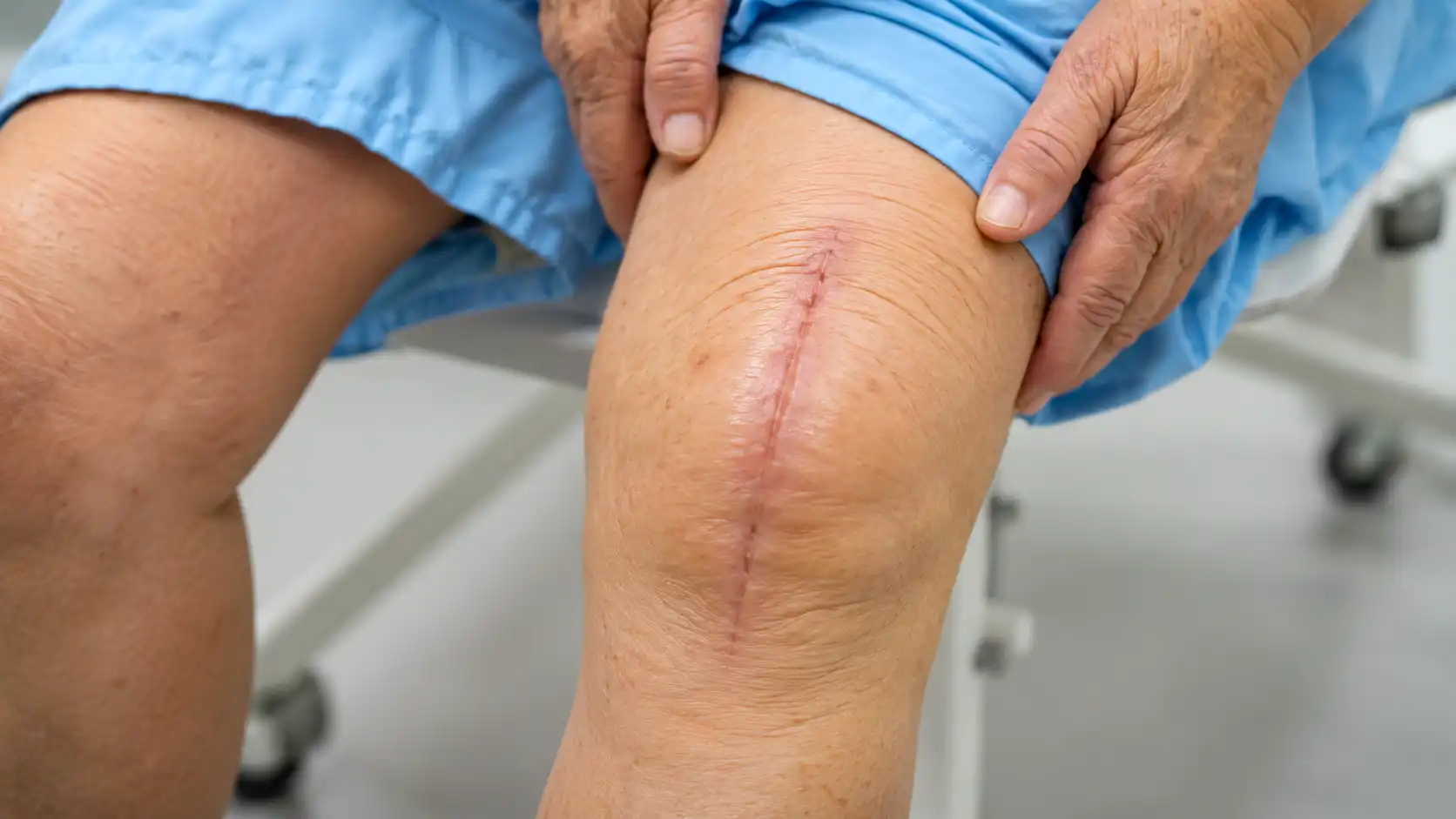

If knee pain has you limping, avoiding stairs and planning your day around how far you can walk, it may be time to think about surgery. The usual signs you need a knee replacement are severe pain despite months of non-surgical care, pain at rest or at night, and a knee that limits daily life. That is how to know if you need a knee replacement in short, and the rest of this guide explains each sign in plain terms.
At London Knee Care, many of the people we see have put up with a worsening knee for years because they were unsure it was “bad enough”. Others worry about being rushed into an operation. This guide covers the signs that point towards surgery, the signs that suggest you can wait, and the options that may suit you better than a replacement.
How to Know If You Need a Knee Replacement
You are likely to need a knee replacement when severe pain and stiffness continue despite months of treatment without surgery. They limit daily life, such as walking, stairs, sleep or work. No single symptom decides it. Pain, loss of function and the failure of other treatments matter together, and the final call is made with your surgeon.
A simple way to judge this is to ask three questions. How much pain do you have on an ordinary day? What can you no longer do that you used to take for granted? And have you given non-surgical care a fair trial? That usually means several months of physiotherapy, activity changes, weight management where relevant, pain relief and, for some people, injections. If the honest answers are “a lot”, “plenty” and “yes”, a conversation about knee replacement is reasonable.
Signs You Need a Knee Replacement in Everyday Life
The signs you need a knee replacement are usually felt in daily life before they show on a scan. They include constant or worsening pain, pain at night, trouble with stairs or short walks, stiffness, swelling and a knee that looks or feels different. Any one of these can have other causes, but several together, lasting for months, deserve a proper assessment.
- Pain on most days that has not settled with months of treatment
- Pain at rest or at night that wakes you
- Difficulty with stairs, getting out of a chair or walking short distances
- Stiffness that stops you bending or straightening the knee fully
- Swelling that keeps coming back, or a knee that gives way
- A visible change in shape, such as the knee bowing outwards or inwards
Many of these overlap with other knee conditions, such as ligament or meniscus problems, which is why a clear diagnosis matters before surgery is discussed.
Limping and Pain That Stays Despite Treatment
A limp is your body protecting a painful joint. A limp that lasts beyond a few weeks and keeps returning means the knee is struggling. Over time it can place extra load on the hip, the lower back and the other knee.
Pain that stays despite treatment is the sign that carries the most weight. Picture someone who has tried exercises, weight management and pain relief for six months and still cannot manage a short walk to the shops. That pattern, rather than a single bad week, is what moves surgery onto the table.
Symptoms You Need a Knee Replacement Often Show Up at Night
Aching that continues when you are resting, or that wakes you several nights a week, is one of the clearer symptoms you need a knee replacement assessment. Stiffness after sitting, a knee that swells by the evening and difficulty finding a comfortable sleeping position often travel with it.
Night pain has several causes. Our guide to knee pain at night covers the other explanations. When night pain sits alongside the other signs above, it adds weight to the case for a closer look.
When Do You Need a Knee Replacement?
You need a knee replacement when joint damage, most often from osteoarthritis, causes pain and loss of function that other treatments no longer control. At that point the aim is to get your quality of life back. There is no set age, score or scan result. Timing depends on your symptoms, your daily demands, your images and what has already been tried.
Research suggests many people wait longer than is ideal, while some have surgery before they need it. Both can reduce the benefit, which is why a well-timed decision matters more than a fast one. If you would like an opinion on where you stand, you can contact us and we will talk it through.
Bone on Bone on an X-Ray Is Not the Whole Story
“Bone on bone” means the cushioning cartilage has thinned heavily on an X-ray, which is common in advanced knee osteoarthritis.
Some people with severe changes on their X-ray cope well for years. Others with milder changes have significant pain and stiffness. Scans support the decision. They do not make it for you, and how the knee feels and works in daily life carries equal weight.
When to Know If You Need a Knee Replacement Instead of Waiting
The decision is shared between you and your surgeon, and age is not the test. Younger, active people often prefer to try joint-preserving options first. Older, otherwise fit people can do very well with surgery when their symptoms justify it.
Useful markers include missing things that matter to you, such as family events, holidays or walking the dog. If that sounds familiar, it is reasonable to ask for an assessment rather than waiting for a breaking point.
Signs You Can Wait Before Choosing a Knee Replacement
You can often wait when pain is manageable, you can still do the things that matter to you, and other care has not had a fair trial yet. Waiting is reasonable in those circumstances, provided the knee is reviewed if things change.
| What you notice | May point towards surgery | Often means you can wait |
| Pain | Constant, severe or waking you at night | Comes and goes, settles with rest and simple measures |
| Walking | Limited to short distances | Manageable with some adjustments |
| Treatment so far | Months of treatment with little effect | Not yet given a fair trial |
| Stiffness and swelling | Persistent and limiting bending | Mild, with occasional flare-ups |
| Daily life | Affecting sleep, work or independence | Still able to do what matters most |
If you are in the right-hand column, the early signs of knee arthritis and how to slow them down are worth reading. Not sure which column fits you? Contact us and we can help you place it.
Is Knee Replacement Always Necessary?
No. Many people with knee arthritis never need surgery, and others are better served by a procedure that keeps more of their own joint. Whether replacement is the right step depends on which part of the knee is damaged, how active you are, your age and how much the symptoms limit you.
Alternatives to Knee Replacement for Osteoarthritis
Several options may be worth trying first, or may suit you better, depending on your knee:
- Structured exercise and physiotherapy to strengthen the muscles that support the joint
- Weight management and changes to activity, which reduce load through the knee
- A hydrogel injection, which can ease symptoms for some people with osteoarthritis, though it is not a cure
- Knee osteotomy, which realigns the bone to move load away from a damaged area and can suit younger, active people
None suits everyone. Our comparison of osteotomy vs replacement sets out how the choice is made.
Signs You Need a Partial Knee Replacement Instead of a Total One
A partial replacement suits people whose damage is limited to one part of the knee, usually the inner side, while the ligaments remain healthy. Signs that point this way include pain concentrated on one side of the knee, X-rays showing damage confined to one area, and a knee that is otherwise stable.
When wear is widespread, a total replacement is more likely. Our guides to partial vs total replacement and to partial knee replacement explain the differences in more detail.
When to Get Your Knee Assessed Without Waiting
Some knee symptoms need attention the same day, whatever the cause. They are not signs you need a knee replacement. They can point to infection, a blood clot or a serious injury. Get in touch with us straight away if you notice any of these:
- A hot, red, swollen knee, especially with a fever or feeling generally unwell
- Sudden swelling, pain or warmth in the calf
- A knee that is locked, visibly out of shape after an injury, or will not take your weight
- Sudden severe pain after a fall or twist
If any of these apply, contact us the same day.
What to Expect From a Knee Replacement Surgeon Assessment
A knee replacement surgeon assessment is a conversation and an examination, followed by imaging where it is useful. We ask about your pain, sleep, walking distance and what you want to get back to. We then check movement, alignment and stability, and review X-rays. An MRI scan may be arranged if it will help.
We also confirm that the knee is the source of your symptoms, because hip and back problems can refer pain to the knee. Mr Raghbir Khakha takes a joint preservation approach, so the options that keep more of your own knee are always considered before replacement. He also accepts referrals for complex primary and revision knee reconstruction. You can read more about knee replacement surgery and about London Knee Care on our site.
What to Look For in the Best Knee Replacement Surgeon
The best knee replacement surgeon for you has relevant training and experience in this operation, explains your options clearly and is willing to say when surgery will not help. Those are the standards we hold ourselves to at London Knee Care.
Mr Raghbir Khakha holds the FRCS (Tr & Orth) qualification in trauma and orthopaedics. Alongside his clinical work, he is an honorary senior lecturer at a London university, knee lead tutor for surgical training across south London and the south east, and secretary of a national knee surgery society. He has also convened an international online masterclass on osteotomy and speaks at national and international meetings on minimally invasive knee surgery. His joint preservation approach means alternatives to replacement are discussed openly, and replacement is advised when it is the right step for your knee. If you would like to talk through where you stand, contact us.

Book a Knee Replacement Assessment at London Knee Care
Mr Raghbir Khakha is a Consultant Orthopaedic and Specialist Knee Surgeon at London Knee Care in London. He has been in consultant practice since 2017, has completed trauma and knee fellowships, and focuses on joint preservation, including meniscal surgery, ligament reconstruction and osteotomy. He also accepts referrals for complex primary and revision knee reconstruction.
We start with a thorough clinical examination, review any scans you already have and arrange imaging if it will help. We aim to give you a clear diagnosis and a plan that says plainly whether a replacement, an alternative or simply more time is the right next step. Our knee treatments and knee conditions pages show what we treat. To arrange an assessment, contact us.
If your knee becomes hot, red and swollen with a fever, or you notice sudden swelling in the calf, get in touch with us the same day.
- Address: 45 Queen Anne Street, London W1G 9JF
- Phone: 020 7046 8008
- Email: rk@os.clinic
Frequently Asked Questions About Knee Replacement Signs
What happens if you don’t get a knee replacement?
Without a knee replacement, osteoarthritis usually carries on slowly, and pain and stiffness often increase over time. Some stay stable for years with exercise and other care. When surgery is needed and put off for a long time, muscle weakness, stiffness and changes in leg shape can make recovery harder, so regular reviews are sensible.
How long can you go without a knee replacement?
There is no fixed limit. Some people manage for many years with exercise, weight management and other treatments, while others find daily life shrinking within months. The better guide is how your knee affects sleep, walking and independence.
Can you have a knee replacement at 40?
Yes, it can be done, but it is rarely the first choice at that age. Implants do not last for ever, and a younger, active person is more likely to need further surgery over a lifetime. For that reason, options that preserve the joint, such as osteotomy, are usually considered first.
Will I need a knee replacement if I have osteoarthritis?
Not necessarily. Many people with osteoarthritis keep their symptoms under control with exercise, weight management and other measures for years. Surgery comes up when pain and loss of function stay severe despite that care, and the decision is made together after an assessment.
Where is the pain if you need a knee replacement?
The pain is usually felt deep in the knee or along the joint line, and it often gets worse when you put weight through the leg. Pain that sits mainly in the hip, groin or back may come from elsewhere, which is why an assessment checks the source.
Who might not be suitable for a knee replacement?
Suitability is decided individually. An active infection, health conditions that raise surgical risk, or symptoms that come mostly from elsewhere can change the advice, and another treatment may fit better. If you are unsure, get in touch with us and we will go through your situation.