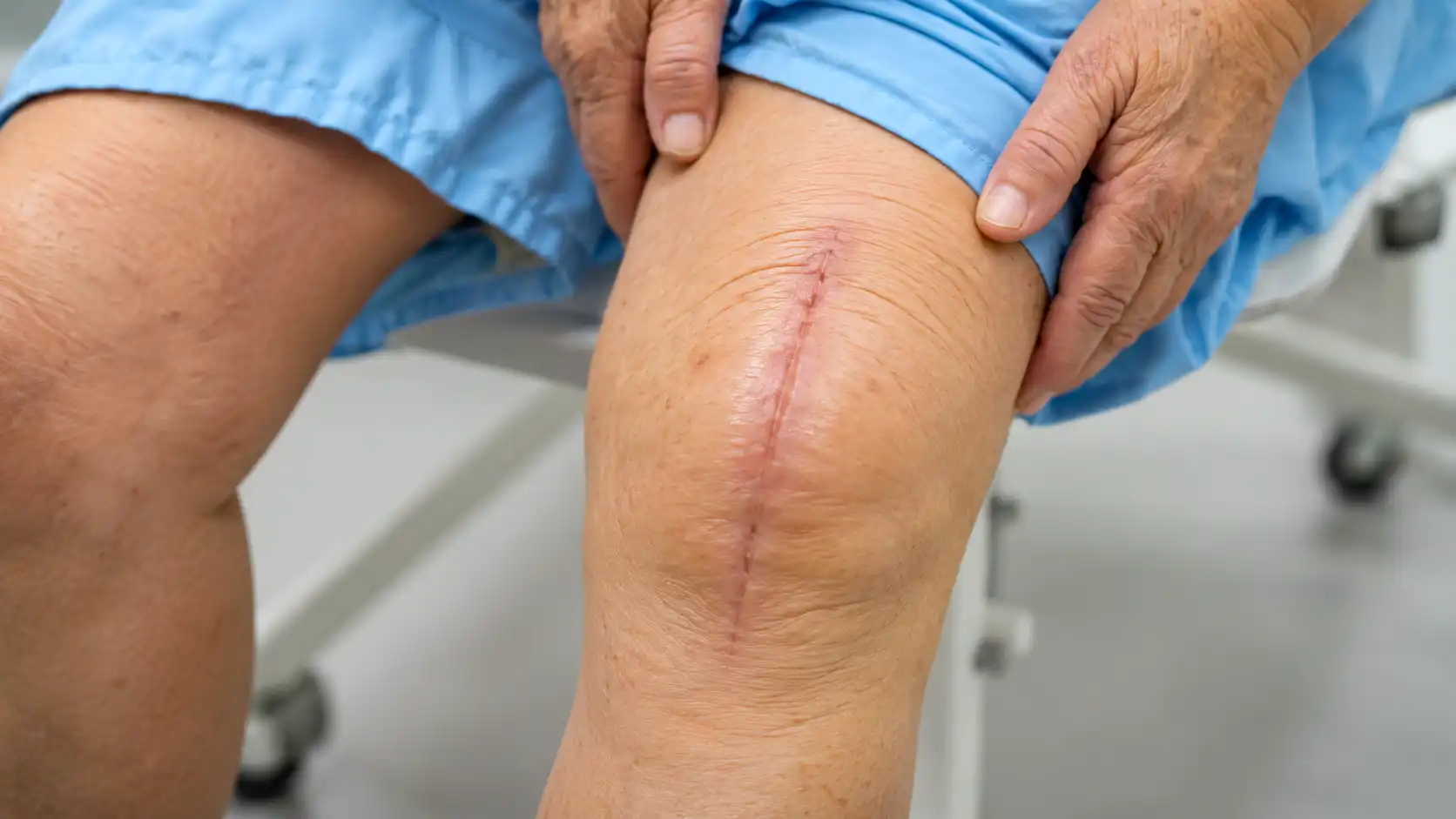
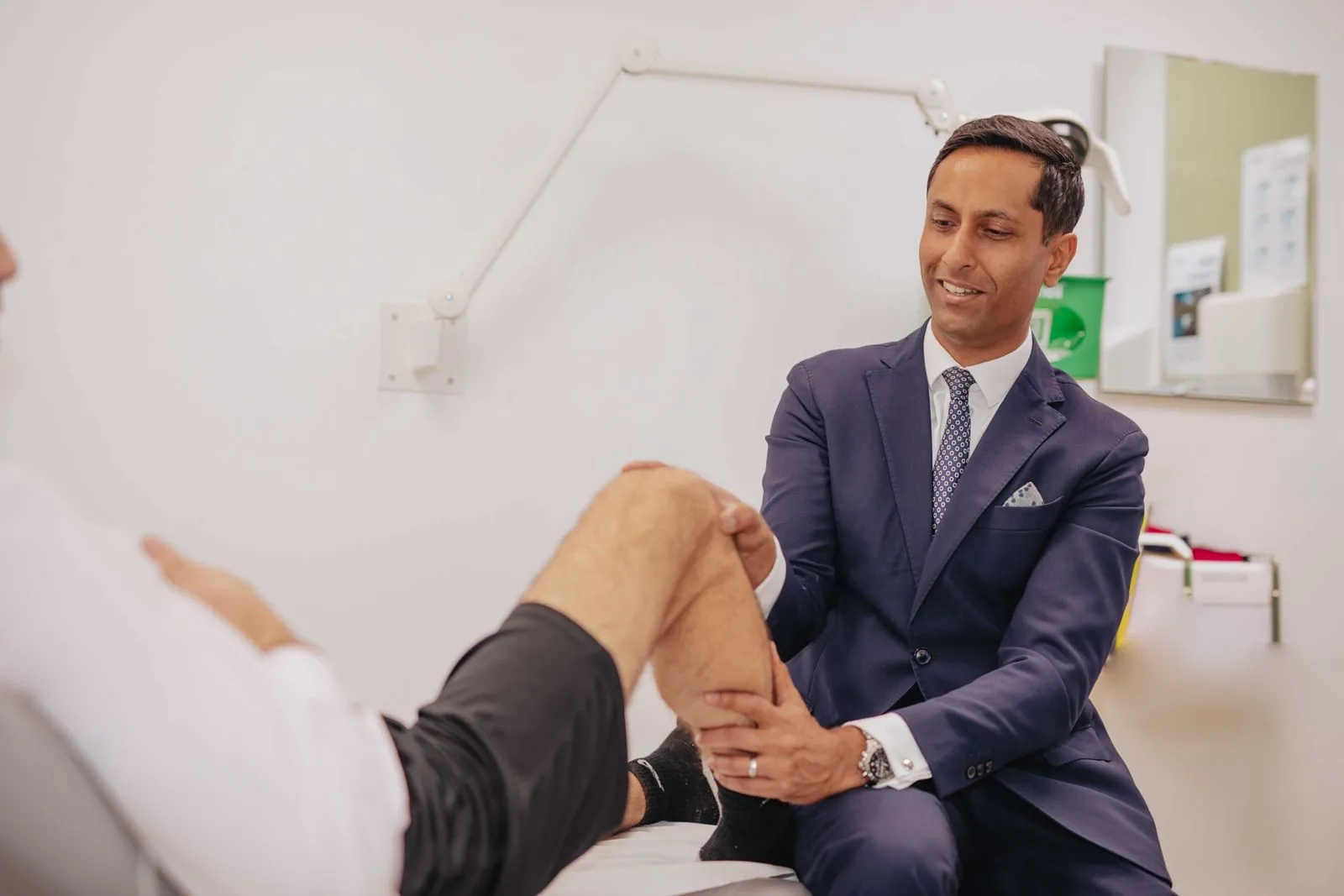
A knee surgeon consultation covers your history, an examination, any scans you need and a clear treatment plan, and it rarely ends with an automatic recommendation for surgery.
Booking a knee surgeon consultation can bring a mix of relief and nerves. Relief, because you are finally getting your knee looked at properly. Nerves, because many people assume the first appointment will end with a recommendation for surgery.
In reality, that is rarely how it goes. A first consultation is about listening, examining and understanding. We want to find out what is causing your symptoms, how much they affect your life and what the safest, most sensible next step is. Surgery is only part of the conversation if it truly suits you.
This guide takes you through each stage, from preparing for the appointment to leaving with a clear treatment plan, so you know what to expect before you walk in.
Preparing for Your First Visit
A little preparation helps us make the most of your time together, and it helps you feel more in control of the appointment.
What to Bring With You
Please bring the following with you:
- Any previous X-rays, MRI scans or ultrasound reports
- Any referral or clinic letters, including those from your physiotherapist
- A list of your current medications and any allergies
- Your knee brace, walking stick or special insoles, if you use them
These often tell us a great deal about how your knee is coping day to day.
What to Think About Beforehand
Before you arrive, spend a few minutes thinking about when your knee problem began and what triggered it, if anything. Notice what makes the pain better or worse, whether it is worse at night, and whether the knee swells, locks or gives way. Writing these points down is helpful, as small details often point us towards the diagnosis.
It also helps to decide what you want from treatment. Some people simply want to walk the dog without pain, while others want to return to football, running or skiing. Your goals shape our advice, so be clear about them. Wear shorts or loose trousers that roll up easily so we can examine the whole knee comfortably.
Step-by-Step Guide to What Happens During Your Knee Surgeon Consultation
Reviewing Your Medical History
We begin by talking. We ask about the type, duration and severity of your pain, and whether you have noticed swelling, stiffness, clicking, locking or a feeling that the knee gives way. We also want to understand how the problem affects your work, your sleep, your daily routine and any sport or hobbies you enjoy.
We then ask about past injuries, previous operations, your general health, any family history of joint problems and the treatments you have already tried. This part of the consultation is not a formality. In many cases, the history alone gives us a strong idea of what is going on before we even touch the knee.
The Physical Examination
Next, we examine the knee itself. We watch how you stand and walk, as your posture and the way you walk can reveal problems with alignment or weight distribution. We then check your range of movement, muscle strength and stability, and feel around the joint for tenderness and swelling. Fluid in the knee, known as an effusion, is something we look for carefully.
We may also carry out specific tests to assess the ligaments and cartilage. The Lachman test and the drawer test, for example, help us judge whether the anterior cruciate ligament (ACL) is working properly. Because pain felt in the knee can sometimes start elsewhere, we may also look at your hip, ankle, foot or lower back.
The examination should not be unduly painful. If something hurts, tell us and we will adjust what we are doing.
X-Rays, Scans and Other Tests
Many patients have a weight-bearing X-ray, which means the image is taken while you are standing. This gives a far more accurate picture of the joint space and alignment than an X-ray taken lying down, and it shows the bone structure and any signs of arthritis.
If we suspect damage to soft tissues such as the meniscus, cartilage or ligaments, we may recommend an MRI scan or ultrasound. An MRI is often arranged separately rather than done at the first visit. Blood tests are occasionally needed if we are considering an inflammatory or infective cause. We only request tests that will change what we advise, so you are not sent for scans you do not need.
Understanding Your Diagnosis
Once we have your history, examination findings and imaging, we explain what they mean in plain language. Where possible, we show you your own images, point out what is happening inside the joint and explain how this fits with the symptoms you have described.
Common diagnoses (see our knee conditions pages) include osteoarthritis, meniscal tears, ligament injuries, kneecap problems and tendon conditions. Each behaves differently. Some settle well with simple measures, while others need closer monitoring or an operation. We will tell you plainly what is causing your pain, how it is likely to progress and what could happen if it is left untreated.
If we need more information before giving a firm answer, we will say so and explain what the next step is. Please ask us to repeat or simplify anything that is unclear. A good diagnosis is one you fully understand, and we help you understand what it means for your daily life, not just what it is called.
Discussion of Treatment Options
Non-Surgical Treatment First
For most people, we begin with the least invasive options that have a reasonable chance of working. These may include targeted physiotherapy, activity modification, weight management, pain relief or anti-inflammatory medication, and joint injections. Many knee problems improve well with this approach, and plenty of patients never need an operation.
We will explain what each option involves, how long it should take before you notice a difference and what we will do if it does not help.
When Surgery May Be Recommended
Surgery becomes part of the conversation when non-surgical treatment has not worked, when an injury needs repair to restore stability, or when arthritis is significantly limiting your life. Depending on your diagnosis, options might include keyhole surgery (arthroscopy), ligament reconstruction, partial knee replacement or total knee replacement. Mr Raghbir Khakha takes a joint preservation approach, so we look at ways to protect your own joint wherever that is the right choice. You can see the full range on our knee treatments page.
For any operation we discuss, we explain what it involves, the likely benefits, the risks and the realistic recovery timeline. No operation can promise a perfect result, and we believe you should hear that clearly before making any decision. Surgery should only go ahead when you feel informed and comfortable with it.
Personalised Treatment Planning
The right plan is the one that fits you. Two people with similar scan findings can need very different treatment, depending on their age, activity level, job, general health and personal goals. We take all of this into account and agree a plan together.
Your plan will set out what we recommend first, how we will measure whether it is working and what happens if it is not. If you decide to proceed with surgery, we arrange a pre-operative assessment to confirm you are fit for the procedure. You will also be told what to expect afterwards, including pain control, physiotherapy and when you may return to work, driving and exercise.
You are never rushed into a decision. If you would like time to think, or want to talk it through with family, that is entirely reasonable.
What You Should Ask Your Knee Surgeon
Having a few questions ready makes the appointment far more useful. It is also useful to ask about the risks and benefits of each treatment, how long recovery usually takes, and when you could realistically return to work or sport. A few questions to have ready:
- What exactly is causing my knee problem?
- Do I need surgery, or are there other options to try first?
- What are the risks and benefits of each treatment?
- How long will recovery take, and when can I return to work or sport?
- What is likely to happen if I wait or choose not to have treatment?
Another valuable question is what is likely to happen if you wait or choose not to have treatment. Some knee problems are stable and can be monitored, while others can worsen over time, and knowing which applies to you helps you decide.
Do not worry about asking too many questions. A good surgeon expects them and welcomes them.
When Should You Seek a Knee Specialist Consultation?
It is sensible to see a knee specialist if your pain has lasted more than a few weeks, keeps coming back or is gradually getting worse. The same applies if your knee swells repeatedly, locks, clicks painfully or gives way when you put weight on it. Pain that disturbs your sleep or limits your work and daily activities is another good reason to get checked.
Some knee symptoms are fairly harmless, such as mild stiffness after sitting for a long time or a short-lived ache after unusual exercise that settles within a few days. Others deserve prompt attention. These include:
- Sudden swelling after an injury
- Being unable to straighten or bend the knee fully
- Being unable to put weight on the leg
Get in touch with us the same day if your knee becomes hot, red and swollen, especially if you also have a fever or feel generally unwell, as this can be a sign of infection.
If you are unsure whether your symptoms need a specialist, contact us and we can assess this quickly and guide you on the next steps.
Why Choosing the Right Knee Surgeon Matters
Your knee surgeon shapes your diagnosis, your treatment and your confidence in every decision that follows. A specialist who focuses on knees sees these problems every day, which makes a real difference when your symptoms do not fit a clear-cut pattern. You can read more about London Knee Care and how we work.
Just as important is how you are treated. You should feel heard, informed and free to ask questions. Look for a consultant who explains things clearly, is open about risks and limitations, and is willing to recommend non-surgical care when that is the better choice. Experience matters, but so does the feeling that your surgeon is advising you based on your needs and not on one preferred treatment.
Book a Knee Surgeon Consultation at London Knee Care
Mr Raghbir Khakha is a Consultant Orthopaedic and Specialist Knee Surgeon at London Knee Care in London. He has been in consultant practice since 2017 and takes a joint preservation approach to knee care. His areas of focus include meniscal tears, sports injuries such as ACL and PCL injuries, and young knee preservation.
If knee pain is affecting your life, you do not have to wait for it to get worse. At London Knee Care, we take the time to understand your symptoms, examine your knee and explain your diagnosis clearly. You leave knowing what is wrong, what your options are and what we recommend next.
To arrange a consultation, contact us, or get in touch if you would like to ask a question first. If your knee becomes hot, red and swollen, you cannot put weight on it, or it locks, get in touch with us the same day.
45 Queen Anne Street, London W1G 9JF
Phone: 020 7046 8008
Email: rk@os.clinic
Frequently Asked Questions About Knee Surgeon Consultation
How Long Does a Knee Surgeon Consultation Take?
The length depends on how much we need to discuss and whether imaging is done on the day. We prefer not to hurry, so you have time to ask everything you want to, and you can ask us for a time estimate when you get in touch.
Will I Need Surgery After My First Appointment?
Not necessarily. Many patients are advised to try non-surgical treatment first, such as physiotherapy, medication or injections. We only recommend surgery when it is likely to help and other options have not worked or are unsuitable.
Do I Need a Referral to See a Private Knee Surgeon?
In many cases you can book directly with us, though some insurers ask for a referral letter before they will cover the cost. It is worth checking your policy beforehand. Please bring any letters or scan reports you already have.
Will I Have an MRI Scan on the Day?
We can usually arrange an X-ray as part of your visit, while an MRI is often booked separately. We only recommend an MRI if it will help us reach a clearer diagnosis or plan treatment.
Is the Knee Examination Painful?
It should not be. Some tests may cause brief discomfort if your knee is already sore, but we go gently and stop whenever you need us to.
This article is general information and does not replace a personal assessment. If you are worried about your knee, please get in touch with us and we will arrange your assessment.