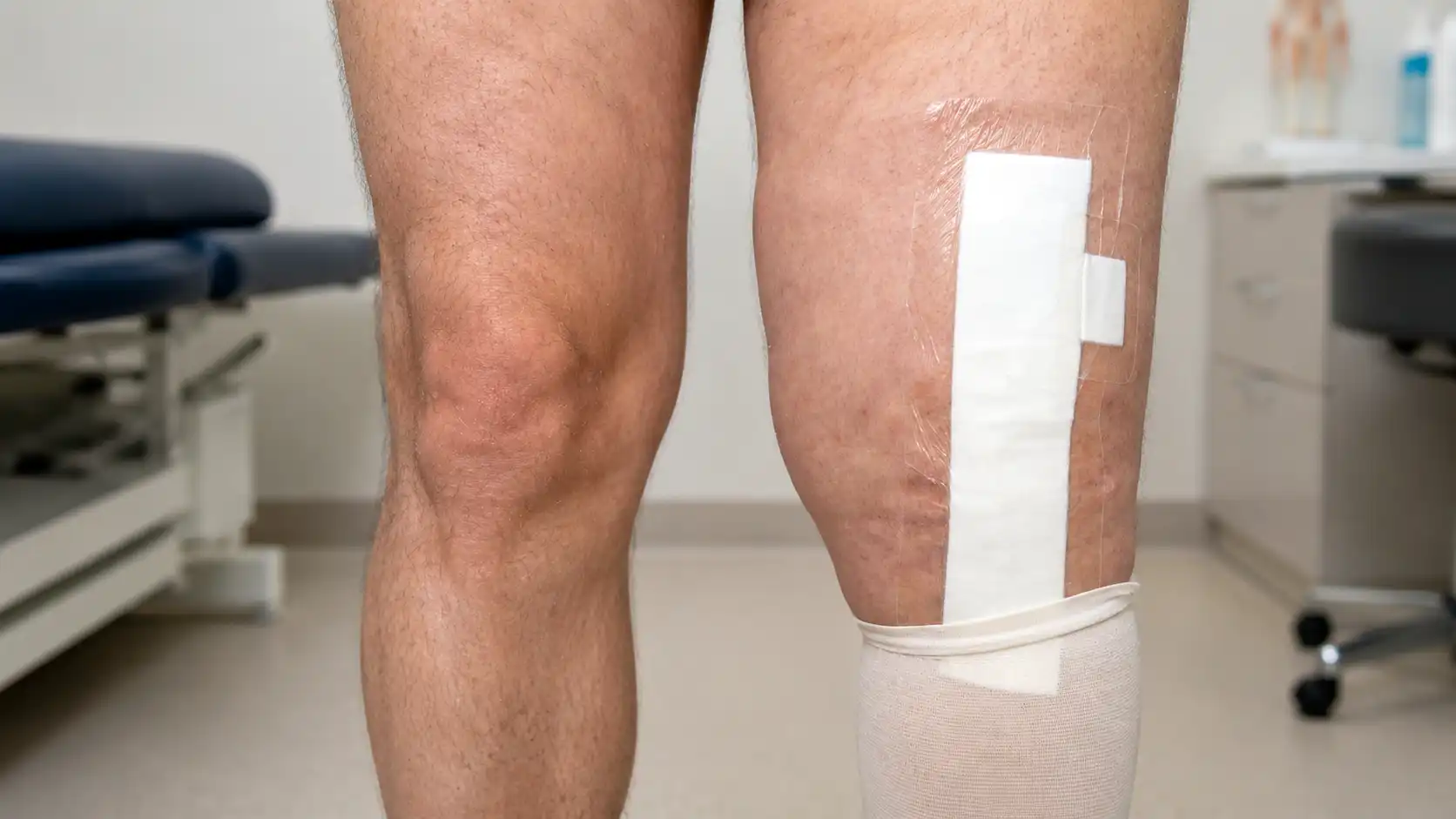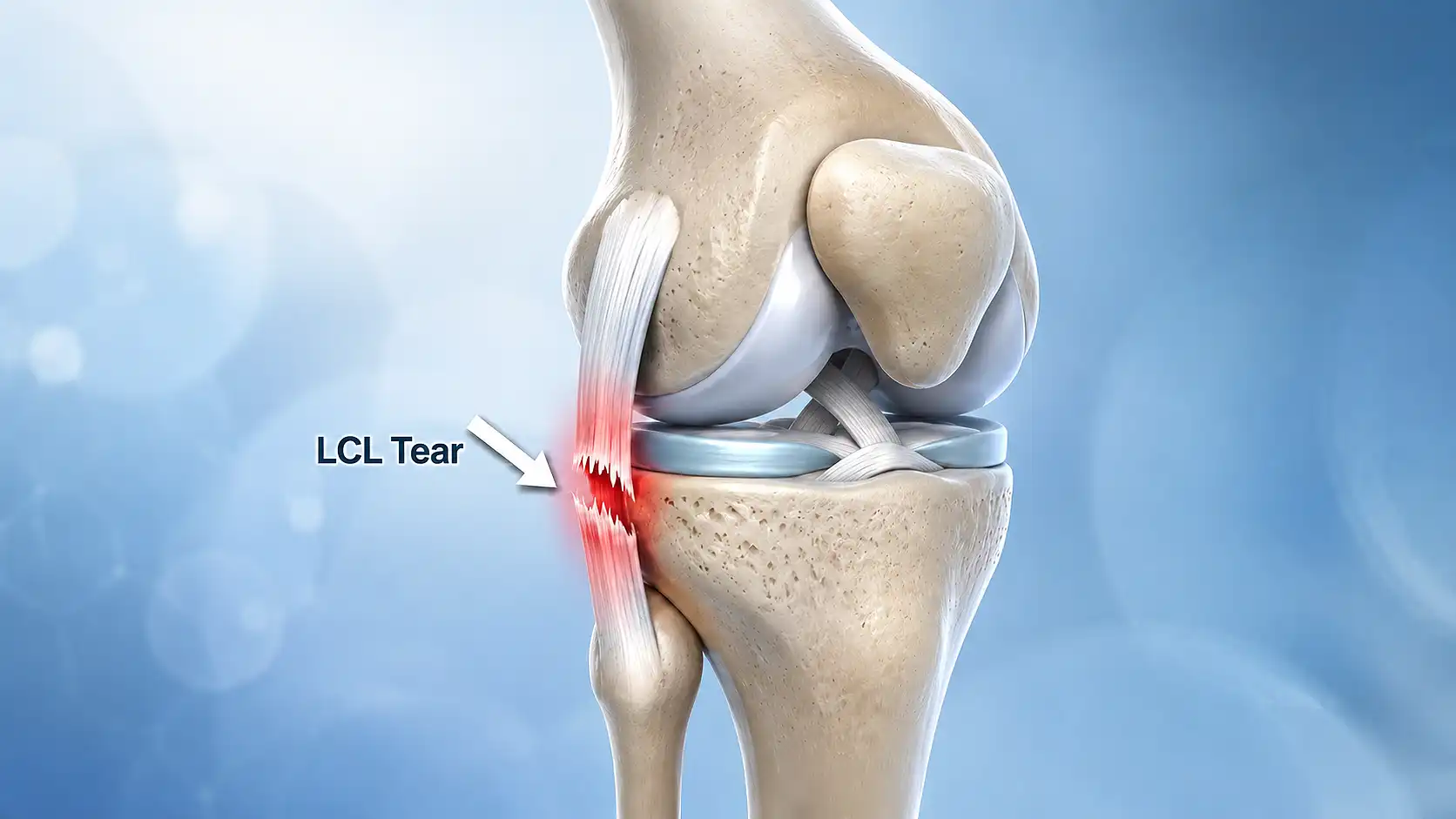

If your knee gave way during a game, or twisted awkwardly during a run, you are probably searching for one thing right now. You want to know if this is serious. The symptoms of torn ACL injuries can feel frightening in the moment, but understanding what is actually happening inside your knee is the first step to getting the right help.
What are ACL tears, exactly? Your anterior cruciate ligament, or ACL, is one of the main ligaments that keeps your knee stable. It sits deep inside the joint and stops your shin bone from sliding too far forward under your thigh bone. Ruptured ACL symptoms, sometimes described as a ruptured ACL in knee injuries from sport or sudden twists, are among the most common reasons people end up seeing a knee specialist, and the good news is that most people recover well once they understand their injury and get the right treatment plan.
This guide walks you through what a torn ACL actually feels like, how to tell the difference between a mild sprain and a complete rupture, and when you should book in with a specialist rather than waiting it out.
What Is a Ruptured ACL and Where Is the Ligament Located
Your knee is held together by four main ligaments. Two sit on the sides of your knee, and two cross over each other deep inside the joint. The ACL is one of these inner ligaments, and it forms an X shape with its partner, the posterior cruciate ligament, just behind it.
Where is the ACL ligament exactly? It runs diagonally from the back of your thigh bone to the front of your shin bone, right in the centre of your knee. You cannot feel it from the outside, which is part of why an ACL injury can be confusing. The pain you feel is not always where the actual damage is.
What is a ruptured ACL in simple terms? It means the ligament has been stretched beyond its limit and has torn, either partially or completely. Because the ACL controls how much your shin bone can shift forward, a tear leaves your knee feeling loose and unstable, particularly during twisting or pivoting movements.
Signs of a Torn ACL You Should Not Ignore
Most people who tear their ACL know something significant has happened. Signs of a tore ACL, or symptoms of tearing your ACL more generally, tend to be sudden and unmistakable rather than something that creeps up slowly over weeks.
The most commonly reported sign is a popping sound knee injury at the exact moment it happens. Many people describe hearing or feeling a distinct pop or snap deep in the knee. This is not universal though, so if you did not hear a pop, it does not rule out a torn ligament. Torn ACL symptoms knee presentations vary quite a bit between people, and the absence of a dramatic sound does not mean your injury is minor. Some people also describe symptoms of torn ACL ligament damage appearing gradually over the following hours rather than all at once.
Knee Gives Way and Why It Happens
If your knee gives way, it means it suddenly feels like it cannot support your body weight, almost like the joint is buckling beneath you. This is one of the clearest signs that something inside the knee, often the ACL, is no longer doing its job properly.
Reasons for knee giving way usually come down to the ligament no longer controlling the normal movement of the joint. Without the ACL working properly, your shin bone can shift slightly out of position during certain movements, which your brain interprets as instability. This is particularly common when walking knee gives out on uneven ground, on stairs, or when you try to change direction quickly.
Where the Pain Sits and What It Tells You
ACL tear pain is usually felt deep within the knee rather than on the surface. Acl tear pain site and acl tear location both point to the same general area, the centre of the joint, though pain can sometimes radiate slightly to the sides depending on whether other structures were also affected.
Immediate pain is common, but it is worth knowing that it does not always stay severe. Many people find the sharp pain eases within a few days, even though the underlying ligament damage has not healed. This is one of the more confusing parts of an ACL injury, because feeling better does not mean the joint is stable again.
Swelling and Instability After the Injury
Knee swelling after injury is extremely common with ACL tears. Around seven in ten people notice their knee swell up within a few hours, caused by bleeding inside the joint from the torn ligament. The knee often looks visibly puffier than your other knee and may feel warm to the touch.
Knee instability after injury, alongside the swelling, is what tends to worry people most. You might also notice your knee feels unstable even at rest, almost like it cannot be trusted to hold your weight. Can you walk with a torn ACL? Often yes, particularly once the initial swelling has settled, though many people describe a nagging sense that the knee could give way at any moment, especially on stairs or uneven surfaces. Not everyone experiences obvious swelling either, and acl tear symptoms no swelling cases do happen, particularly with smaller partial tears.
How to Tell If Your Knee Injury Is Serious
Not every knee twist means a torn ACL, and not every torn ACL needs surgery straight away. Still, certain patterns tend to point toward a more significant injury that deserves prompt attention rather than a wait and see approach.
A combination of symptoms usually tells us more than any single sign on its own. If you heard or felt a pop, your knee swelled up within a few hours, and it now feels like it could give way during ordinary movements, this pattern is far more consistent with a complete tear than a mild sprain. On the other hand, if your knee feels a little sore and slightly swollen but generally stable when you walk, this leans more toward a partial tear or a different, less significant injury altogether.
A few signs in particular suggest your injury needs prompt assessment rather than home rest alone.
- Your knee gave way more than once, even during gentle movement
- Swelling came on quickly and made it hard to bend or straighten your knee fully
- You cannot put your full weight through the leg without your knee feeling unstable
- The instability has continued for more than a week rather than settling down
- You also heard a pop and felt immediate, significant pain at the time of injury
If several of these apply to you, it is worth getting your knee properly assessed rather than waiting to see if it improves on its own.
It is worth being honest that symptoms alone cannot tell you for certain whether your ACL is partially or completely torn, or whether other structures like your meniscus are also involved. They can give you a reasonable sense of how urgently you should seek help, but a proper diagnosis really does need a hands on examination and, in most cases, an MRI scan to confirm exactly what has happened inside your knee.
How Do You Tear Your ACL
Understanding how do you tear your ACL helps make sense of why this injury happens so often in sport, and why it can sometimes happen even without contact from anyone else.
ACL injury causes generally fall into a few common patterns. A twisting knee injury is the most frequent cause, where your foot stays planted on the ground while your body continues to rotate. A pivoting knee injury follows a similar pattern, often seen when changing direction suddenly at speed. Landing awkwardly from a jump with your knee straight can also place enough force through the ligament to tear it.
ACL tear sports injury cases are particularly common in football, netball, skiing, and basketball, sports that involve frequent stopping, starting, and changing direction. It is worth knowing that women are statistically more likely to tear their ACL than men in equivalent sports, largely due to differences in knee anatomy and muscle activation patterns rather than any lack of fitness or technique.
How Severe Is Your ACL Tear
Not every ACL tear is the same, and the severity makes a real difference to your treatment and recovery.
ACL tear grades are used to describe how much damage has occurred. A grade 1 injury means the ligament has been stretched but still holds the knee together reasonably well. A grade 2 injury means the ligament is partially torn and noticeably loosened. A grade 3 injury means the ligament has torn completely into two separate pieces and can no longer provide any meaningful stability on its own.
Partial ACL tear symptoms tend to be a little more mixed, sometimes with milder instability and less dramatic swelling, though this is not always the case. Complete ACL tear symptoms usually involve more obvious instability, particularly during pivoting movements, since there is no intact ligament left to resist that motion at all.
People often ask about ACL sprain vs tear as if these are different injuries, but a sprain is simply an older or more general term for ligament damage, while grading gives a more precise picture of how much of the ACL itself has been affected.
ACL Tear or Something Else
Because several structures sit close together inside the knee, it is genuinely difficult to tell different injuries apart without a proper assessment.
ACL tear vs meniscus tear confusion is extremely common, partly because the two injuries often happen together. Around half of people with an ACL tear also damage their meniscus, the cushioning cartilage inside the knee. Meniscus tears tend to cause more clicking, catching, or a sensation of something physically blocking movement, while ACL tears are more associated with a feeling of the knee giving way.
ACL vs MCL injury symptoms can also overlap, since both cause significant swelling and pain. The difference between ACL and meniscus injury, and indeed MCL injury, usually comes down to the exact mechanism of injury and where the pain and tenderness are most concentrated, which is something we assess carefully during your consultation rather than something you need to work out yourself.
How We Diagnose an ACL Tear
Getting an accurate diagnosis matters because the right treatment depends entirely on knowing exactly what has been damaged.
How is ACL tear diagnosed at our London Knee Care clinic?
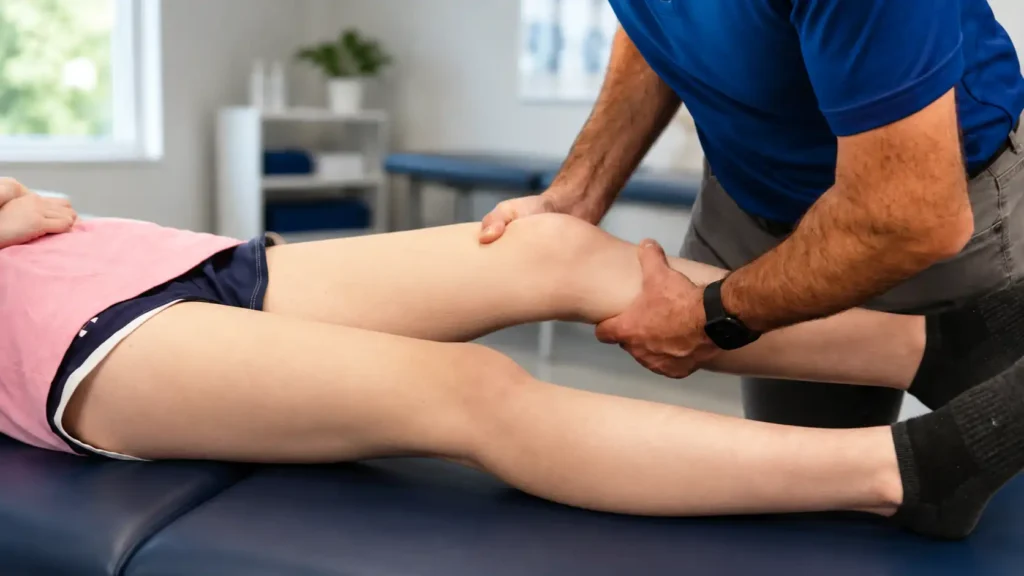
We start with a detailed conversation about how the injury happened, followed by a hands on examination. The Lachman test is one of the main physical tests we use, where we gently move your shin bone forward relative to your thigh bone to feel how much the ACL is restraining that movement. It is one of the most reliable tests available, and most patients find it more uncomfortable in anticipation than in reality.
We will usually arrange an ACL tear x-ray first, mainly to rule out any fracture, since ligaments themselves do not show up on X-rays. An ACL tear MRI gives us a much clearer picture of the ligament itself, along with the meniscus and cartilage, and helps confirm exactly how severe the tear is before we discuss your options.
Treatment and Recovery After an ACL Tear
Treatment for an ACL tear is not one size fits all, and what is right for you depends on your age, activity level, and how unstable your knee feels.
ACL tear treatment without surgery is a genuinely valid option for many people, particularly those who are less active or willing to adjust their lifestyle slightly. This usually starts with physiotherapy for ACL tear rehabilitation, focused on rebuilding strength around the knee so the surrounding muscles can help compensate for the missing ligament support.
For people who want to return to sports involving pivoting and cutting, ACL reconstruction surgery is often recommended. This involves replacing the torn ligament with a graft, usually taken from your own hamstring tendon, to restore proper stability to the joint. It is worth knowing that this is not a same day fix. ACL tear recovery time typically runs between six and nine months, sometimes longer for competitive athletes who need to return to full intensity training.
ACL surgery recovery time UK patients can expect follows a similar pattern to international guidance, though private treatment often means faster access to your initial assessment, scan, and surgery date compared with typical NHS waiting times. This does not change how long your body needs to heal, but it does mean less time spent waiting anxiously for answers.
If we recommend treatment options at our clinic, they typically include the following.
- A thorough assessment and MRI to confirm the diagnosis and severity of your tear
- A structured physiotherapy programme, whether or not surgery is needed
- ACL reconstruction using a hamstring graft for patients wanting to return to pivoting sports
- A guided rehabilitation plan with clear milestones before returning to activity
Your consultant will talk you through which of these applies to your specific knee and goals.
Expert ACL Care at London Knee Care
Living with the symptoms of torn ACL injuries, the instability, the swelling, the constant worry about your knee giving way again, can affect far more than just sport. It can knock your confidence in everyday activities too. Left without proper treatment, the side effects of torn ACL injuries can include further damage over time, including a higher risk of meniscus tears and early wear in the joint, so getting it assessed properly is about protecting your knee for the long run, not just getting back to sport.
As your ACL specialist London patients trust, we offer prompt assessment, the right scans at the right time, and a treatment plan built around your specific injury and lifestyle, not a generic protocol. Mr Raghbir Khakha leads our clinic with over fifteen years of specialist experience in ligament reconstruction, and he takes the time to explain exactly what has happened in your knee and what your realistic options are.
Whether you need ACL injury treatment London based athletes rely on for a fast return to sport, or you are simply looking for private ACL surgery London appointments without a long wait, we are here to help. As a knee ligament specialist London team, we also treat MCL, LCL, and PCL injuries, so if your injury turns out to involve more than just the ACL, you are already in the right place.
You can book your consultation directly through our online booking page, or get in touch with our team through our contact page if you would like to discuss your symptoms first.
Frequently Asked Questions About Torn ACL Symptoms
How serious is a torn ACL?
A torn ACL is a significant injury, but it is rarely a medical emergency in the way a fracture or true joint dislocation can be. Most people recover well with the right treatment, whether that is physiotherapy alone or reconstruction surgery. The seriousness usually relates more to how it affects your activity goals than an immediate threat to your health.
Can a torn ACL heal itself?
A complete ACL tear has very limited ability to heal on its own, since the ligament sits in fluid that does not support normal healing. Some partial tears respond well to rest and rehabilitation alone. For complete tears, newer research using specific bracing protocols has shown promising healing on MRI scans in some patients, though the regrown ligament is not always as strong as the original, and a significant number of people who try this route still go on to need surgery later if the knee remains unstable. Most people will need either guided rehabilitation or surgery to regain full stability, and this is best decided together with your consultant based on your scan and activity goals.
Do you need surgery for a torn ACL?
Not always. Surgery is generally recommended for younger, more active patients who want to return to sports involving pivoting and cutting. Older or less active patients may do well with physiotherapy alone, particularly if they are willing to modify high risk activities. This decision is always made together with your consultant based on your specific situation.
How long does it take to walk after ACL tear?
Many people can walk again within one to two weeks once the initial pain and swelling have settled, particularly with crutches in the first few days. Walking in a straight line places relatively little strain on the ACL. Activities like pivoting, twisting, or walking on uneven ground tend to be more difficult until the knee is properly rehabilitated.
Can you tear your ACL without a pop?
Yes. While a pop or snap is commonly reported, its absence does not rule out an ACL tear. Some people feel very little at the moment of injury and only notice problems later when their knee starts giving way during activity.
Can you feel an ACL tear?
Yes, most people feel something at the moment of injury, ranging from a sharp pain to a distinct popping sensation deep in the knee. The intensity varies a lot between individuals, and some people describe more of a strange shifting feeling than outright pain.
Can you tear your ACL without knowing?
It is possible, particularly with smaller partial tears. Some people carry on with sport or daily activity for days or even weeks before realising their knee is not behaving normally, often only seeking help once they notice repeated episodes of the knee giving way.
Is a torn ACL an emergency?
A torn ACL on its own is not usually considered a medical emergency. However, if your knee looks severely deformed, you cannot bear any weight at all, or you have signs of a fracture, you should seek urgent medical attention rather than waiting for a routine appointment.