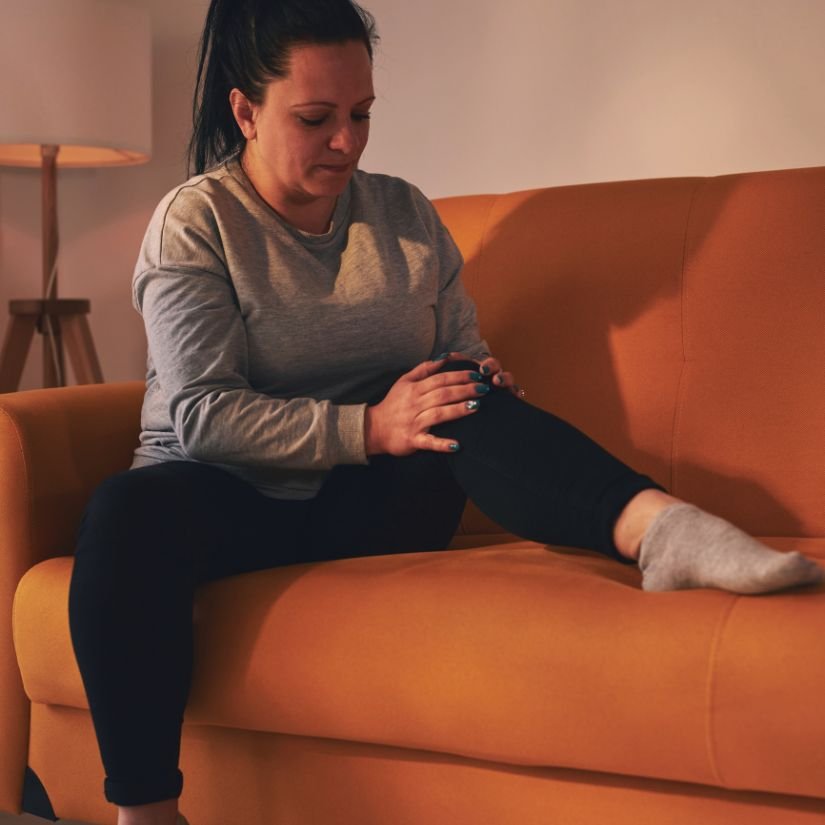
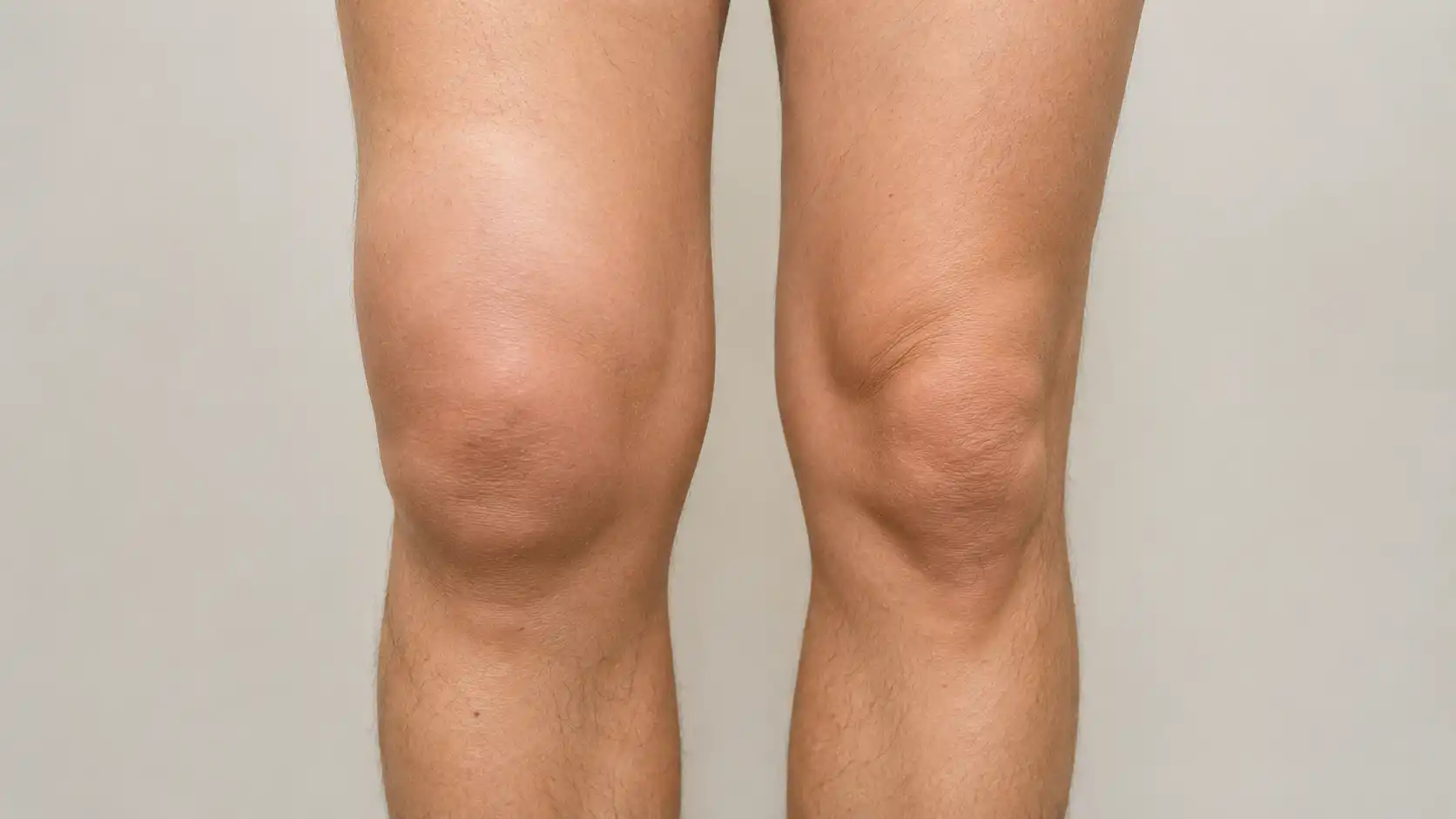
If your knee swells up after walking, you are not alone. Knee swelling is one of the most common complaints we see at our clinic. It can be alarming, especially when it seems to appear out of nowhere. Sometimes the knee swelled up and hurts. Other times it puffs up but feels fine. Either way, swelling is your knee’s way of telling you something is not quite right inside the joint.
The good news is that most causes of knee swelling are treatable. Understanding why your knee swells after walking is the first step toward getting the right help. This guide explains the most common causes, what your symptoms might mean, how to manage swelling at home, and when it is time to see a knee specialist in london.
Why Does Your Knee Swell in the First Place
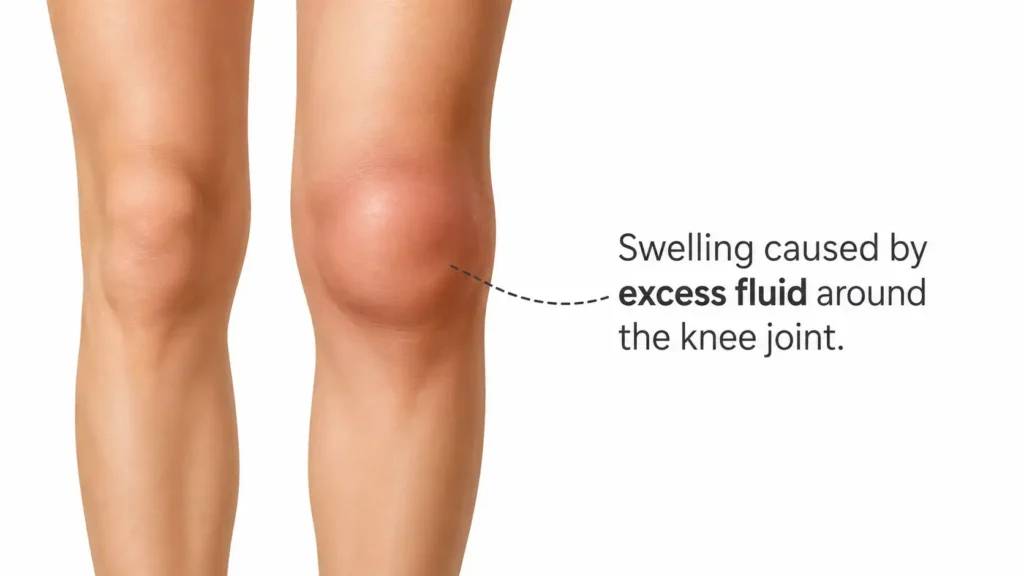
To understand knee swelling, you first need to know a little about how the knee works. Your knee joint is surrounded by a thin lining called the synovial membrane. This lining produces a small amount of fluid that keeps the joint moving smoothly. When something irritates or damages the knee, this lining goes into overdrive and produces too much fluid. That excess fluid builds up inside or around the joint, causing the swelling you can see and feel.
This build up of fluid is sometimes called knee effusion, or more commonly, water on the knee. It is not actually water but rather a natural fluid your body produces in response to irritation, injury, or inflammation.
Why Does My Knee Swell Sometimes But Not Always
This is a question we hear very often. The knee may swell after a long walk one day but feel perfectly fine the next. This usually means the joint is being pushed past its comfortable limit on some days but not others. The amount of swelling often depends on how long you walked, the surface you walked on, your footwear, and the underlying condition causing the sensitivity in the first place. Swelling that comes and goes is still worth investigating because it usually means something inside the joint needs attention.
Common Causes of Knee Swelling
Knee swelling for no reason can feel confusing and frustrating. But there is always a reason, even if it is not obvious straight away. Here are the most common causes we see.
Osteoarthritis and Knee Swelling
Osteoarthritis is one of the leading causes of knee swelling, particularly in people over 40. When the cartilage inside the knee wears down, the joint becomes irritated and produces extra fluid. You might notice the knee feels puffy after activity and stiff first thing in the morning. Do knees swell with osteoarthritis? Yes, very commonly, and this swelling tends to build up gradually over time rather than appearing suddenly.
Water on the Knee and What It Means
Water on the knee is a term people use to describe excess fluid collecting inside the joint. It can make the knee look noticeably larger than the other one. The skin around the kneecap may feel tight and puffy. You might struggle to fully bend or straighten your leg. This build up of fluid, or knee swelling with fluid, is the body’s response to damage or inflammation inside the joint and will keep coming back until the underlying cause is addressed.
Meniscal Tears and Knee Swelling
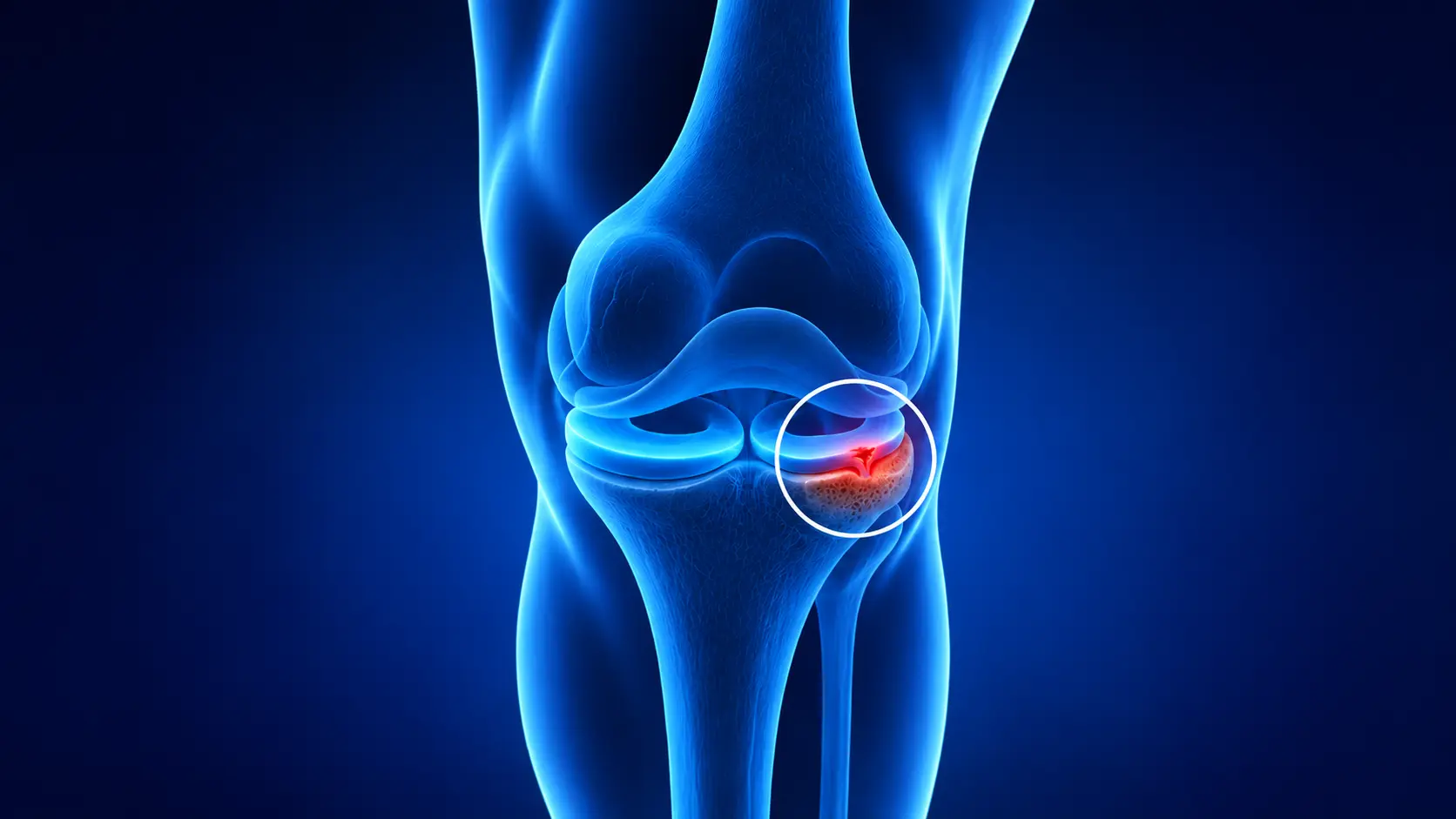
Can a torn meniscus cause swelling in the knee? Yes, absolutely. The meniscus is a piece of cartilage that acts as a cushion between the bones in your knee. When it tears, it triggers an inflammatory response that leads to fluid build up inside the joint. Can a torn meniscal tear cause fluid on the knee? Yes it can, and this type of swelling often appears within a few hours of the injury or activity that caused the tear. You may also notice clicking, locking, or a feeling that the knee is giving way.
Knee Swelling After Running and Exercise
Why does your knee swell after running or exercise? Repeated impact from running places significant load on the knee joint. If the joint is already slightly irritated, or if you have increased your activity level too quickly, the lining of the knee responds by producing more fluid. Why does your knee swell after exercise more generally? The same principle applies to any high impact or repetitive activity. The knee is being asked to do more than it is currently comfortable handling, and swelling is the signal it sends back.
Knee Bursitis and Swelling on the Side of the Knee
Swelling knee bursitis is another common cause. Bursae are small fluid filled sacs that sit around the knee joint and reduce friction between tissues. When they become irritated or inflamed, they swell up and cause localised pain and puffiness. Knee swelling on the side of the joint is often linked to bursitis or to a problem with the ligaments running along the inner or outer side of the knee. This type of swelling tends to feel more tender to touch in a specific spot rather than being spread across the whole joint.
Knee Swelling With No Pain
Knee swelling no pain is a situation that confuses many patients. If the knee is puffy but does not hurt, it can be tempting to ignore it. However, painless swelling still means excess fluid is present inside or around the joint. Some conditions, particularly early stage osteoarthritis and certain inflammatory conditions, can cause fluid build up before significant pain develops. Painless swelling that persists for more than a week or two should still be assessed by a specialist.
Knee Swelling for No Obvious Reason
Why would a knee swell without injury? This is more common than people think. Many patients come to us saying their knee just started swelling without any fall, twist, or accident. The most likely explanations are gradual cartilage wear, an inflammatory condition such as gout or early rheumatoid arthritis, or overuse from daily activities that have slowly accumulated over time. What causes knee swelling and tightness together is often the same process — fluid build up combined with the surrounding tissues tightening in response to inflammation.
Knee Swelled Up and Hurts — What Does It Mean
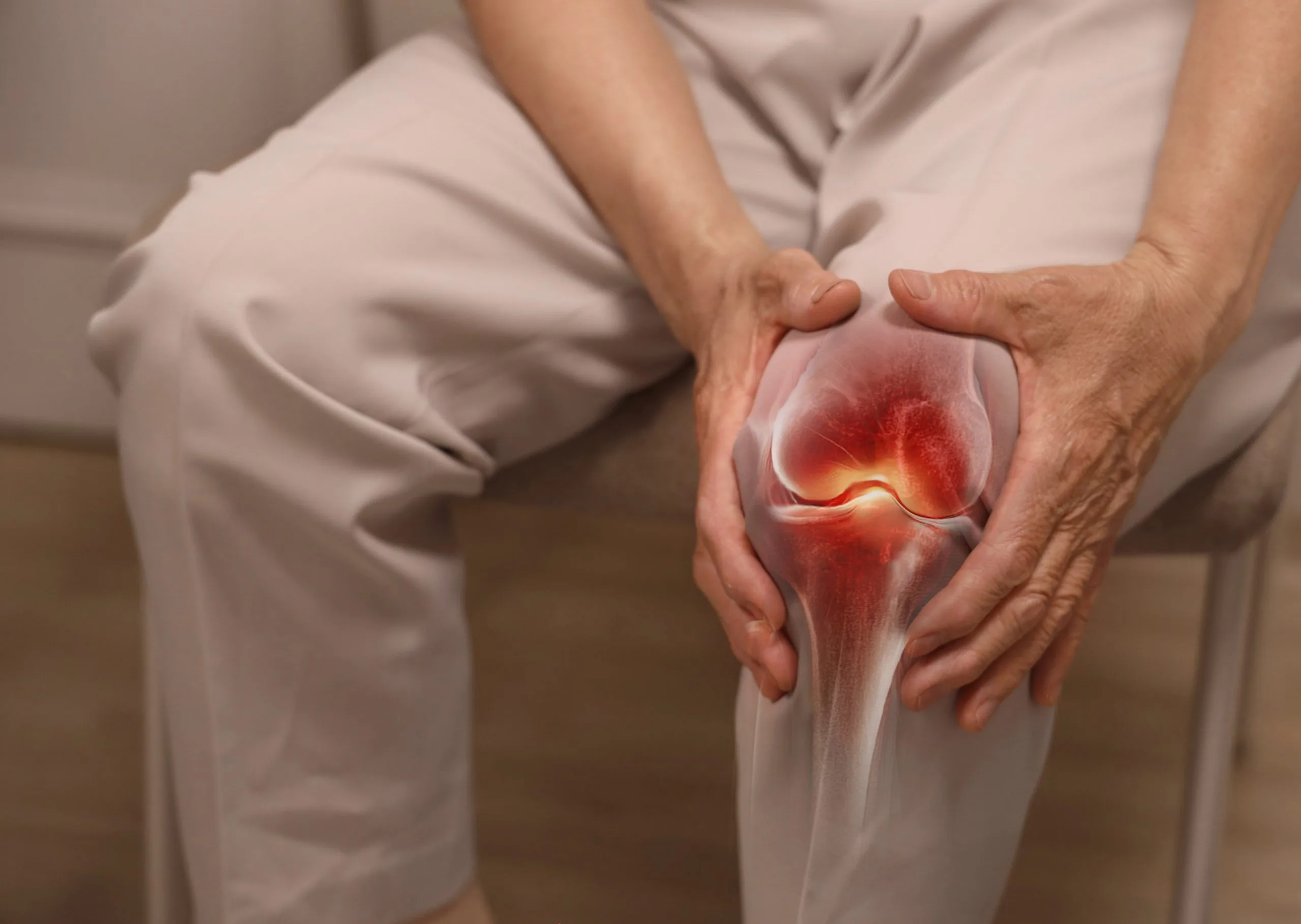
When the knee swells up and hurts at the same time, it usually means there is both structural damage and active inflammation happening together. Pain alongside swelling narrows down the possible causes and makes specialist assessment more important. The combination often points toward a ligament injury, a meniscal tear, a flare up of arthritis, or an inflammatory joint condition. The pattern of pain matters too. Pain that is worse first thing in the morning suggests inflammation. Pain that builds during or after walking suggests a mechanical or structural problem.
What Causes Knee Swelling and Tightness Together
When the knee swells, the excess fluid increases pressure inside the joint. This pressure is what creates the feeling of tightness or tension that many patients describe. It can make it difficult to fully bend the knee or feel comfortable sitting for long periods. Knee swelling after sitting can also make the joint feel particularly stiff when you first stand up, which then eases off after a few minutes of moving around.
What Is Knee Effusion and How Does It Differ From General Swelling
Knee effusion is the medical term for fluid collecting specifically inside the knee joint capsule. General knee swelling can also include swelling in the soft tissues around the outside of the joint. Knee effusion causes include osteoarthritis, ligament injuries, meniscal tears, gout, infection, and inflammatory arthritis. The difference matters because fluid inside the joint often needs to be drained or treated differently from swelling in the surrounding soft tissues. A specialist can tell the difference through a physical examination and, if needed, an ultrasound or MRI scan.
Treatment for Water on the Knee
Treatment for water on the knee depends entirely on what is causing it. Simply draining the fluid without addressing the underlying cause means it will return. Here is how we approach treatment depending on the situation.
When Home Treatment Is Not Enough
Home management has its limits. If your knee swelling keeps coming back, does not settle within a week or two, or is accompanied by significant pain, warmth, or redness, it needs professional assessment. Persistent knee swelling that is not addressed tends to worsen over time and can lead to further joint damage. Treatment at this stage may include physiotherapy, joint injections such as Arthrosamid for osteoarthritis-related swelling, aspiration to drain the fluid, or surgical intervention depending on the underlying cause.
How Long Should Knee Swelling Last
Mild swelling from overactivity or a minor irritation typically settles within a few days with rest and home care. Swelling linked to a more significant injury or an underlying condition such as arthritis may take several weeks to reduce, and may return without proper treatment. If your swelling has not improved after two weeks of rest and home management, or if it is getting worse rather than better, it is time to seek a specialist opinion.
Knee Swelling on the Side — What It Usually Means
Swelling specifically on the inner or outer side of the knee is a slightly different presentation from general joint swelling. Knee swelling on the side most commonly points toward a ligament injury, bursitis, or a meniscal tear on that side of the joint. Inner side swelling often involves the medial collateral ligament or the medial meniscus. Outer side swelling may relate to the lateral ligament, the IT band, or the lateral meniscus. Identifying the exact location of swelling helps our specialist narrow down the cause quickly during assessment.
When Should You See a Knee Specialist About Knee Swelling
Many people manage knee swelling at home for weeks or months before seeking help. While mild swelling after a particularly long walk is not always a cause for alarm, there are clear signs that tell you it is time to get a proper assessment rather than waiting it out.
You should see a specialist if:
- Your knee swelling has not settled after two weeks of rest and home care
- The swelling keeps coming back after activity
- Your knee swelled up and hurts significantly
- The joint feels hot, looks red, or you have a fever alongside the swelling
- Your knee locks, clicks loudly, or gives way
- You cannot fully straighten or bend your knee
- Swelling appeared after a fall, twist, or direct impact to the knee
- You have noticed the swelling gradually worsening over several weeks
A hot, red, swollen knee with fever is a red flag that needs prompt medical attention as it can indicate joint infection, which requires urgent treatment.
How We Diagnose the Cause of Knee Swelling
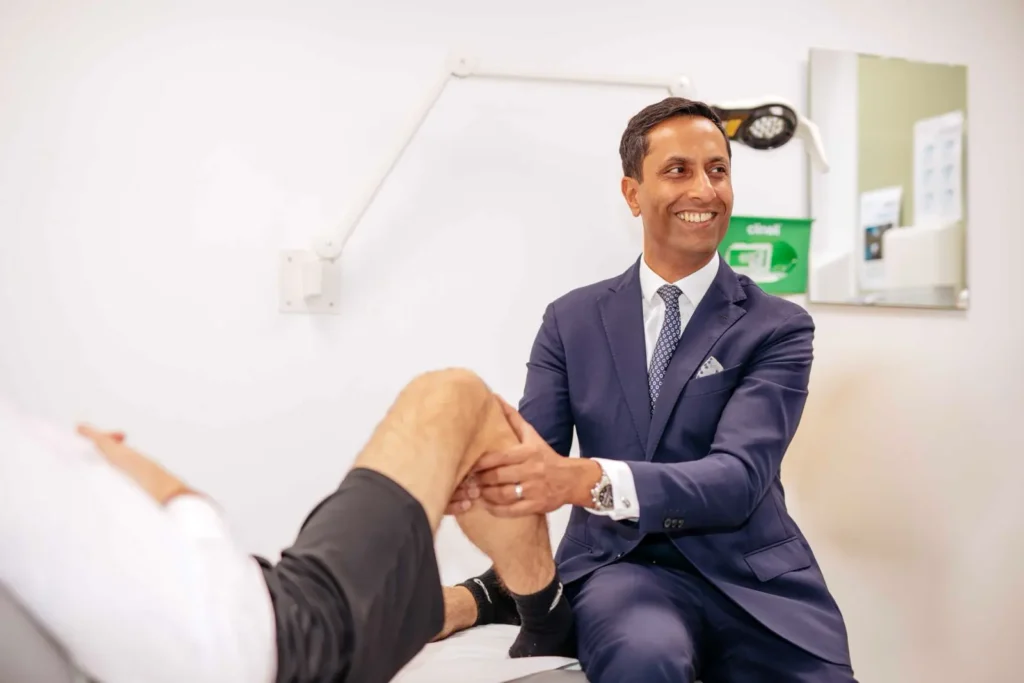
At London Knee Care, diagnosing the cause of your knee swelling starts with a thorough conversation about your symptoms and a careful physical examination. We look at where the swelling is, how the knee moves, and whether there are any signs of specific structural problems.
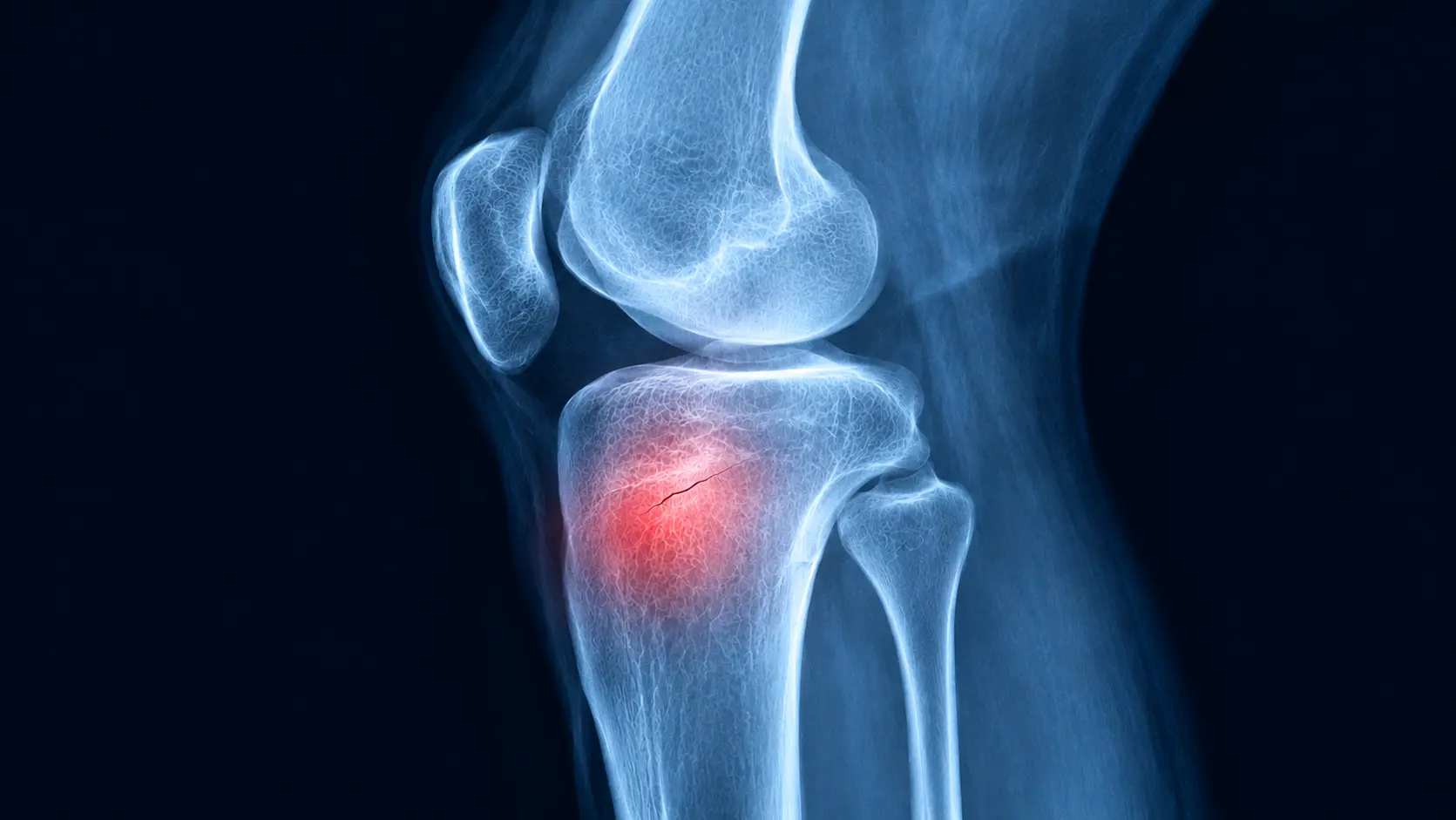
Depending on what we find, we may arrange an X-ray to check the bones and joint spacing, or an MRI scan to look at the soft tissues including the cartilage, meniscus, and ligaments. If significant fluid is present inside the joint, we may recommend aspiration, which involves using a fine needle to remove and test the fluid. This tells us whether the fluid contains signs of infection, blood, crystals from gout, or general inflammatory markers. Each of these findings points toward a different cause and therefore a different treatment plan.
Expert Knee Swelling Care at London Knee Care
If your knee swelling is affecting your daily life, your sleep, or your ability to stay active, we can help you find out exactly what is causing it and what needs to be done.
At London Knee Care, we see patients with all types and causes of knee swelling, from mild recurring puffiness after walking to significant fluid build up linked to arthritis or injury. Our approach always begins with an accurate diagnosis before recommending any treatment, because the right treatment depends entirely on the right diagnosis.
Our clinic is led by Mr Raghbir Khakha, a consultant orthopaedic surgeon with over 15 years of specialist experience. He takes a careful, patient focused approach to every case, explaining findings clearly and discussing all available options so you can make an informed decision about your care.
Booking is straightforward and appointments are available promptly. You can book your consultation online here at a time that suits you. If you would like to speak with our team first or have any questions before booking, please visit our contact page and we will get back to you quickly.
Frequently Asked Questions About Knee Swelling
Why does my knee swell after walking but it does not hurt?
Painless swelling still means excess fluid is building up inside or around the joint. It is often an early sign of osteoarthritis, bursitis, or mild cartilage irritation. Just because it does not hurt does not mean it should be ignored. If it keeps happening after walks, it is worth getting it checked.
How long should knee swelling last?
Mild swelling from overactivity usually settles within a few days with rest, ice, and elevation. Swelling linked to an injury or an underlying condition can take two to six weeks or longer to reduce. If your swelling has not improved after two weeks of home care, see a specialist.
Can a torn meniscus cause swelling in the knee?
Yes. A meniscal tear is one of the most common causes of knee swelling. The tear triggers an inflammatory response inside the joint that leads to fluid build up. This swelling often appears within hours of the injury and is usually accompanied by pain, clicking, or a feeling of the knee giving way.
Do knees swell with arthritis?
Yes, knee swelling is very common with osteoarthritis. As the cartilage wears down, the joint lining becomes irritated and produces excess fluid. The swelling tends to build gradually and is often worse after activity or at the end of the day.
Should I walk with a swollen knee?
Gentle walking is generally fine for mild swelling, but you should avoid long distances or high impact activity until the swelling has settled. If walking makes the swelling significantly worse, rest the knee and seek advice. Pushing through significant swelling can make the underlying condition worse.
Why would my knee swell without any injury?
Many knee conditions cause swelling without a clear injury. Osteoarthritis, gout, bursitis, and inflammatory arthritis can all cause fluid to build up in the joint with no obvious trigger. Gradual overuse from daily activities can also lead to swelling over time without a single identifiable incident.
What is water on the knee and how is it treated?
Water on the knee is the common term for excess fluid collecting inside the knee joint. Treatment depends on the cause. Options range from rest and anti-inflammatory medication for mild cases, to physiotherapy, joint injections, or aspiration for more persistent or significant fluid build up. Addressing the underlying cause is essential to prevent the fluid from returning.
Can knee swelling go away on its own?
Mild swelling from minor irritation or overactivity can settle on its own with rest and home care. However, swelling linked to an underlying condition such as arthritis or a structural injury will usually keep returning until the cause is properly treated. Swelling that keeps coming back should not be left unaddressed.