Can Bow Legs Be Corrected in Adults
If you’ve noticed your knees sitting further apart than they should, even when your ankles are touching, you’re probably wondering whether anything can still be done about it now that you’re an adult. The short answer is yes, in most cases it is not too late. Bow legs in adults can often be improved, and in more noticeable cases, corrected through surgery. What changes as we get older isn’t whether treatment works, but which treatments are actually available to us.
As children, our bones are still soft and flexible, which is why braces and splints can gently guide growing legs into a straighter position. Once we reach adulthood, our bones have hardened, so those same approaches have far less effect on the underlying alignment. That doesn’t mean you’re out of options. It simply means the right treatment for a bow legs adult case looks different to the treatment offered to a toddler.
We understand that living with bow legs in adulthood can feel discouraging, especially if you were told as a child that it would sort itself out and it never quite did. At London Knee Care, we look at your bow legs not as something to feel self-conscious about, but as a mechanical alignment issue that can, in many cases, be properly addressed.
What Bow Legs Actually Means
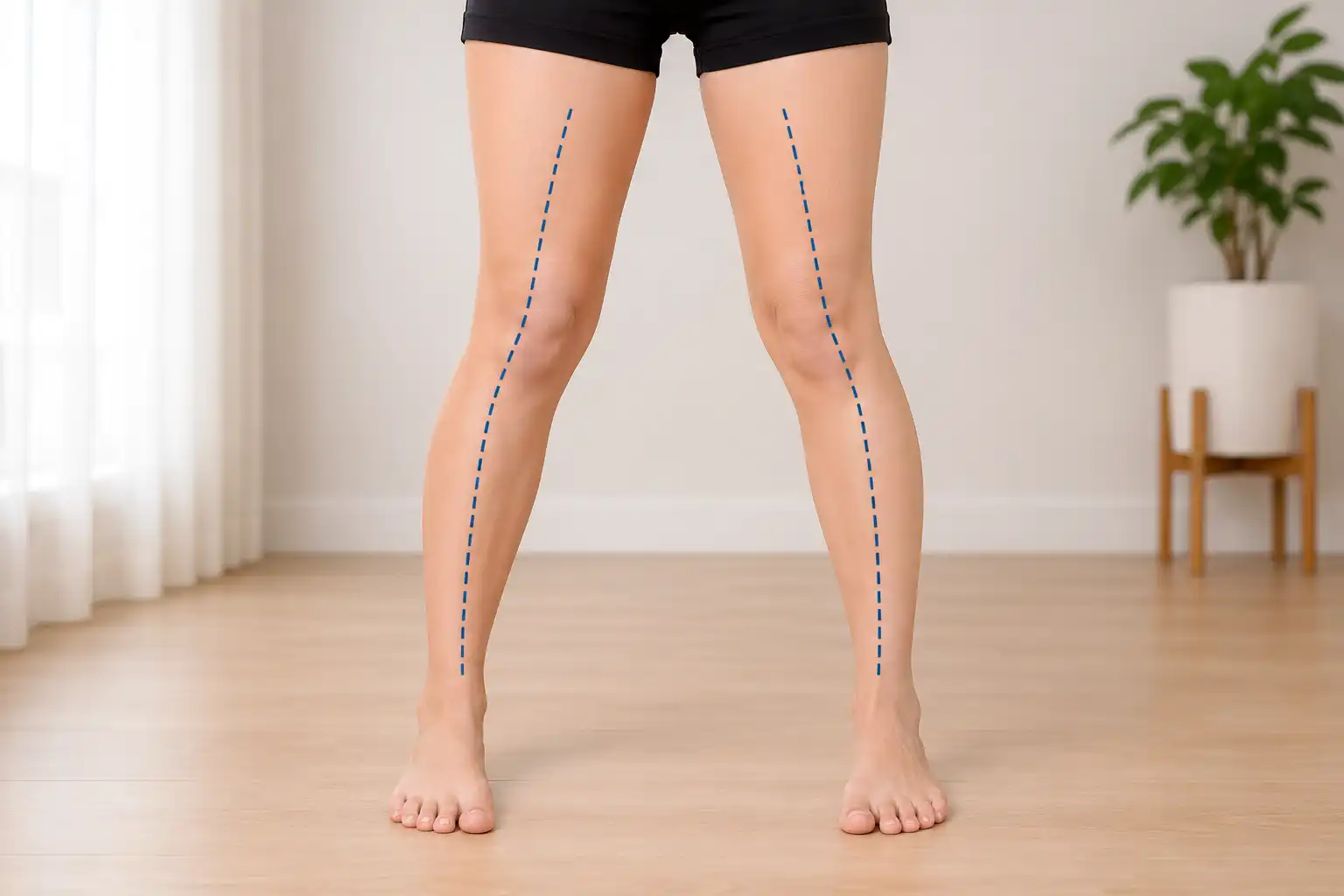
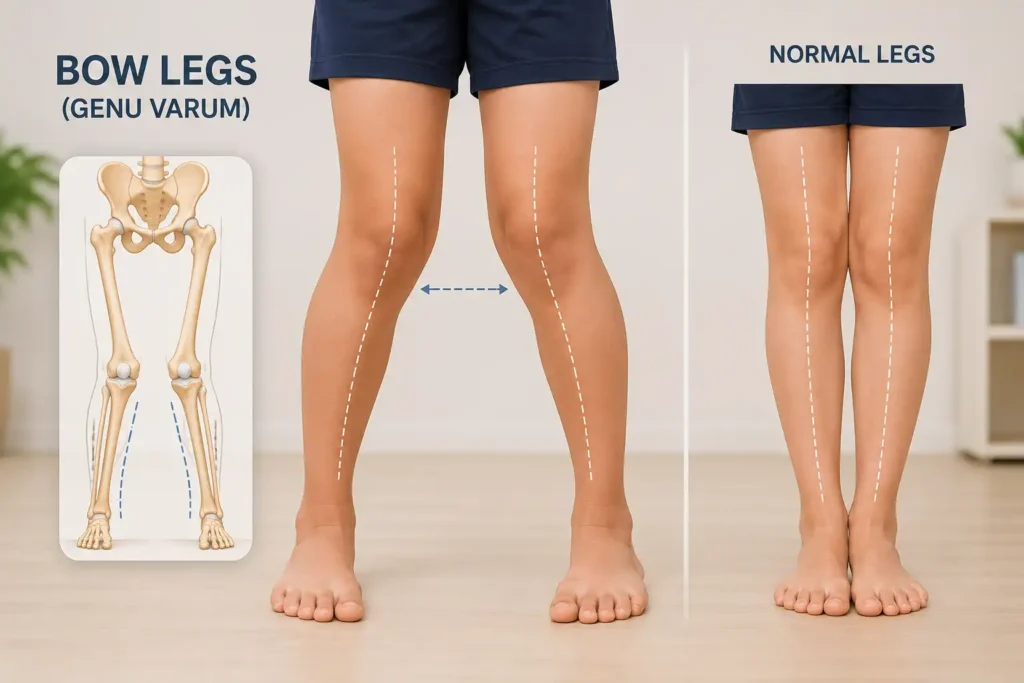
In the simplest terms, bow legs meaning is straightforward: your knees curve outward while your ankles stay together. If you’re asking what do bow legs look like in practice, picture standing with your feet touching. A noticeable gap between your knees is what we mean by bow legs. Some people describe this as having bent legs, and it’s the opposite of knock knees, where the knees touch but the ankles drift apart.
For most of us, bow legs first appear in early childhood, and it’s a completely normal stage of leg development in babies and toddlers. Most children’s legs naturally straighten out somewhere between the ages of two and four as their bones mature. When bow legs in adulthood persist rather than fully correcting during those early years, it’s usually because the underlying cause was never treated, not because nothing could have been done.
How to Tell if I Have Bow Legs
You likely already have a good idea, simply from looking at your legs while standing normally. This bow legs walking pattern, where your toes may turn slightly inward, is often the first thing people notice. Some people also notice a slight rocking or instability in their knees, particularly if the bowing has been present for years and has started to affect the joint itself. If you’re unsure whether what you’re seeing counts as bow legs or just a natural variation in your build, that’s exactly the kind of question worth raising with a knee specialist rather than working out alone.
Bow Legs Causes in Adults
There are several reasons bow legs can be present in adulthood, and understanding which one applies to you matters, because it shapes what treatment actually makes sense.
Are Bow Legs Genetic
In some cases, yes. Certain rare skeletal conditions and bone growth disorders run in families and can lead to bowing of the legs. That said, genetics is only one piece of the picture, and most adults with bow legs didn’t inherit the condition in any straightforward way.
Why I Have Bow Legs
For many of our patients, the honest answer is that their bow legs never fully corrected during childhood. Conditions like Blount’s disease affect the growth plate near the knee and can leave a lasting curve if not caught early. Other adults developed bowing later in life, often linked to an old fracture that healed slightly out of position, a vitamin D deficiency that weakened the bone, or wear from osteoarthritis that gradually pulled the knee out of alignment. Working out the real cause behind your case is important, since each of these has a different underlying story, which is why we always start with a proper assessment rather than an assumption.
Can You Prevent Bow Legs
Where bow legs come from your natural bone development or an inherited condition, prevention isn’t really possible. Where the cause is something like a vitamin deficiency or an injury that wasn’t given time to heal correctly, catching it early and treating the underlying issue can help stop things getting worse. This is one more reason it’s worth having your legs properly assessed rather than assuming nothing can be done.
When Should You Seek Advice About Bow Legs
Not every case of bow legs needs specialist input. Mild bowing that has stayed stable for years, without pain or difficulty walking, may simply be part of how your body is built. Even so, we’d encourage you to book a consultation if your bow legs are becoming more noticeable over time, if you’re experiencing knee pain, swelling or stiffness, if one leg looks more curved than the other, or if the shape of your legs is starting to affect your confidence or the activities you enjoy. Bow legs that have been present for many years can gradually place uneven pressure on the inside of the knee joint, and that’s worth having checked before it progresses rather than after.
How to Correct Bow Legs in Adults
There’s no single bow legs treatment that suits every patient, which is why assessment always comes first. The right approach depends on how pronounced your bow legs are, whether they’re causing pain, and what’s driving them in the first place. We always begin with a thorough assessment, usually including a physical examination and imaging, before recommending any course of action.
Non-Surgical Options for Bow Legs
If your bow legs are mild and pain free, we may recommend simply monitoring your legs over time rather than jumping straight to treatment. Some patients find that targeted stretching and strengthening exercises help support the knee and ease mild discomfort, and a supportive brace can help during activity. It’s worth being honest here. These approaches can help manage symptoms and support the joint, but they’re unlikely to meaningfully straighten established bow legs once your bones have finished growing. Where the underlying cause is something correctable, such as a vitamin deficiency, treating that cause directly can genuinely help.
Bow Legs Surgery and What It Involves
For adults with more pronounced bowing, ongoing pain, or legs that are wearing unevenly, surgery is usually the treatment that actually changes the alignment. The procedure most commonly used is a knee osteotomy, where the bone near the knee is carefully reshaped to shift your weight back onto a more even, natural line. Mr Raghbir Khakha has extensive experience in this type of joint preserving surgery, using it to realign the knee while protecting your natural joint for as long as possible.
Is Bow Legs Surgery Safe
As with any surgery, there are risks to consider, and we’ll always talk you through these honestly during your consultation. Knee osteotomy is a well established procedure with a strong track record when carried out by an experienced knee surgeon, and most patients tolerate it well. It isn’t the right choice for everyone, which is exactly why a proper assessment matters before deciding on surgery.
What a Bow Legs Fix Really Looks Like
If you go ahead with surgical correction, recovery takes time and patience. Most patients need a period of restricted weight bearing while the bone heals, followed by a structured course of physiotherapy to rebuild strength and movement in the knee. Every patient heals at a different pace, and we’ll give you a realistic timeline based on your specific procedure and general health, rather than a generic estimate.
It’s worth saying plainly that surgery for bow legs is about realigning the joint and reducing the uneven pressure that causes pain and long term wear. It isn’t a guarantee of a particular cosmetic outcome, and results vary from person to person. What we can say, from years of treating bow legs and similar alignment problems, is that most patients notice a genuine improvement in comfort and knee function once they’ve fully recovered.
Meet the Specialist Behind Your Care
Your treatment is led by Mr Khakha, a consultant orthopaedic surgeon with over fifteen years of experience specialising in knee surgery, including ligament reconstruction, knee replacement and osteotomy for alignment problems like bow legs. He has performed thousands of knee procedures and is known by his patients for taking the time to properly explain what’s happening in your knee before recommending any course of action. You can read more about his background and the joint preserving philosophy that guides how we treat conditions like bow legs at London Knee Care clinic.
Book Your Consultation With London Knee Care
If your bow legs are causing pain, affecting your confidence, or simply making you wonder whether anything can still be done, we’d encourage you to come in and talk to us. We’ll assess your legs properly, explain exactly what’s causing the bowing in your case, and talk you through every option available, without any pressure to choose surgery if it isn’t the right fit for you. You can find out more about our clinic and how we work with patients.
London Knee Care
45 Queen Anne Street, London W1G 9JF
Call us on 0207 046 8008
Email us at rk@os.clinic
Or visit our contact page
Frequently Asked Questions
Can bow legs be corrected in adults?
Yes, in many cases. Mild bowing may be managed with monitoring and support, while more pronounced bowing is usually corrected through knee osteotomy surgery, which realigns the bone and relieves the uneven pressure on the joint.
What is bow legs correction in adults?
It generally means surgical realignment of the knee, since an adult’s bones no longer respond to the braces and splints used in children. The goal is to shift weight evenly across the joint and reduce long term wear
What does bow legs in adults treatment involve?
Treatment ranges from simple monitoring for mild cases, through to knee osteotomy surgery for more pronounced bowing or bowing that’s causing pain. Which path is right for you depends entirely on your individual assessment.
Is there another name for bow legs?
Yes, some people refer to bow legs as O legs because of the shape they create, though genu varum is the medical term specialists use.