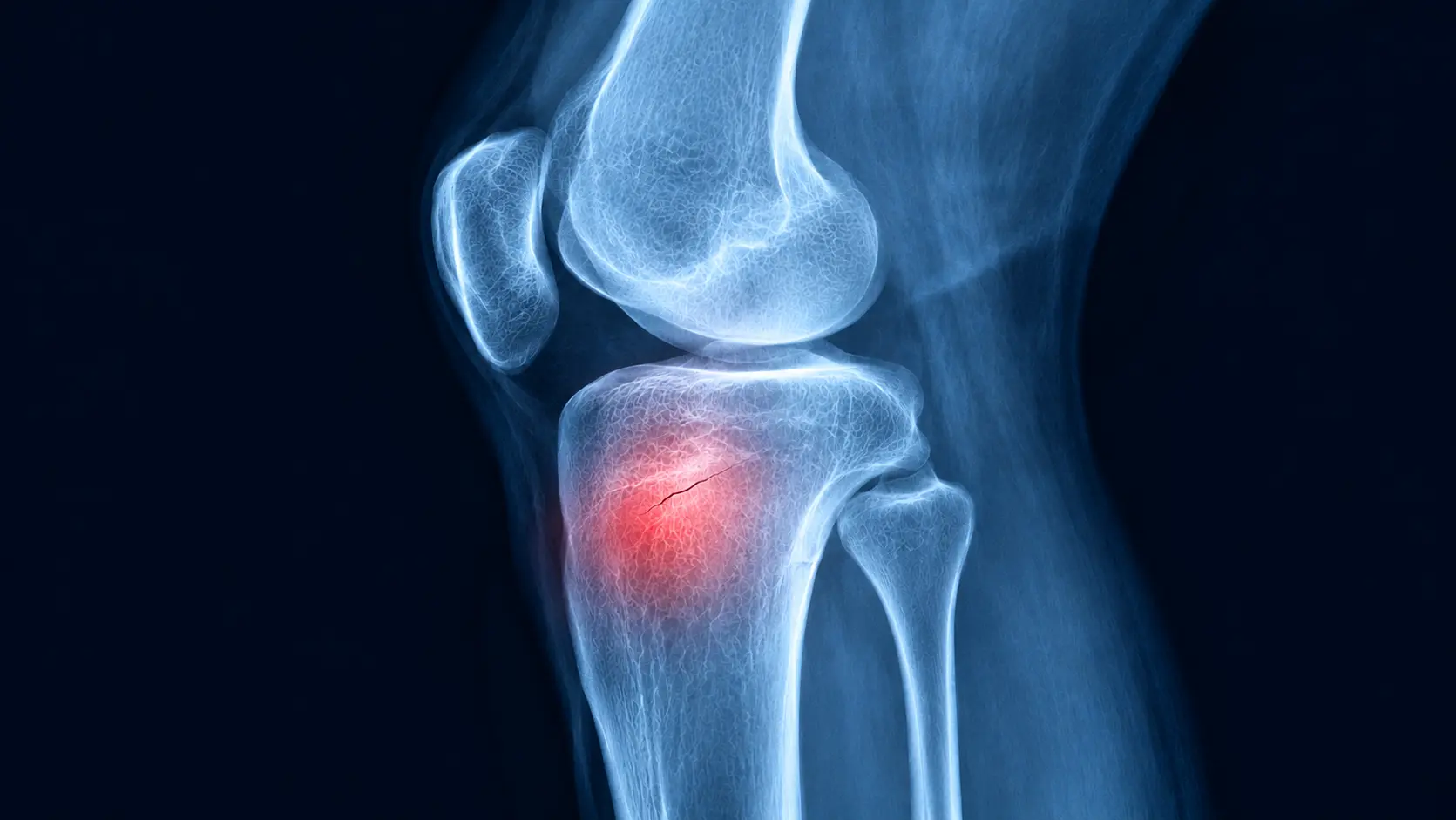
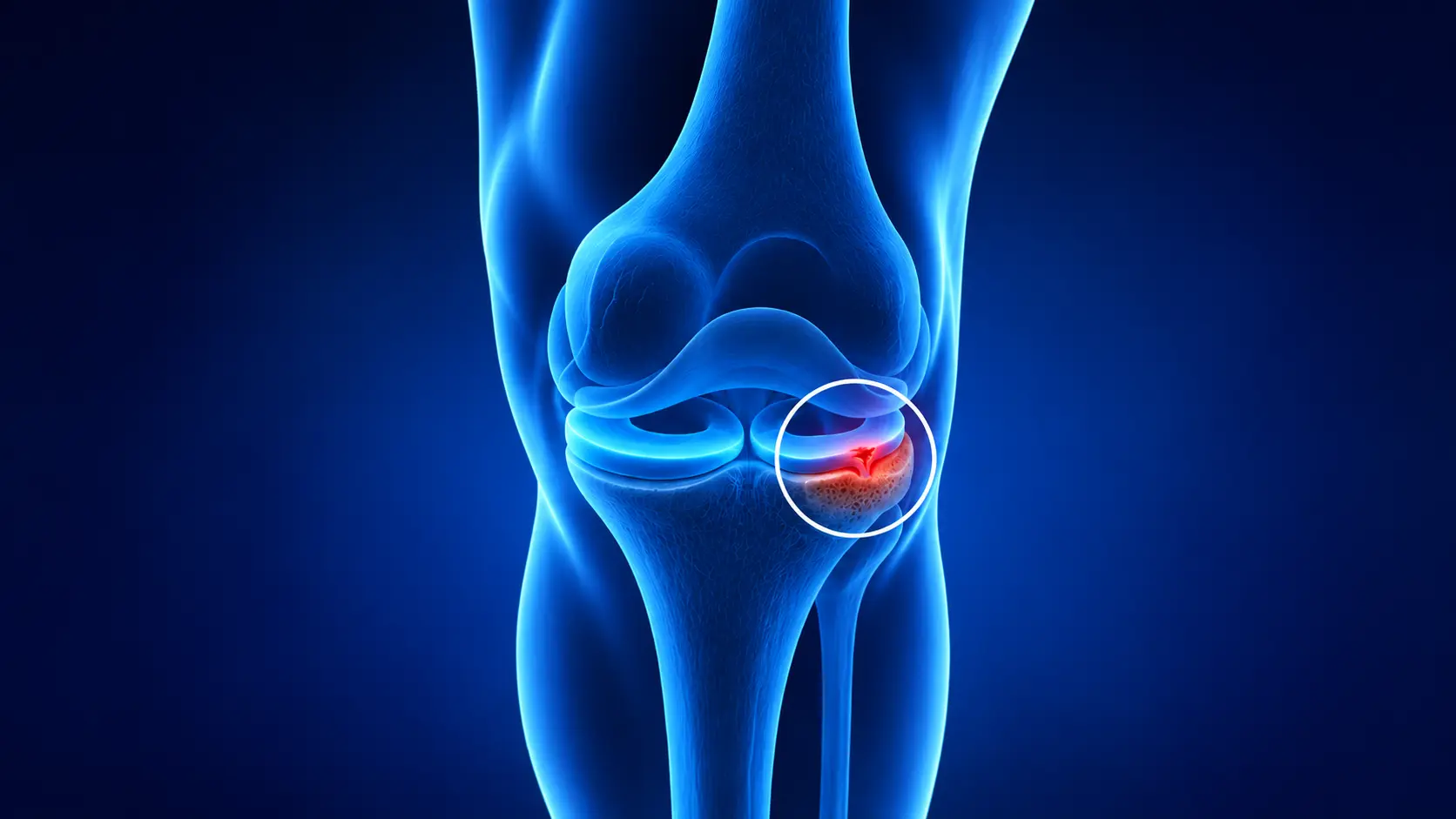
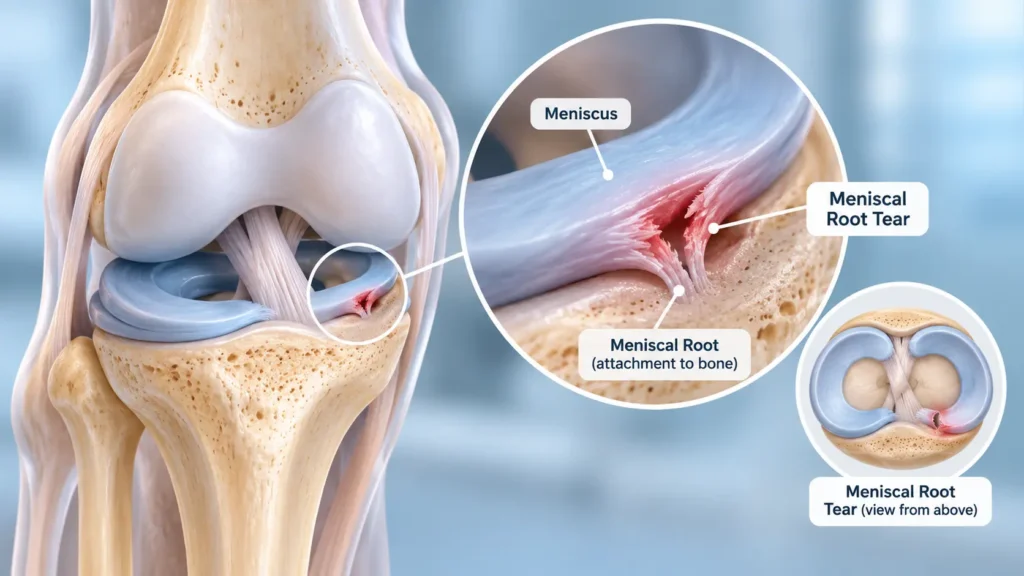
A meniscal root tear is a tear at, or very close to, the point where one end of the meniscus is anchored to the shin bone. The meniscus is the C-shaped cushion inside your knee. Because the root holds the whole meniscus in place, a root tear behaves differently from most other meniscus tears, and it is not always treated in the same way.
You may have just been told you have a meniscal root tear, perhaps after an MRI report that left you with more questions than answers. Or you may have a sore, swollen knee and want to understand what is going on before you decide what to do.
Below, we explain why a meniscus root tear behaves differently, who gets one, how it is diagnosed, and how repair compares with trimming. We also cover recovery and when to see a knee specialist.
Posterior Meniscal Root Tear and Medial Meniscus Root Tear
The back (posterior) root is the one most often involved, which is why you will often see the term posterior meniscal root tear on a scan report. When it happens on the inner side of the knee, it is called a medial meniscus root tear. Inner-side tears are usually linked to gradual wear. Outer-side (lateral) root tears are more often caused by an injury, commonly alongside a knee ligament injury such as an ACL tear.
Why Are Meniscal Root Tears Different from Other Meniscus Tears?
Picture a healthy meniscus as a C-shaped rubber cushion sitting on the shin bone, with both ends tied down so it acts like a ring. When you stand, walk or land from a jump, the ring is squeezed and tries to spread outwards. The roots hold both ends firmly, so the ring stays tight and shares the load across a wide area. Doctors call this hoop stress.
Most meniscal tears damage part of the ring, such as a flap on the edge or a split in the middle. The ring is still anchored, so it can often keep working, or the damaged piece can be trimmed or stitched. A root tear is different because it cuts the anchor itself. The ring comes loose and slips out of position, which is called meniscus extrusion. It then stops sharing the load, and more force lands on the cartilage that covers the ends of your bones. Published research describes the effect of a root tear as close to losing the whole meniscus.
That is why a meniscal root tear is treated as its own problem, even though it accounts for roughly one in five meniscal tears. Trimming can be a sensible answer for some other tears. For a root tear, it does not restore the anchor, so it does not fix the underlying problem.
Root Tear vs Typical Meniscus Tear
| Typical meniscus tear | Meniscal root tear | |
| Where it happens | Body or edge of the meniscus | The attachment to the shin bone |
| Effect on the knee | Part of the ring is damaged, the anchor is intact | The ring loses its anchor and shifts out of place |
| Common causes | A twist or gradual wear | Injury (often outer side) or gradual wear (often inner side) |
| Is trimming enough? | Often, if the tear is small and suitable | Often not, because the anchor is still missing |
| Main long-term concern | Catching or locking | Cartilage damage and knee arthritis |
Who Gets Meniscal Root Tears?
Root tears tend to affect two quite different groups. One is young, active people who injure the knee in sport. The other is older adults whose knees already show early wear. If you are an athlete, this is one of several knee sports injuries worth ruling out after a twisting or landing injury. Published figures suggest that between 6 and 12 in every 100 ACL tears also involve a lateral root tear, so we look for it carefully when the ligament is injured.
Key Risk Factors for Meniscal Root Tears
No single factor causes a root tear, and having one or more does not mean you will get one. The ones we see discussed most often are:
- Being middle-aged or older, with early wear in the knee
- Deep squatting or full bending of the knee under load
- A twisting or landing injury during sport
- An ACL or other ligament injury
- A meniscus that was already worn or degenerate
What Are the Symptoms of a Meniscal Root Tear?
Meniscus root tear symptoms can look very like those of other knee problems, which is one reason the diagnosis is sometimes delayed. A common story with an inner-side tear is a painful pop during an ordinary movement, followed by pain and swelling. The usual signs are:
- Pain on the inner or outer side of the knee, depending on which meniscus is torn
- Swelling that builds up after activity or walking
- Difficulty walking comfortably, using stairs or squatting
- Stiffness after rest
- Catching or locking in some people, though not everyone has it
Not every knee ache needs urgent review. The table below gives a rough guide.
| Usually settles with rest and time | Needs specialist review |
| Mild ache after unusual activity | A sudden pop followed by pain and swelling |
| Stiffness that eases within minutes | Pain on the inner or outer joint line that keeps returning |
| Symptoms improving week by week | Swelling that does not settle |
| No change in how the knee moves | A knee that catches, locks or will not fully straighten |
Warning Signs That Need Prompt Attention
Please get in touch with us soon if you cannot put weight on the leg, cannot fully straighten the knee, or have swelling that has not eased after a few days. The same applies if pain keeps returning on one side of the joint after a twisting injury. We can assess this quickly and tell you whether it fits a root tear or something simple
How Is a Meniscal Root Tear Diagnosed?
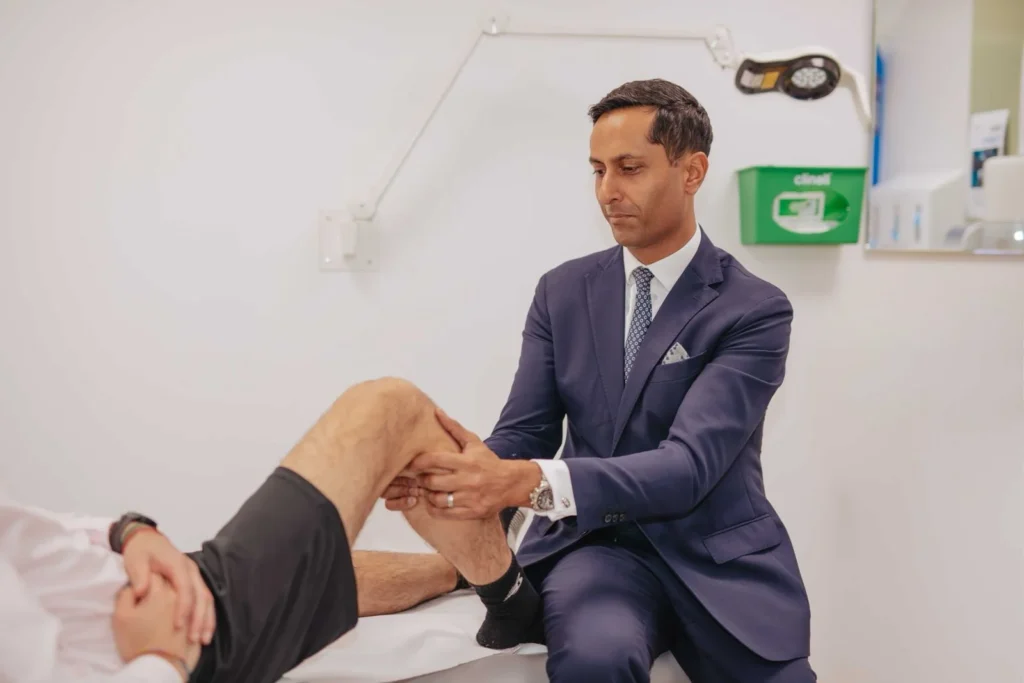
We start by listening to how the injury happened, then examine your knee, including how it moves and where it is tender. A scan usually follows. Early diagnosis matters, because research suggests the meniscus can move further out of position in the months after the tear first happens.
MRI Findings in Meniscal Root Tears
MRI is the scan of choice for finding a meniscal root tear. A radiologist looks for direct signs, such as a gap or missing section where the root should attach. They also look for indirect signs, such as the meniscus sitting too far out of the joint. Extrusion of 3 mm or more is a useful clue, but on its own it does not prove a root tear. That is why the scan should be read alongside your symptoms and examination. Occasionally, the final confirmation comes during keyhole surgery.
If you already have an MRI report, bring the images and the report with you. We help you understand what it means for your knee.
Meniscal Root Tear Treatment Options
There are three broad routes. You can manage the knee without surgery, repair the root back to the bone, or trim the damaged tissue (meniscectomy). The right one depends on your age, activity level, how much cartilage wear is already present, and how the tear looks on your scan. We explain each option openly, including its limits, so you can decide with confidence.
Non-Surgical Management of Meniscal Root Tears
A fully torn root is unlikely to reattach to the bone on its own. Physiotherapy, activity changes and pain relief can calm symptoms, and some people, particularly those with advanced wear in the knee, are best managed this way. What they cannot do is restore the anchor, so the meniscus may continue to sit out of position. If you choose a non-surgical path, we recommend regular review, so any change is picked up early.
How Meniscal Root Repair Is Performed
Meniscus root tear surgery is done by keyhole surgery under anaesthetic. The surgeon looks inside the joint, brings the torn root back to its original position and secures it. This is commonly done with strong stitches passed through a small tunnel in the shin bone. Placing the root accurately is a large part of what decides how well the repair works. You can read more about our approach to meniscal surgery, and we always talk through whether repair is realistic for your knee before any decision is made.
Meniscal Root Repair vs Meniscectomy
Many patients ask us whether it is better to repair the root or simply trim away the damaged tissue. Both are real options, and each has trade-offs.
For suitable patients, the evidence leans towards repair. Reviews of the research report that repairing a posterior root tear on the inner side leads to less arthritis progression and better function than meniscectomy. A trial of 63 patients found that those who had meniscectomy felt better faster in the first six months. Those who had repair did better by the final follow-up, especially for pain and symptoms. Trimming also leaves the anchor missing, so the knee can still behave much as it would with no working meniscus.
There are honest limits to this. Repair does not stop arthritis altogether, and extrusion does not always fully correct. Some repairs fail and need further surgery, and many of the studies are small. Repair also means a slower recovery. Trimming gets people moving sooner, which is a real advantage for some. We weigh up all of this with you rather than pushing one answer.
What Happens If a Meniscal Root Tear Is Left Untreated?
Symptoms may ease over time, but the mechanical problem usually stays. Without its anchor, the meniscus keeps sharing less load, and the cartilage beneath it can wear faster. That raises the risk of knee osteoarthritis and, in some people, cartilage damage that is hard to reverse.
One study followed 48 patients over 50 with root tears and early to moderate wear. Over about four years on average, 3.3% of those who had arthroscopic (keyhole) repair went on to need a knee replacement. That compares with 33.3% of those who were simply observed. That is a small study, and not everyone with a root tear will progress. It does show why we advise getting a clear diagnosis rather than waiting.
Who Needs Surgery for a Meniscal Root Tear?
Not everyone does. The decision depends on your symptoms, your scan, your age and the condition of the cartilage.
Who May Benefit from Repair?
- Younger, active people with a recent injury
- Middle-aged adults with a root tear and only mild wear in the knee
- Some older adults with early to moderate wear who are keen to stay active
- People whose root tear came with a ligament injury that is also being treated
When Surgery May Not Be Appropriate
- Advanced arthritis, where the cartilage is badly worn
- Poor-quality meniscus tissue that will not hold stitches
- Other health conditions that make surgery or a long rehabilitation risky
- Being unable or unwilling to follow the rehabilitation plan
If repair is not suitable, we discuss the alternatives with you. These range from structured physiotherapy to other joint-preserving procedures and, when it is the right time, knee replacement.
Meniscus Root Tear Recovery and Rehabilitation
Meniscus root tear recovery is slower than recovery from a simple trim, and this surprises many people. The repaired root needs time and protection to heal into the bone. Protocols differ between surgeons, so please treat the outline below as a general guide only. Mr Raghbir Khakha will confirm your own plan.
- First few weeks: crutches, a brace and a limit on putting weight through the leg, plus gentle movement exercises, with bending usually restricted
- Around weeks 6 to 9: weight bearing builds up step by step until you walk normally without crutches
- Around 3 months: strengthening, balance and control work progress
- From about 5 months: a return to running, jumping and sport is usually considered, depending on how the knee feels and how strong it is
Doing too much too soon is the main risk to a repair, so sticking to the plan matters. As with any knee surgery, there are also general risks such as infection, stiffness, blood clots and a repair that does not heal fully. We go through these with you before you decide.
When to See a Knee Specialist for a Meniscal Root Tear
You should seek a consultation if your MRI mentions a meniscal root tear, or if you have a sudden pop followed by pain and swelling that is not settling. It is also worth being seen if inner or outer knee pain keeps returning, or if you struggle to walk or squat. The same applies if you were told you had a standard meniscus tear and have not improved. Athletes should not wait, because early diagnosis gives you more options. We can see you, review your scan and explain the next steps clearly.
Book a Meniscal Root Tear Assessment at London Knee Care
Mr Raghbir Khakha is a Consultant Orthopaedic and Specialist Knee Surgeon at London Knee Care in London. He is fellowship-trained in knee surgery, has been in consultant practice since 2017, and his practice focuses solely on the knee, including meniscal surgery and joint preservation. Mr Khakha is also an honorary senior clinical lecturer who helps train surgeons in knee surgery.
If you think you may have a meniscal root tear, we can help you find out. At London Knee Care, we start with a clear diagnosis, because the right treatment depends on it. We examine your knee, review your MRI, and help you understand what it means for you in plain language. Joint preservation is central to how we work. If repair is possible, we explain what it involves and what recovery looks like. If it is not the right option, we say so and guide you towards the best alternative from our knee treatments. You can also read about related knee conditions we assess.
If your knee has locked, you cannot put weight on it, or it is hot, red and swollen with a fever, please get in touch with us the same day.
If you would like to talk through your symptoms or your MRI, contact us and we will guide you on the next steps.
- 45 Queen Anne Street, London W1G 9JF
- 0207 046 8008
- rk@os.clinic
Frequently Asked Questions About Meniscal Root Tears
Is a Meniscal Root Tear Serious?
It can be. The tear itself is not dangerous, but losing the meniscus anchor can strain the cartilage over time and raise the risk of wear in the joint. How serious it is depends on your age, your activity level and the state of your cartilage. That is why we recommend getting it assessed.
Can You Walk with a Meniscal Root Tear?
Many people can walk with a meniscal root tear, though often with pain and swelling. Being able to walk does not mean the knee is fine, because the meniscus can still sit out of position and load the cartilage unevenly. Please have it checked rather than push through.
Can You Exercise with a Meniscal Root Tear?
Gentle, low-impact movement is often fine with a meniscal root tear. Twisting, deep squatting and impact sport can aggravate it and put more load on the cartilage. Once we have assessed your knee, we advise on which activities are safe and which are best paused for now.
Will a Meniscal Root Tear Lead to Arthritis?
A meniscal root tear increases the risk of arthritis, but it is not certain. The risk depends on your age, the state of the cartilage, and whether the root is treated. Getting a clear diagnosis early gives you the widest choice of options to protect the joint.
Is Meniscal Root Repair Major Surgery?
Meniscal root repair is done through keyhole incisions, so the cuts are small. The recovery is slower than for a simple trim, because the repair needs protection while it heals into the bone. Most people use crutches and a brace for the first few weeks.
This article is general information and is not a substitute for a personal assessment. If you have concerns about your knee, please get in touch with us.