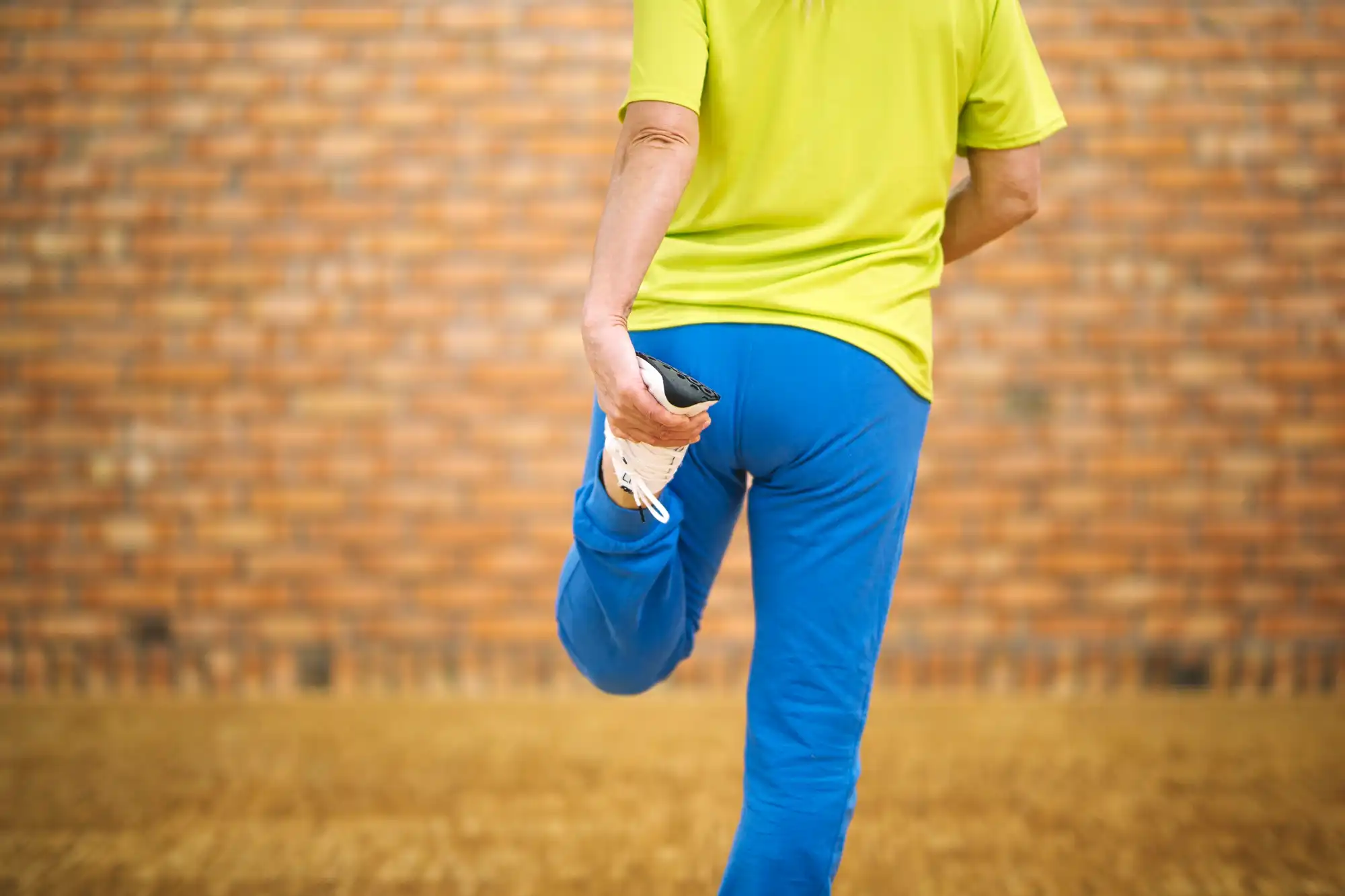
If bending your knee brings on a dull ache, sharp twinge, or a half-locked feeling behind the joint, the cause often sits outside the knee itself. Back of the knee pain when bent is frequently linked to the hamstring tendons crossing behind the joint, rather than the structures people usually blame first, like cartilage or ligaments. Many patients describe it simply as one of several back of the knee problems, without realising a specific tendon is often behind it. Here is how to tell the causes apart, and what treatment actually involves.
Why Does Pain Behind the Knee When Bending Happen?
Pain behind the knee when bending usually happens because one of the structures crossing that space, most often a hamstring tendon, the popliteus muscle, or a fluid-filled cyst, gets irritated, overstretched, or compressed as the knee folds. Bending brings these soft tissues closer together, which is why symptoms often worsen specifically during flexion. This hamstring pain behind knee when bending pattern, sometimes described simply as back knee pain when bent, is one of the most common reasons patients come to see us about posterior knee symptoms.
Understanding Posterior Knee Pain Bending: The Hamstring Anatomy Behind It
To make sense of posterior knee pain bending, it helps to know what is actually back there. The back of your knee is a small, crowded space where muscle, tendon, nerve, and blood vessels all pass close together, which is part of why pain here can be trickier to pinpoint than pain at the front of the knee.
Hamstring Tendons Knee: Medial and Lateral Anatomy
Your hamstring tendons knee attachments split into two groups either side of the joint. On the inner, or medial, side, the semitendinosus and semimembranosus tendons attach just below the knee. On the outer, or lateral, side, the biceps femoris tendon attaches near the head of the fibula. What are the hamstring tendons in practical terms? They are the tendon that connects hamstring to knee at three separate points rather than one, which is why symptoms vary so much depending on where the strain sits.
What Is the Popliteal Fossa?
The popliteal fossa is the diamond-shaped hollow at the back of your knee, bordered by the hamstring tendons above and the calf muscles below. It houses the popliteal artery, vein, and nerve, which is part of why swelling here, such as from a Baker’s cyst, can feel deceptively deep.
The Popliteus Muscle and Why It Unlocks Your Knee
The popliteus muscle is small but does a specific job few patients have heard of. It sits deep in the back of the knee and its main role is to unlock the knee joint from full extension, rotating the thigh bone so the knee can begin to bend. Strain here often shows up as pain worse right at the start of bending, particularly going downhill or downstairs.
Semimembranosus Tendon vs Biceps Femoris Tendon: Inner or Outer Pain?
This distinction is genuinely useful for working out what is going on before your appointment. Pain on the inner back of the knee usually points to the semimembranosus tendon or semitendinosus tendon. Pain on the outer back of the knee more often involves the biceps femoris tendon. Central, diffuse pain without a clear inner or outer point suggests a cyst, the popliteus muscle, or a meniscus issue rather than a single tendon.
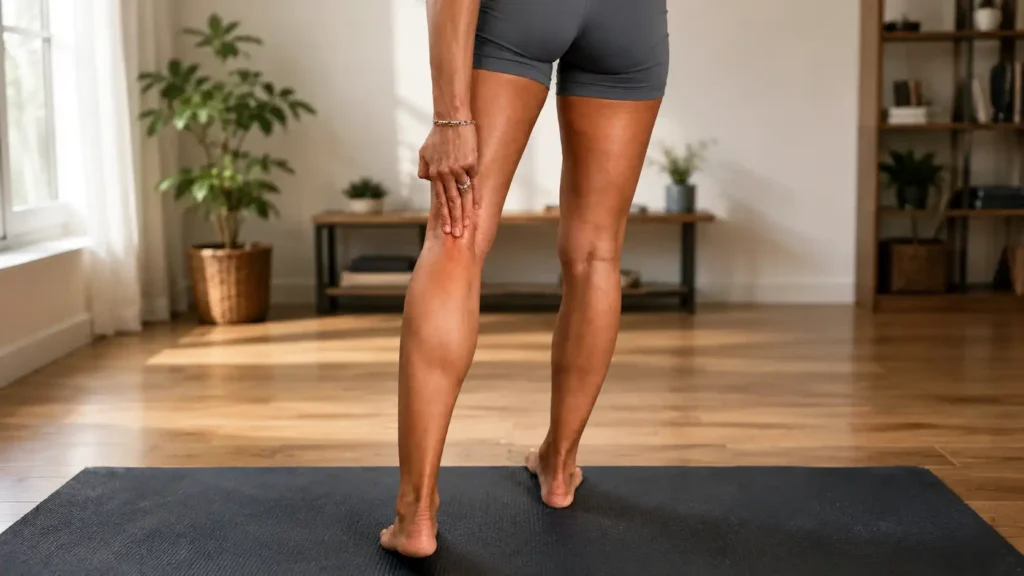
What Causes Pain Behind Knee When Bending?
Several distinct conditions can produce pain behind the knee when bending, and they do not all need the same treatment. The most common causes we see include:
- Hamstring tendinopathy, an overuse injury to one of the hamstring tendons
- A Baker’s cyst, a fluid-filled swelling behind the knee
- Popliteus tendon strain, from sudden deceleration or downhill activity
- A posterior meniscus tear, affecting the back portion of the knee’s cartilage cushion
- Prolonged sitting or sitting cross-legged, which shortens and tightens the hamstrings
Hamstring Tendinopathy Knee
Hamstring tendinopathy knee pain develops gradually, from repeated small strain rather than one injury, common in runners, cyclists, and anyone doing repetitive bending without enough recovery. What causes back of knee pain when bending in these cases is usually a training load that has crept up faster than the tendon can adapt to.
Baker’s Cyst Behind Knee and Popliteal Cyst Causes
A Baker’s cyst behind knee, also called a popliteal cyst, is a soft, fluid-filled lump that forms when excess fluid in the knee joint collects at the back. Popliteal cyst causes are usually linked to another knee condition, most often osteoarthritis, rheumatoid arthritis, or a cartilage injury. Bending can make the cyst more noticeable.
Popliteus Tendon Strain
Popliteus tendon strain tends to follow sudden twisting movements or repeated downhill running, where the muscle works hard to control rotation as the knee starts to bend. It is easy to mistake for a general hamstring strain unless someone is specifically checking for it.
Posterior Meniscus Tear
A posterior meniscus tear affects the back portion of the C-shaped cartilage cushion in your knee, from a twisting injury or gradual wear. Alongside pain when bending, it often causes catching or locking.
Overuse Hamstring Knee Pain
Overuse hamstring knee pain builds slowly rather than from a single incident, common in people who have recently increased training volume or added hill work without building up to it gradually.
Sitting Cross Legged Knee Pain and Prolonged Sitting Knee Pain
Sitting cross legged knee pain and prolonged sitting knee pain share the same root cause, static positions where the hamstrings stay shortened for long periods. This tends to build gradually through the day and ease once you stand and stretch, a useful clue the issue is tightness rather than a structural problem.
Running Downhill Posterior Knee Pain
Running downhill posterior knee pain happens because downhill movement asks the hamstrings and popliteus muscle to control your knee’s braking force with every stride, a well recognised trigger for both hamstring tendinopathy and popliteus strain.
Symptoms: How Back of Knee Pain Shows Up
Back of knee pain when bent does not always feel the same from one person to the next, and the pattern of your symptoms is often as useful as the pain itself.
Back of Knee Hurts When Sitting
If your back of knee hurts when sitting, particularly after longer periods, this points more towards hamstring tightness, tendinopathy, or a Baker’s cyst than an acute injury. Swelling behind knee when sitting, alongside a soft lump you can feel, is a fairly clear sign of a cyst.
Back of Knee Ache When Kneeling
A back of knee ache when kneeling, or a back of knee hurts when kneeling feeling more generally, often relates to compression of an already irritated structure as the fully bent position squeezes the joint. Knee pain kneeling down and knee pain squatting behind the knee tend to go together, since both put the knee into deep flexion.
Other patterns worth knowing:
- Tightness behind knee when bending usually points to muscular tightness rather than swelling
- A lump behind knee when bent that is soft and fluid-filled is the hallmark of a Baker’s cyst
- Sharp pain behind knee when bending is more typical of a tendon or meniscus issue than general tightness
- Back of knee hurts when sitting cross legged and back of knee aches when sitting are common early signs
- Back of knee hurts when bending and extending, rather than one direction, suggests a structural cause
- Back of knee hurts after sitting, easing once you move, points towards tightness rather than an acute tear
If pain behind the knee when bending leg movements is worst at the extremes, or pain behind knee when bending leg back catches you during sport, that fits a tendon or popliteus strain more than a cyst. Where back of my knee hurts when bent regardless of position, or pain behind the knee when bending knee to its full range feels consistently sore, that constant pattern is worth having assessed.
Diagnosing Pain Behind the Knee: What to Expect
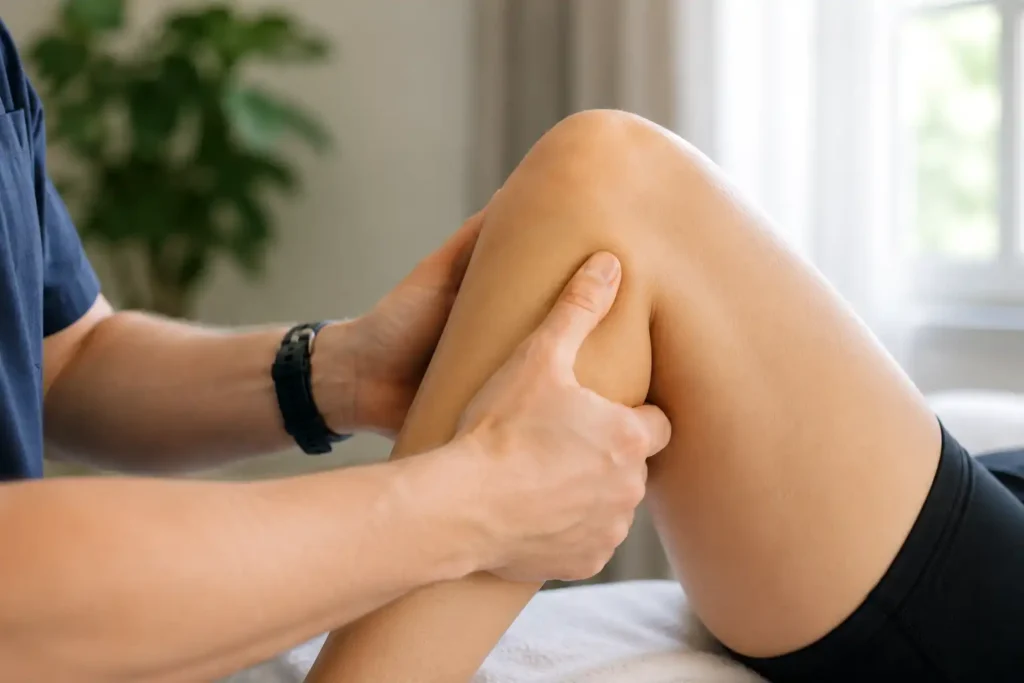
Diagnosing pain behind the knee starts with listening carefully to how, when, and where your symptoms happen, because the pattern alone narrows things down before any scan is needed.
Physical Exam Hamstring Tendinopathy Assessment
A physical exam hamstring tendinopathy assessment involves testing resisted knee bending, checking flexibility, and pressing along each tendon to find the exact point of tenderness.
MRI for Posterior Knee Pain
An MRI for posterior knee pain gives a detailed picture of tendons, the meniscus, and any fluid collections. We recommend one if symptoms have not settled with initial treatment.
Ultrasound Baker’s Cyst Scans
Ultrasound Baker’s cyst scans are quick and confirm both the presence of a cyst and its size, without the wait or cost of an MRI, and are usually our first choice when a cyst is suspected.
When Should You Seek Medical Advice for Back of the Knee Pain When Bent?
Most cases of back of the knee pain when bent settle with simple measures, but certain signs mean you should not wait. According to NHS guidance on Baker’s cysts, you should seek urgent advice if swelling in your leg suddenly worsens, or if you notice bruising, warmth, or redness spreading down your calf, since these can point to a burst cyst or a blood clot rather than routine knee pain.
Book an appointment with us if you notice:
- A lump behind the knee that is growing, painful, or does not settle within a few weeks
- Pain that has not improved after two to three weeks of rest and gentle stretching
- Your knee locking, catching, or giving way
- Noticeable swelling around the whole joint, not just behind it
- Pain severe enough to stop you weight-bearing normally
Treatment for Pain Behind the Knee
Treatment for pain behind the knee depends entirely on what is causing it. There is no single back of knee pain when bending treatment that suits every cause, so the plan follows directly from what the exam and any imaging show.
Hamstring Tendinopathy Treatment
Hamstring tendinopathy treatment usually starts conservatively, with relative rest, a structured loading and stretching programme, and a gradual return to full training. Surgery is rarely needed.
Baker’s Cyst Treatment Options
Baker’s cyst treatment options range from monitoring a small, painless cyst to draining the fluid or treating the underlying knee condition causing it. Most Baker’s cysts do not need surgery.
Physiotherapy Posterior Knee Pain Rehabilitation
Physiotherapy posterior knee pain rehabilitation is central to recovery for almost every cause here, whether tendon loading, popliteus specific strengthening, or general flexibility work. We will talk you through the right knee treatments once we know what we are dealing with.
Recovery: What to Expect After Diagnosis
Recovery timelines vary depending on the cause, and realistic expectations from the start make the process easier to stick with.
Recovery Time Hamstring Tendinopathy
Recovery time hamstring tendinopathy cases typically take six to twelve weeks with consistent rehabilitation, though milder cases settle faster and more stubborn ones take longer.
How Long Does Baker’s Cyst Take to Heal?
How long does Baker’s cyst take to heal is one of the most common questions we get. NHS guidance notes a Baker’s cyst can take anywhere from a few months to a few years to resolve.
Return to Sport Hamstring Tendon Injury
Return to sport hamstring tendon injury timelines depend on how gradually you rebuild load. Rushing back before the tendon has adapted is one of the most common reasons symptoms return, so we build a phased plan rather than a single fixed date.
Expert Care for Back of Knee Pain at London Knee Care
As a knee specialist posterior knee pain London patients trust for an accurate diagnosis, Mr Khakha draws on years of experience distinguishing hamstring tendon problems from cysts, meniscus tears, and other causes that can otherwise be easy to confuse.
Back of Knee Pain Clinic London
London Knee Care is based in the heart of London and specialises in exactly this kind of diagnosis. Our clinic offers prompt assessment, on site ultrasound and MRI access, and a clear treatment plan from your first visit. Take a look at the full range of knee conditions we manage to understand more about how we approach diagnosis.
If you are dealing with back of the knee pain when bent and want a clear answer rather than more guesswork, we would be glad to see you. You can book a consultation directly, or get in touch through our contact page if you have questions first. Visit our homepage to learn more about London Knee Care.
London Knee Care
45 Queen Anne Street, London W1G 9JF
Call us on 0207 046 8008
Email us at rk@os.clinic
Or visit our contact page
Frequently Asked Questions
Is Back of Knee Pain When Bent Serious?
Not usually. Most cases come from hamstring tightness, tendinopathy, or a Baker’s cyst, all of which respond well to conservative treatment. It is worth getting checked if pain persists beyond a few weeks or comes with swelling, locking, or a growing lump.
Can Hamstring Tendinopathy Cause Knee Pain?
Yes. Because the hamstring tendons attach directly at the back of the knee joint, irritation there is commonly felt as knee pain rather than thigh pain.
Should I Worry About Pain Behind My Knee When Sitting?
Generally no, especially if it eases once you stand and move. It is more often tightness from a shortened hamstring position than anything structural. Persistent swelling or a lump alongside the pain is worth having checked.
How Do I Know if It’s a Cyst or Something Else?
A cyst typically feels like a soft, fluid-filled lump that is more noticeable when standing, while a tendon issue feels more like a firm, tender line along the back or side of the knee. An ultrasound settles this quickly.
Why Does My Knee Hurt Behind When I Kneel?
Kneeling puts the knee into a fully bent position, which compresses whatever is already irritated back there, whether that is a tendon, the popliteus muscle, or a cyst.
How Successful Is Knee Cartilage Surgery?
Success varies by procedure and patient factors, but published outcomes are genuinely encouraging, with satisfaction rates around 86 percent for chondrocyte implantation and return to sport rates of 80 to 88 percent for osteochondral grafts at mid to long term follow up.