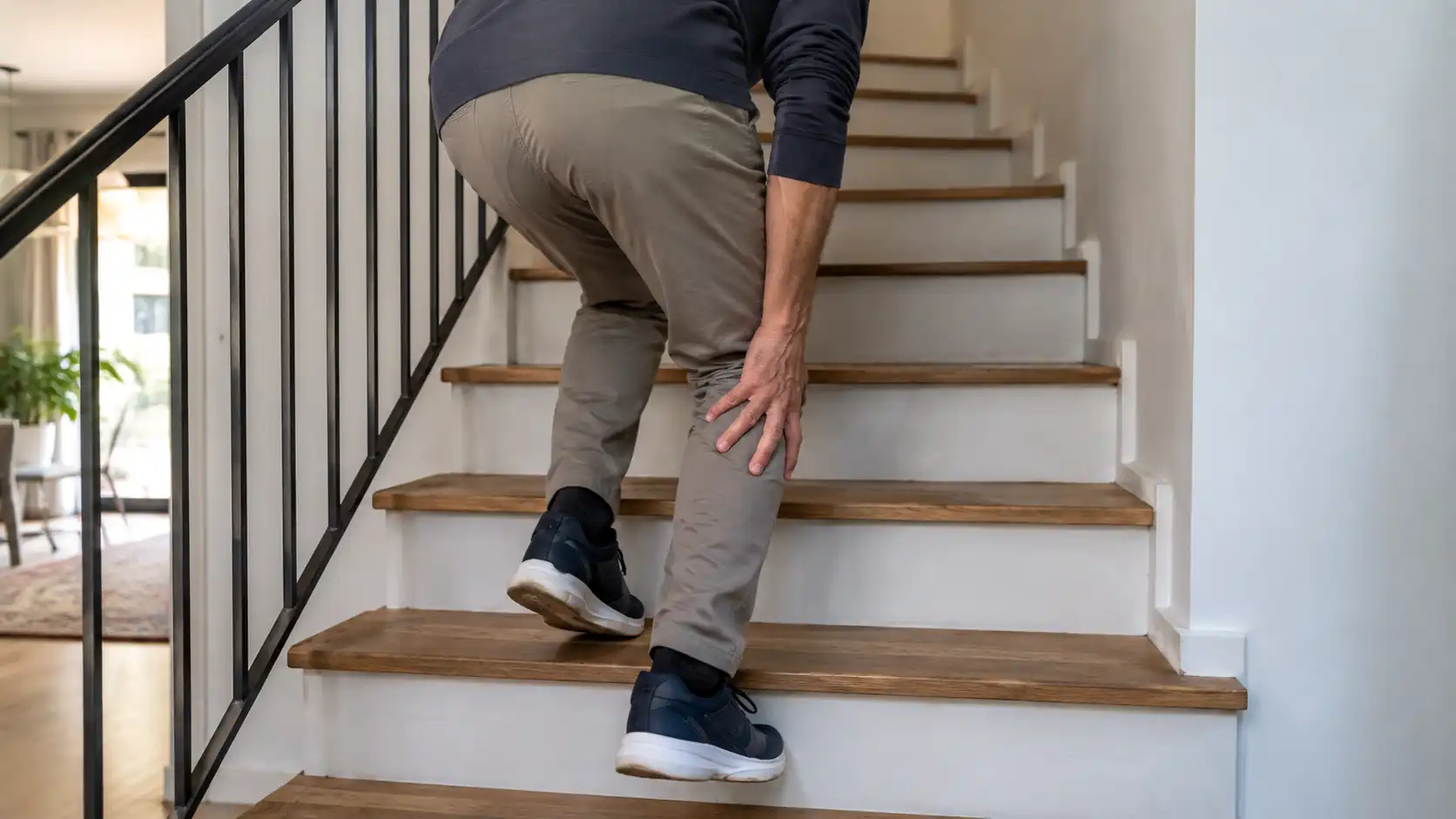
There is a particular kind of alarm that comes from your knee suddenly buckling underneath you, whether it happens stepping off a curb, standing up from a chair, or walking down the stairs. One moment you are moving normally, the next your leg briefly folds and you catch yourself, sometimes with your heart racing more from the shock than from any actual pain. When your knee gives way like this, even once, it is completely natural to want to understand exactly why.
This sensation, often described as a knee giving way, buckling, or feeling unstable, is one of the more unsettling symptoms we hear about in clinic, mostly because it feels so unpredictable. The good news is that this symptom, while genuinely worth taking seriously, usually has an identifiable cause once properly assessed. This guide walks through what is actually happening in your knee, the situations most likely to trigger it, and how to work out whether what you are feeling needs a closer look.
What Does It Mean When Your Knee Gives Way
A knee that suddenly gives way is not simply weakness in the way a tired muscle feels weak after exercise. In many cases, it involves what doctors call a protective reflex. When your brain picks up sharp or unexpected pain signals from inside the joint, it can briefly switch off the quadriceps muscle at the front of your thigh, the very muscle that keeps your knee straight and holds your body weight. That split second loss of muscle activation is enough for the knee to fold, even when there is no structural damage causing it.
This is why a sudden knee collapse without warning can happen even in knees that turn out, on proper assessment, to have no torn ligaments or major structural problems. In other cases, the buckling reflects genuine mechanical instability, where a ligament, the meniscus, or the joint surface is no longer providing the support it should. Why my knee gives out sometimes with no clear trigger often comes down to one of these two things, either a brief reflex shutdown or a small mechanical gap in support.
- A single, occasional episode of buckling, particularly during an awkward movement, is common and does not automatically mean something serious
- Repeated, unpredictable episodes, especially during ordinary activities like walking on flat ground, are the pattern that genuinely needs assessment
How Do You Tell if Knee Instability Is Ligament or Muscle Related
This is one of the most useful distinctions to understand, because it changes what kind of help is likely to actually fix the problem. Doctors often split this into two categories: mechanical instability, where a structure inside the knee is physically not holding things together, and functional instability, where the joint is structurally fine but the muscles and nerves controlling it are not doing their job. If your knee feels unstable and gives way repeatedly rather than as a one off, working out which category it falls into is usually the fastest route to a fix.
Mechanical instability tends to involve a genuine feeling of looseness or shifting within the joint, often during twisting or pivoting, and frequently traces back to a previous injury such as a torn ligament. If a ligament has been stretched or torn, the bones can shift slightly against each other under load, which your brain reads as instability.
Functional instability, by contrast, tends to involve general weakness or fatigue around the knee, often improving with rest and worsening with prolonged activity, and frequently relates to weakness in the quadriceps or the muscles around the hip and pelvis. Weak quadriceps are less able to control the knee through its full range of motion, particularly going down stairs or lowering into a squat.
Does the Direction Matter
One detail worth knowing is that the direction your knee buckles in can offer a genuine clue about which ligament is involved. A knee that gives way inward, towards the other leg, more often points to the ligament on the inner side of the joint. A knee that buckles outward points more towards the ligament on the outer side. A knee that gives out backward, as if the joint is folding the wrong way, points towards the ligament that stops your shin bone sliding backward. These patterns do not replace an examination, but they help you describe what is happening more precisely.
Why Does My Knee Feel Loose and Unstable When Twisting
A sensation of looseness specifically during twisting, rather than during straightforward walking, points fairly strongly towards a ligament or kneecap tracking issue rather than pure muscle weakness. Our page on kneecap instability explains how a kneecap that does not track correctly in its groove can feel very similar during twisting, and our article on ACL tear symptoms covers the most common ligament injury behind this pattern.

When and Where Your Knee Gives Way Tells Its Own Story
The specific situations that trigger buckling can genuinely help narrow down what is behind it, and it is worth paying attention to this pattern before your assessment.
Knee Gives Way Going Down Stairs or Off a Curb
This is one of the most commonly reported patterns, and it makes sense mechanically. Descending requires your quadriceps to control your body weight eccentrically, meaning the muscle lengthens under tension rather than shortening, a demanding type of contraction. If quadriceps strength is reduced, or pain triggers the protective reflex described earlier, buckling on the way down is a plausible outcome. Why does my knee buckle when stepping down or off a curb follows the same mechanism, since a curb often demands an even sharper version of the same movement.
Why Does My Knee Feel Unstable When Standing Up From a Chair
Standing up from seated requires a strong, coordinated quadriceps contraction starting from a deeply bent position, which is precisely the range where kneecap compression and quadriceps demand are both at their highest.
Knee Giving Out When Walking on Flat Ground
Buckling during simple, unremarkable walking is a different pattern and tends to raise more concern, since walking places comparatively modest demand on the knee compared to stairs or standing from sitting. When walking knee gives out on flat ground more often suggests a genuine structural issue rather than muscle fatigue, and is generally worth assessing sooner rather than later.
Knee Gives Way With Pain: What Sharp Pain or Aching Can Mean
Not all buckling feels the same, and whether pain comes with it changes what is likely going on. Knee gives out sharp pain that arrives at the exact moment of buckling often points towards something mechanical happening in that instant, a meniscus fragment catching, a ligament briefly overstretching, or the kneecap slipping partly out of place. Knee giving way pain that feels more like a dull, general ache rather than a sharp jolt more often points towards arthritis or an overloaded tendon, where the joint is irritated rather than acutely injured. The timing and character of the pain is one of the clearest clues we use when working out what is happening.
Why Your Knee Can Give Way Without Any Pain
It might seem strange, but knee giving way without pain is a genuinely common presentation, and it does not mean the symptom should be taken any less seriously.
What causes your knee to buckle without any swelling often comes down to two possibilities. The first is pure muscle weakness or fatigue, where the quadriceps are not generating enough force at the right moment, with no joint problem present at all. The second is a mechanical issue, such as a kneecap that briefly slips partly out of its groove and returns, which can trigger buckling through altered joint mechanics without necessarily causing pain. Knee suddenly gives way no pain episodes like this are not automatically the safer category. In some ways they are trickier to work out, since there is no pain to help pinpoint what structure is involved, which is why a proper physical assessment matters more here than trying to work it out at home.
Knee Lock and Give Way: What This Combination Means
When buckling happens alongside a locking sensation, where the knee briefly gets stuck partway through bending or straightening before releasing, this combination points more specifically towards a mechanical block inside the joint, most commonly a meniscus tear or a loose fragment of cartilage catching between the joint surfaces. Our article on what is actually happening inside a knee that locks when bending explains this in more detail, and it is worth reading if locking is a regular feature alongside your buckling, since this combination is one we would generally recommend having assessed.
Can Arthritis Cause Your Knee to Give Way
This is a question we hear often, particularly from patients over 40, and it deserves a clear, honest answer.
Yes, arthritis is one of the more common underlying causes of knee buckling, especially in older adults, and it can happen through a few different routes. As cartilage wears down through osteoarthritis, the joint surfaces become less smooth and evenly matched, which can cause momentary catching or shifting that triggers instability. Arthritis also frequently causes pain during weight bearing, which can trigger the same protective quadriceps shutdown described earlier. Arthritic knees are also often accompanied by weaker surrounding muscles, since pain naturally leads people to move less over time, and moving less leads to weaker muscles. Knee giving way in elderly patients is also tied to broader changes in balance and mobility that come with age, part of why this symptom deserves proper attention rather than being written off as inevitable.
A large study following people with knee osteoarthritis found that those who reported knee buckling were 1.6 to 2.5 times more likely to have repeated falls, and those who fell after a buckling episode had a 4.5 times higher chance of falling again within two years. Our guide to early signs of knee arthritis covers this condition in more depth, and our page on knee osteoarthritis explains diagnosis and treatment fully.
Could a Meniscus Tear Be Behind It
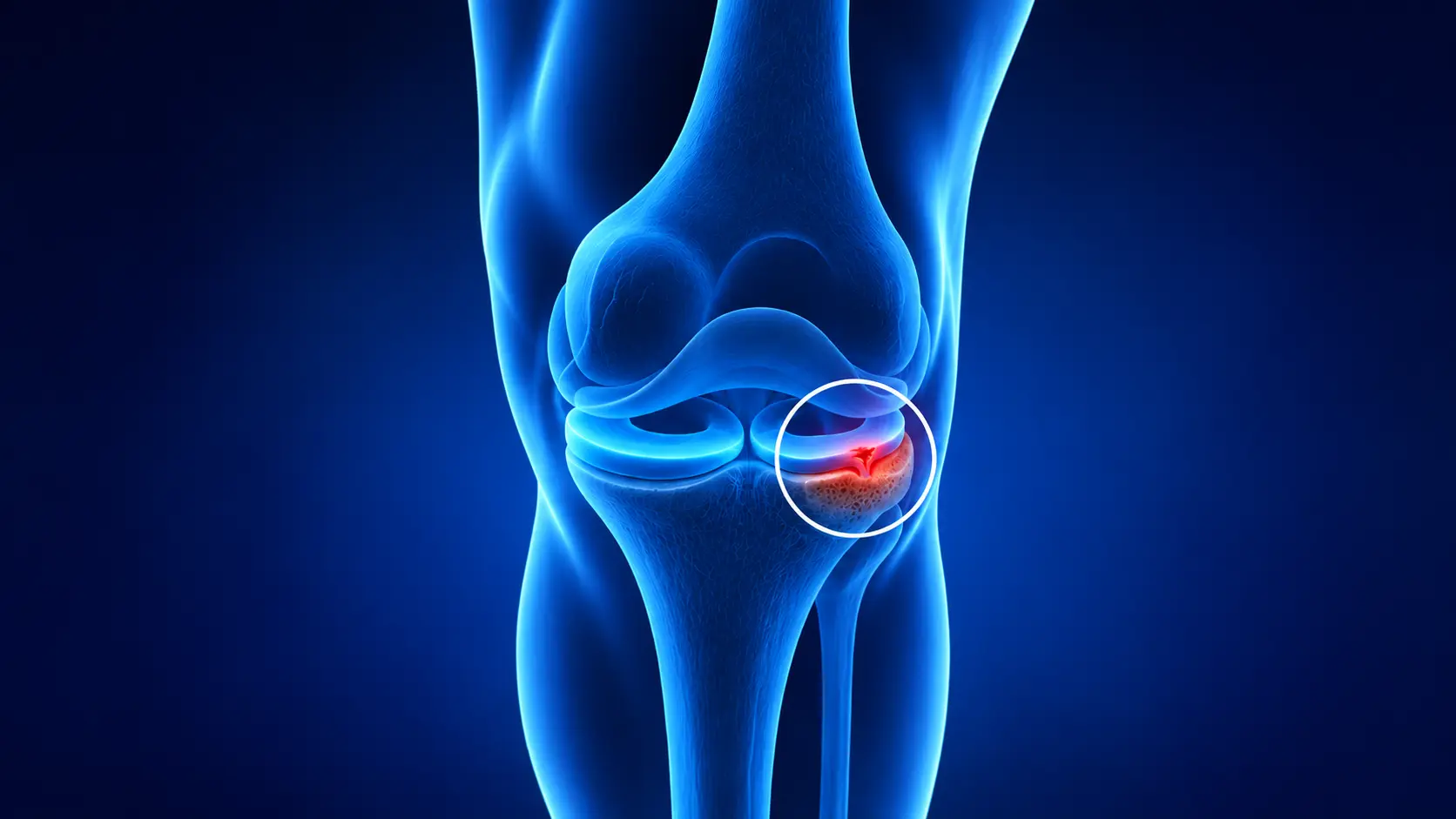
A meniscus tear is another genuinely common cause, particularly if buckling comes with catching, locking, or pain along the joint line. Our page on meniscal tears in the knee and our article on common causes of meniscus tear injuries both explain how these injuries typically show up.
Other Causes Worth Knowing About
A few less common causes are worth a mention, since they explain why does knee give way in cases where the knee itself checks out fine on examination. Nerve irritation lower down in the spine can sometimes weaken the signal reaching the thigh muscles, which can feel just like knee instability, more likely if you also notice tingling or numbness spreading down the leg. Separately, some people have naturally looser joints and connective tissue, sometimes linked to a hypermobility condition, which can make the knee more prone to slipping or buckling during normal daily movement, without this necessarily being painful. Why do my knees sometimes give way with no obvious pattern is occasionally explained by one of these less common causes, which is exactly why an assessment matters when the picture is not clear cut.
Knee Gives Way After ACL Surgery: What It Can Mean
Experiencing buckling after ACL reconstruction can be genuinely worrying, particularly after already going through surgery and rehabilitation expecting a stable knee. There are a few reasons this can happen, and not all of them point to a problem with the surgery itself.
Buckling During Early Recovery
In the earlier stages of recovery, some instability is common simply because the quadriceps and surrounding stabilising muscles have not yet fully regained the strength and coordination they had before injury. This tends to improve steadily with continued, structured rehabilitation.
Buckling That Persists or Worsens
Less commonly, buckling after ACL surgery can mean the graft has not healed as expected, has been re-injured, or that another structure, such as the meniscus or a second ligament, was also affected. Persistent or worsening buckling, rather than gradual improvement, genuinely needs a follow up assessment with your surgical team.
When Knee Buckling Is a Fall Risk Worth Assessing Properly
Most single episodes of knee buckling do not indicate an emergency, but there is a clear set of signs that shift this from something to monitor into something worth assessing promptly.
- Buckling that is becoming more frequent, or happening during increasingly ordinary, low demand activities
- Any fall or near fall caused by your knee giving way, even if you were not injured
- Buckling with locking, catching, significant swelling, or a feeling the knee is genuinely loose rather than just weak
- Buckling in a knee that has previously had surgery, particularly if it seems to be getting worse
- Ongoing buckling in an older adult, given the documented link between recurring buckling and increased fall risk
If any of these apply to you, a proper physical examination, including tests of ligament stability, muscle strength, and joint mechanics, gives far more useful answers than trying to work it out from home.

Get Treatment When Your Knee Gives Way in London
We understand how disruptive and genuinely unsettling it can feel when your knee cannot be relied upon to simply hold your weight. A thorough assessment, including a detailed history of exactly when and how your buckling happens, alongside a hands on examination of ligament stability, muscle strength, and joint mechanics, gives us a much clearer picture than guesswork ever could.
Mr Raghbir Khakha has been in consultant practice since 2017, with a particular focus on ligament reconstruction, meniscal repair, and joint preservation surgery, exactly the areas most often behind genuine knee instability. You can read more about his background and areas of expertise, find out more about London Knee Care, and explore our full range of knee treatments or browse our knee conditions if buckling has become a regular part of your daily life.
If your knee has been giving way, whether occasionally or often, we would rather you had a clear answer than kept adjusting your life around the uncertainty. You can get in touch with our team with any questions, or book directly through our online booking page. We are also reachable by phone on 0207 046 8008. Visit our homepage to find out more about how London Knee Care can help.
London Knee Care
45 Queen Anne Street, London W1G 9JF
Call us on 0207 046 8008
Email us at rk@os.clinic
Frequently Asked Questions
Why does my knee suddenly give way?
Often because of a protective reflex where the brain briefly switches off the quadriceps in response to pain inside the joint, or because of genuine mechanical instability from a ligament, meniscus, or cartilage problem.
Can arthritis make your knee randomly give way?
Yes, through uneven joint surfaces, pain triggered muscle shutdown, and weakened surrounding muscles from reduced activity over time.
Why does knee give way with no clear cause at all?
Sometimes there is no single obvious trigger, and the answer turns out to be a combination of small factors, mild fatigue, or slight joint irritation, rather than one clear structural problem.
Why does my knee give way without warning?
This usually points towards a reflex response to sudden pain or irritation inside the joint, which is why it can feel completely unexpected even during simple movements.
Why do my knees sometimes give way and not other times?
This inconsistency often reflects fatigue, minor swelling that comes and goes, or activity level, since a knee that copes fine on a rested day may buckle more easily when tired.
Is knee buckling serious?
Occasional buckling is usually not an emergency, but frequent or worsening episodes, particularly with falls, locking, or swelling, should be properly assessed given the associated fall risk.
How do you strengthen a knee that gives way?
Targeted quadriceps and hip strengthening, along with balance and proprioception exercises, are commonly used, though the right approach depends on the underlying cause identified on assessment.
Does knee giving way mean I need surgery?
Not necessarily. Many cases improve with strengthening and rehabilitation alone, though structural causes such as significant ligament or meniscus damage may need surgical treatment depending on severity.