You get into bed, the house goes quiet, and your knee starts to ache. It might throb, or it might be a deep, dull pain that makes every position feel wrong. If that sounds familiar, you are not imagining it. Knee pain at night is one of the most common reasons people come to see us, and it is often the symptom that finally makes them ask for help.
Below, we explain why knee pain seems worse after dark, what usually causes it, which signs mean you should not wait, and what can help you sleep. We also cover when nighttime knee pain might lead to a conversation about knee replacement, and when it does not.
Why Does Knee Pain Seem Worse at Night?
Nighttime knee pain does not always mean the damage has suddenly got worse. A few ordinary things happen in the evening that can turn up the volume on a knee that was already unhappy.
Fewer Distractions and More Time Resting
During the day, work, conversation and movement keep your mind busy. At night, there is nothing competing for your attention, so you notice pain that was easy to ignore at 2pm.
Stiffness and Swelling After Daily Activity
A knee that has worked hard all day can become a little swollen and irritated. When you lie still for hours, the joint stiffens, and the first time you shift position it can protest. That is why many people feel knee stiffness at night and again when they get up.
Natural Body Clock Changes
Some doctors think that hormones which follow the body clock, including cortisol, which helps keep inflammation in check, dip in the evening. That may let joint inflammation feel stronger at night. This is still an idea rather than a settled fact, but it fits what many patients tell us.
Knee Pain at Night Causes
Several problems can cause knee pain at night. The most common are:
- Osteoarthritis, where the cartilage wears down
- Inflammation within the knee joint
- Bursitis at the front or inner side of the knee
- Meniscal tears and other cartilage damage
- Tendon irritation (tendonitis)
- Gout and other inflammatory types of arthritis
- Pain referred from the hip
- Old injuries or overuse
Night pain alone does not tell us which one it is, so here is how each tends to behave.
Inflammation and Fluid Build-Up in the Knee
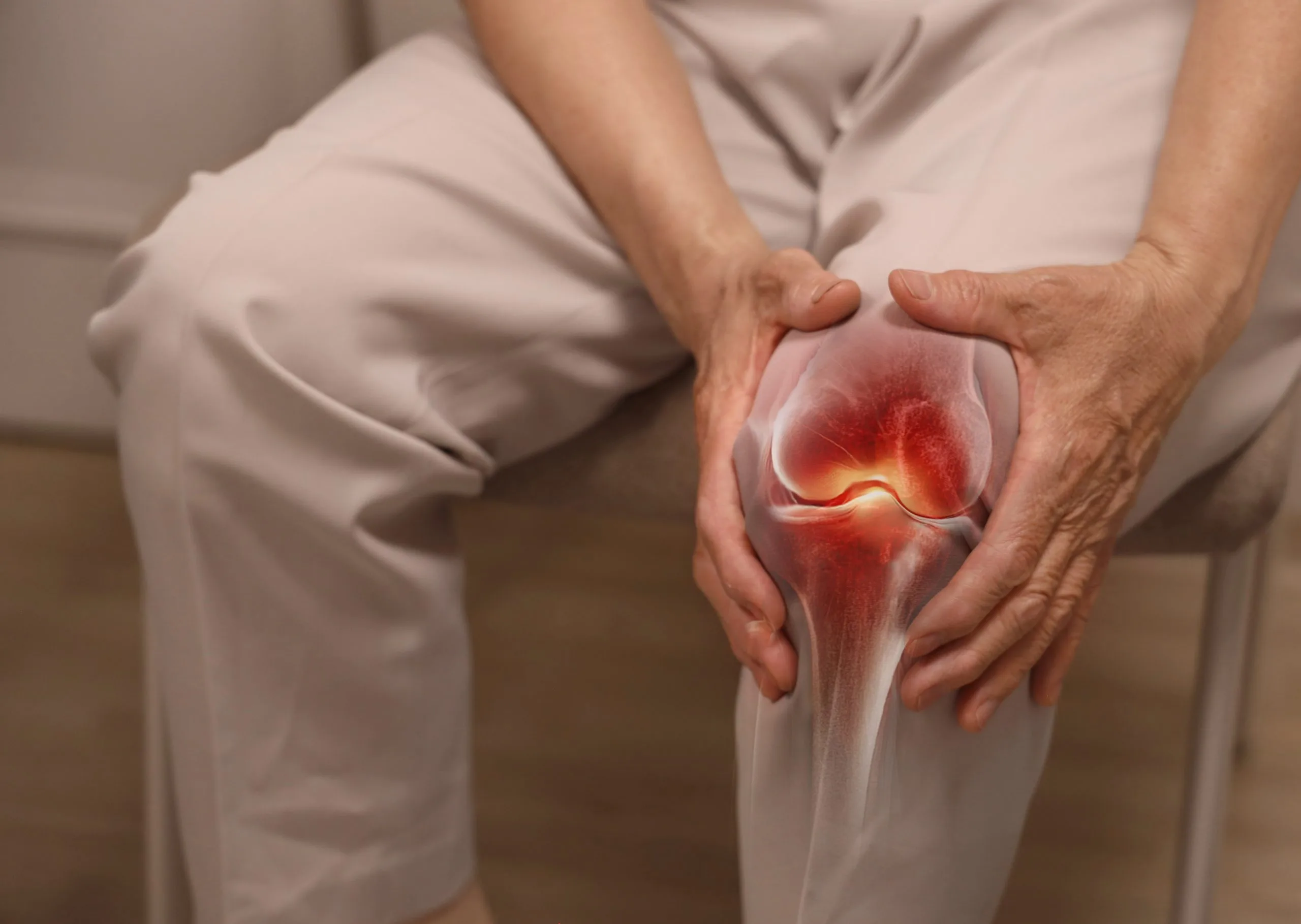
Knee joint inflammation happens when the lining of the joint becomes irritated and makes extra fluid. The knee can feel puffy, tight, warm and tender, and lying still makes it more noticeable. It may follow an injury or a heavy day, or it may be part of arthritis. A knee that is suddenly hot, red, very painful and swollen, especially with a fever, needs urgent attention, and we cover that below.
Osteoarthritis and Degenerative Knee Changes
Can osteoarthritis cause knee pain at night? Yes. Knee osteoarthritis is a wear-related condition where the protective cartilage on the bone ends gradually breaks down, leading to pain, stiffness, swelling and reduced movement. It is the most common type of arthritis in the UK.
In the early stages, the pain usually builds with activity and eases with rest. As degenerative changes progress, some people feel the knee ache even when resting, which is when it starts to disturb sleep. So is knee pain at night a sign of arthritis? It can be, particularly if you are over 45, but it is not the only possible cause.
Bursitis and Soft Tissue Problems Around the Knee
Bursae are small fluid-filled sacs that cushion the tendons and bone around the knee. When they become irritated, they swell and hurt, and the pressure of lying in bed can make that more obvious.
Prepatellar Bursitis. This affects the bursa at the front of the knee, just over the kneecap. You may see swelling, and the area can feel warm and tender. It is often linked to kneeling, so it is common in people who kneel for work or gardening.
Pes Anserine Bursitis. This causes tenderness on the inner side of the knee, a few centimetres below the joint. Side sleepers often notice it, because the knees press against each other when lying down.
Other Possible Causes of Knee Pain While Lying Down
A meniscal tear can cause pain along the joint line, with catching or a feeling of the knee locking. Our page on meniscal tears in the knee explains the symptoms in more detail. Irritated tendons, an old ligament injury and gout can also cause knee pain while lying down. Sometimes the problem is not in the knee at all. Hip problems can send pain to the knee, which is why we always examine the hip too.
Is Knee Pain When Sleeping Harmless or Serious?
Most nighttime knee pain has a straightforward explanation. This quick comparison can help you judge what you are dealing with, though it is a guide and not a diagnosis.
| What you notice | Usually less worrying | Worth getting checked |
| How often | Now and then after a busy day | Most nights, or getting worse |
| Sleep | Settles when you change position | Wakes you repeatedly |
| Swelling | Mild and settles by morning | Persistent, sudden or increasing |
| Relief | Eases with rest and simple painkillers | Does not ease with rest or painkillers |
| Other symptoms | None | Locking, giving way, fever, lump, unexplained weight loss |
| Duration | A day or two | More than a few weeks |
When Should You See a Doctor for Knee Pain at Night?
The NHS advises seeing a GP if knee pain does not improve within a few weeks, and NI Direct lists pain at night or at rest as a reason to get checked. In our view, knee pain at night that keeps returning is worth taking seriously, even if it seems manageable.
A knee specialist is worth considering if night pain is waking you most nights for more than a few weeks, if swelling or stiffness keeps coming back, if painkillers, physiotherapy or rest no longer give enough relief, or if you are starting to wonder whether you might need a knee replacement. If any of this sounds like you, we can assess this quickly and explain what it means. You can read about Mr Raghbir Khakha, who leads our knee care, and how he works.
How Is Knee Pain at Night Diagnosed?
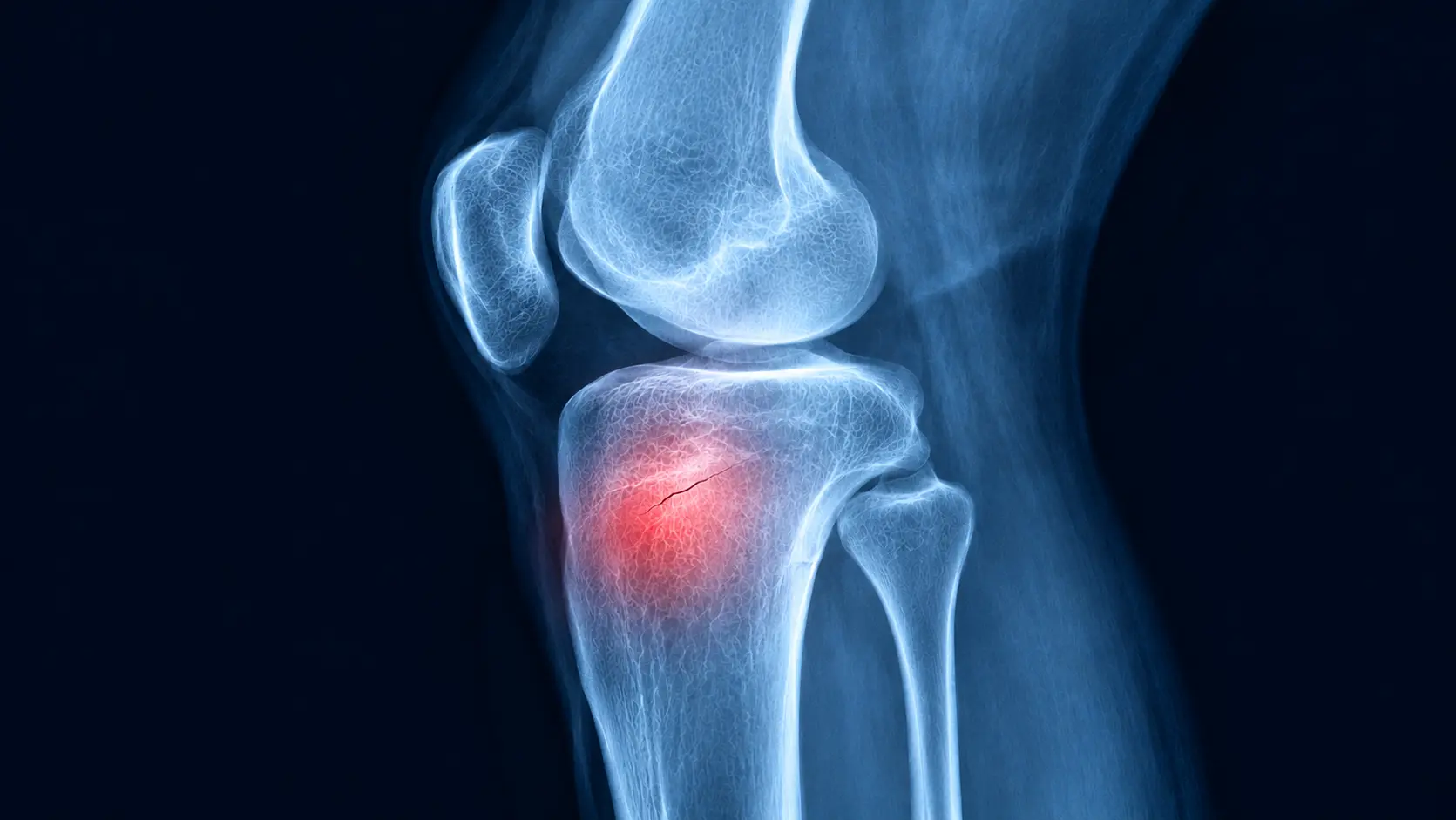
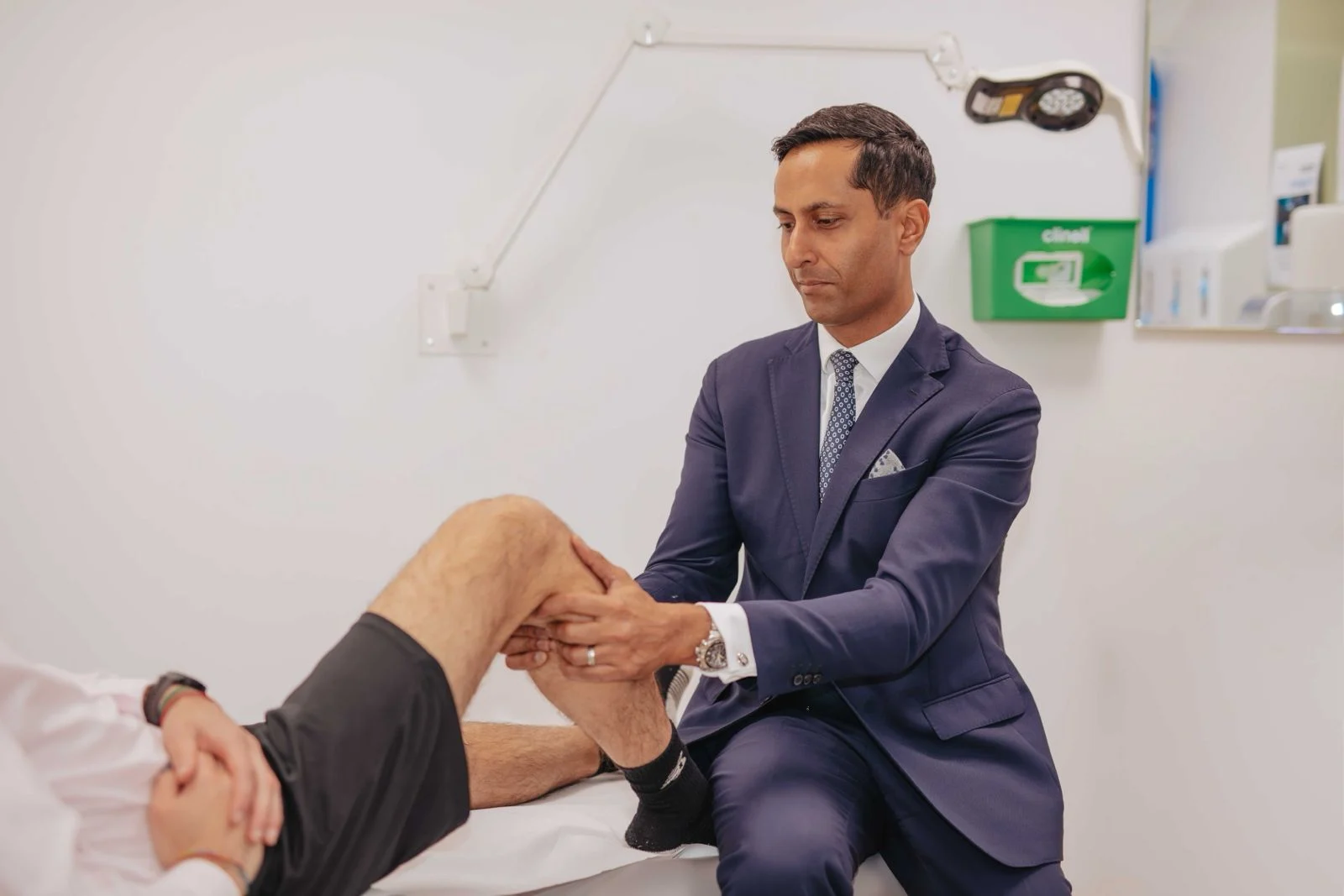
We start by listening. We ask when the pain begins, what eases it, whether the knee swells, and what you can and cannot do. Then we examine the knee, and often the hip, because pain can travel. An X-ray shows wear in the joint and changes to the bone, and where needed we arrange an MRI to look at the meniscus, cartilage and soft tissues. We take time to explain what we find in plain language, so you leave with a clear answer and a clear plan.
Knee Pain at Night Treatment
Treatment depends on the cause, which is why a diagnosis comes first. Many people improve without surgery.
Non-Surgical Treatment and Physiotherapy
Conservative treatment means non-surgical care. It usually includes pacing your activity, strengthening the muscles around the knee, weight management where relevant, and a structured plan with a physiotherapist. Painkillers or anti-inflammatory medicines can help some people. Check with a pharmacist or your GP first, because ibuprofen and similar medicines are not suitable for everyone.
Injection Treatments Including Arthrosamid®
For knee osteoarthritis, injections can calm inflammation and improve comfort. At London Knee Care, we also offer Arthrosamid®, a hydrogel injection for knee osteoarthritis that may help some people reduce pain and delay or avoid knee replacement. Results vary, and it is not right for everyone, so we discuss suitability with you first.
When Surgery Is Considered
Surgery is considered when other measures no longer control symptoms or when there is a structural problem such as a significant meniscal tear. Options range from keyhole procedures to joint preserving surgery such as knee osteotomy, through to knee replacement. We explain the benefits and limits of each, and we only recommend surgery when it is the right step.

How to Relieve Knee Pain at Night at Home
While you wait for an assessment, these simple steps may help:
- Ice or warmth. The NHS suggests an ice pack wrapped in a tea towel for up to 20 minutes every two to three hours when the knee is sore or swollen. Some people find gentle warmth helps stiffness, but avoid heat if the knee is hot and red.
- Gentle movement before bed. A short walk or easy stretching can reduce stiffness, but avoid hard exercise close to bedtime.
- Pain relief. Follow the label, and ask a pharmacist if you are unsure.
- Weight and strength. Extra weight adds strain to the knees, and stronger thigh muscles help support the joint.
How to Sleep Comfortably With Knee Pain
Sleeping Positions That Reduce Knee Strain
There is no single best position, because it depends on what is wrong. Lying on your back is often kind to sore knees, with a pillow under your calves or lightly under the knee so it rests slightly bent rather than locked out. If you prefer your side, place a pillow between your knees to stop them pressing together, which helps with pes anserine pain in particular. Sleeping on your front tends to put extra twisting strain on the joints, so most people find it worse. If you have had a knee replacement, follow your surgeon’s advice on positioning.
Pillow Support and Bedtime Habits
A firm pillow between or under the knees can make a real difference. A mattress that is medium firm and supports your spine often suits people with joint pain. Keeping a regular bedtime routine, and avoiding long periods of sitting with your knee bent in the evening, can also help. Stiffness builds up when the knee stays still, which is why knee pain after sitting for long periods often feels worse by bedtime.
Does Nighttime Knee Pain Mean You Need a Knee Replacement?
Not automatically. Many people with night pain never need a replacement. A knee replacement is usually considered when pain is persistent, including at night, the knee limits daily life, scans show significant joint damage, and non-surgical treatment has stopped helping.
For some people, a lighter option may suit better. A partial knee replacement can be enough when wear is limited to one part of the joint, and an osteotomy can suit younger, active people with arthritis on one side of the knee. Surgeons weigh up knee osteotomy vs knee replacement by looking at your age, activity level and where the wear sits. If replacement does turn out to be right, we explain what knee replacement surgery involves, step by step.
Get Your Knee Pain at Night Assessed at London Knee Care
If knee pain at night is costing you sleep, you do not have to wait for it to get worse. At London Knee Care, we focus entirely on the knee. Mr Raghbir Khakha is a fellowship-trained consultant orthopaedic surgeon who has spent the last 15 years working only on knees and has performed more than 5,000 knee procedures. Our approach is simple. We find out what is causing your pain, explain it clearly, and talk you through every option, including the ones that do not involve surgery.
You can book an appointment with us online, or use our contact us page, or call us on 020 7046 8008. We guide you on the next steps from the first conversation, so you are never left wondering what happens next.
Frequently Asked Questions About Knee Pain at Night
Why Does My Knee Hurt More at Night?
Fewer distractions, stiffness after a busy day, fluid in the joint and possibly body clock changes in inflammation can all play a part. The cause underneath, such as arthritis or bursitis, is what needs identifying.
Why Does Knee Pain Keep Me Awake at Night?
Pain that is steady or throbbing, or that flares when you change position, can stop you settling. Poor sleep can then make pain feel worse the next day, so it is worth treating early.
Can Bursitis Cause Knee Pain at Night?
Yes. Prepatellar bursitis and pes anserine bursitis can both be more noticeable when lying down, especially if the knees press together or rest on a pillow.
Can Inflammation Cause Knee Pain at Night?
Yes. Inflammation within the knee makes it swollen, warm and tender, and it is often more noticeable when you are still.
What Treatments Are Available for Nighttime Knee Pain?
Options include physiotherapy, activity changes, medicines, injections such as Arthrosamid® where suitable, and surgery in selected cases. The right choice depends on the diagnosis.
This article is general information and is not a substitute for a personal assessment. If you have concerns about your knee, please get in touch with us.