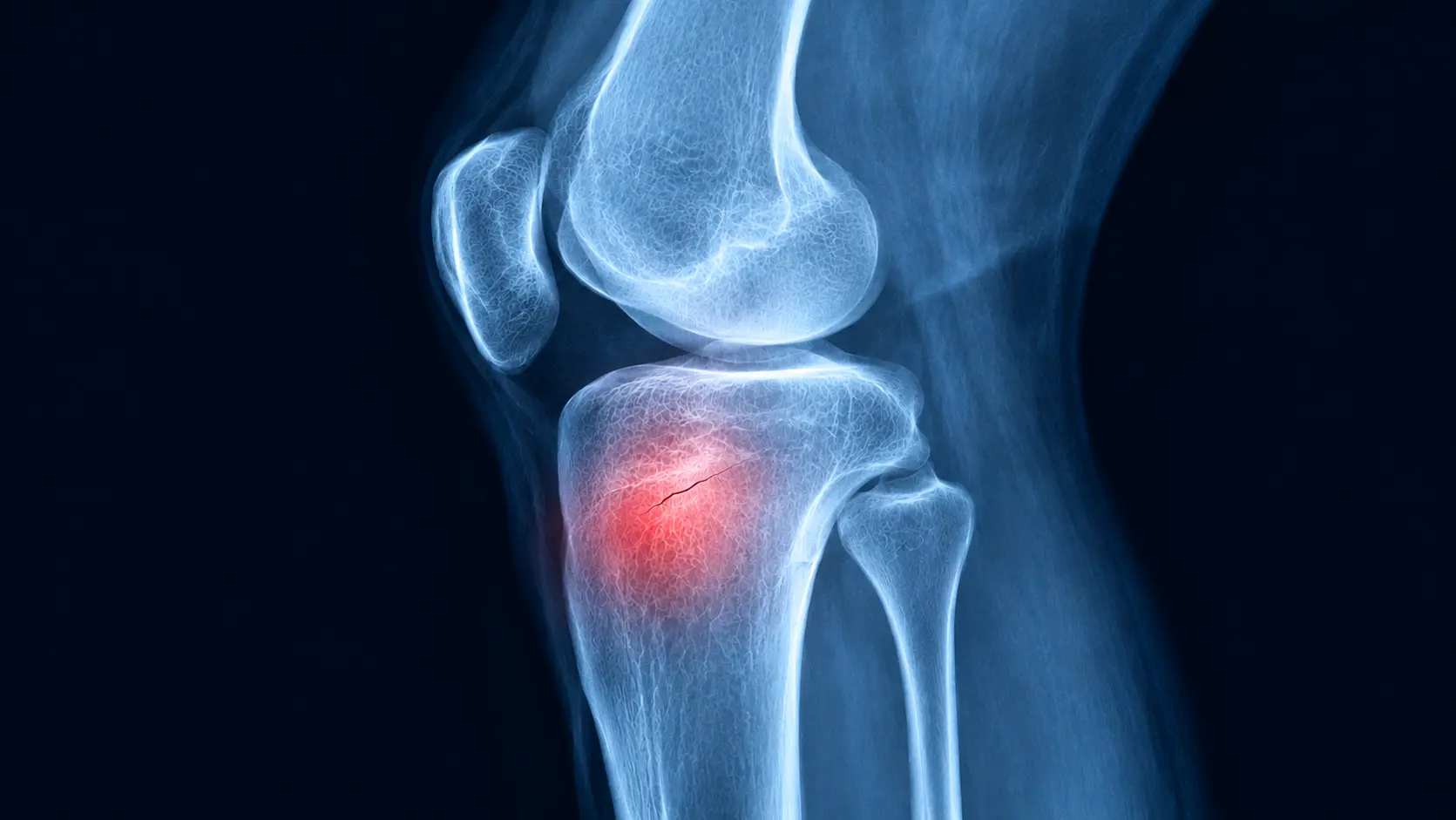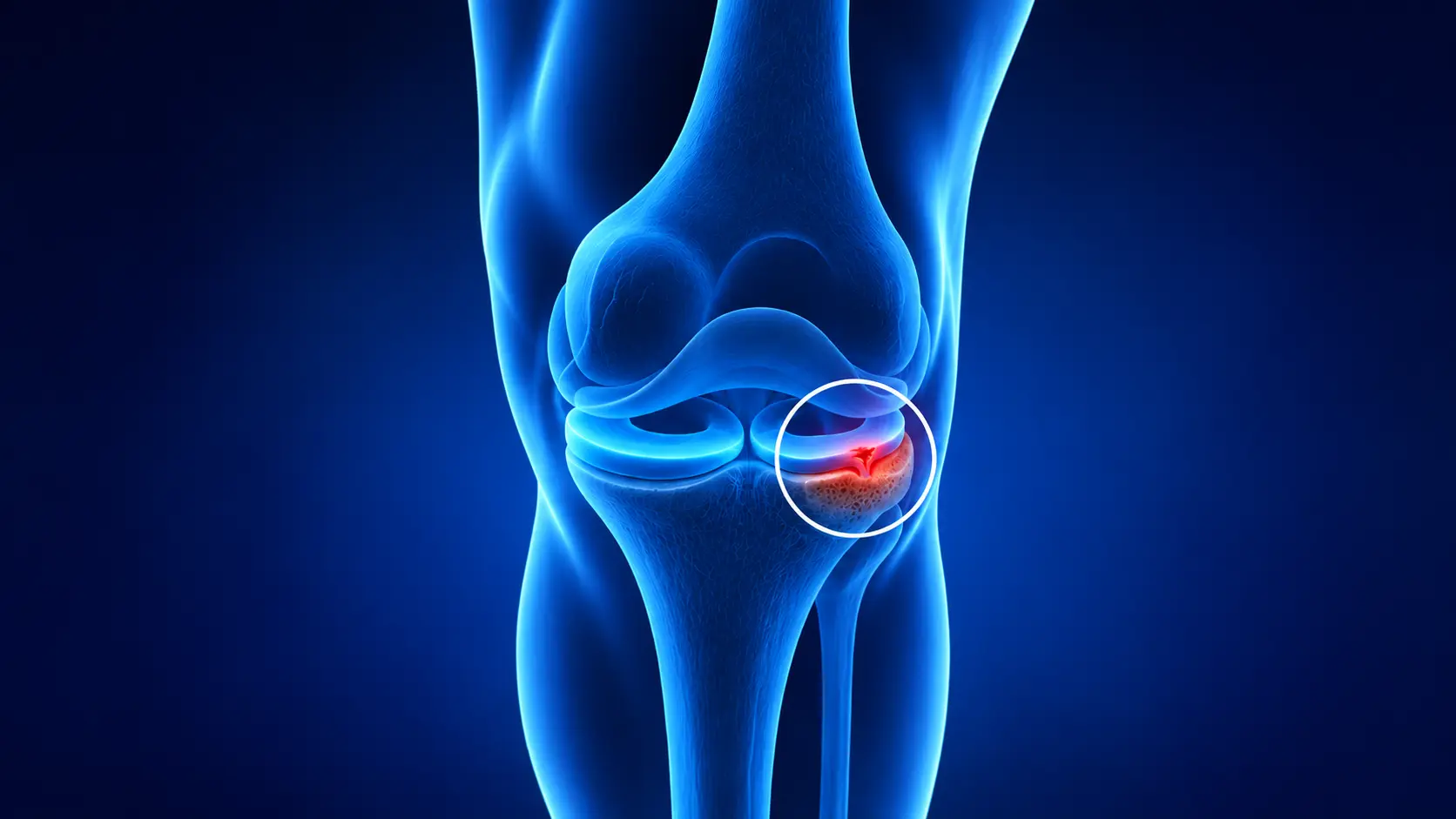
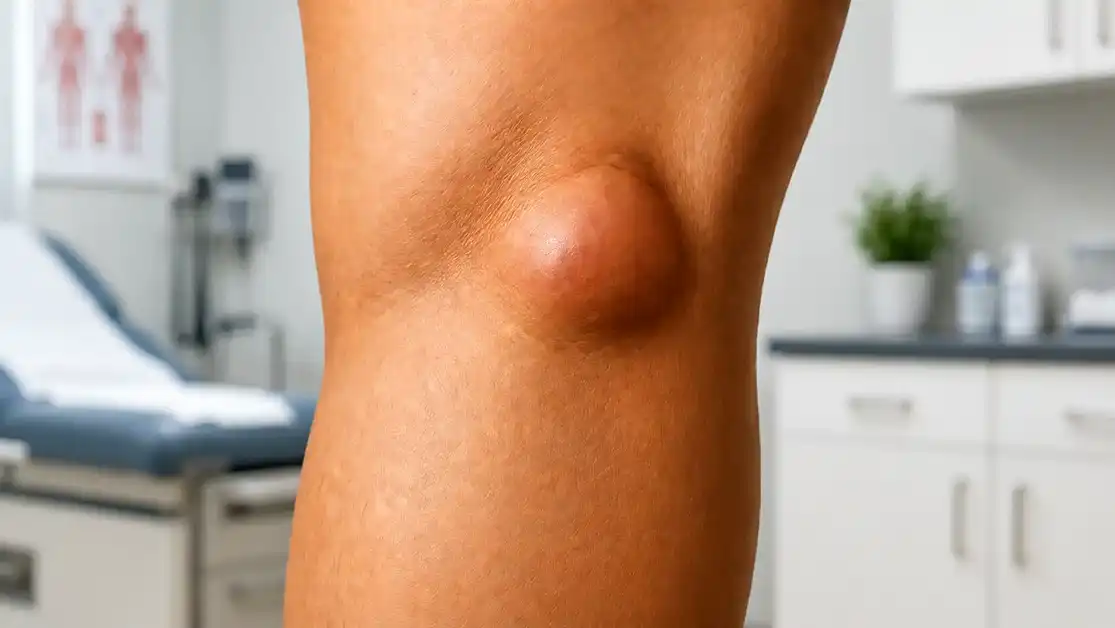
A lump behind your knee can feel worrying, especially if it appears suddenly or starts to affect how you walk, bend or move. You may feel a soft swelling at the back of the knee. You may also notice tightness, pressure, stiffness or pain after walking, standing or climbing stairs.
One common cause is a Baker’s cyst, also called a popliteal cyst. It is a fluid-filled swelling that forms at the back of the knee. It is not usually dangerous, but it can be uncomfortable. It can also be a sign that something inside your knee needs attention.
This is why baker’s cyst treatments should not only focus on the lump. We need to understand why fluid has built up in the first place. Arthritis, a meniscus tear, cartilage damage, injury or inflammation inside the knee can all play a part.
We help you understand what this swelling means, what may be causing it and what your next steps should be. If the lump is painful, growing or keeps coming back, we can assess this quickly and guide you towards suitable treatment.
What Is a Baker’s Cyst
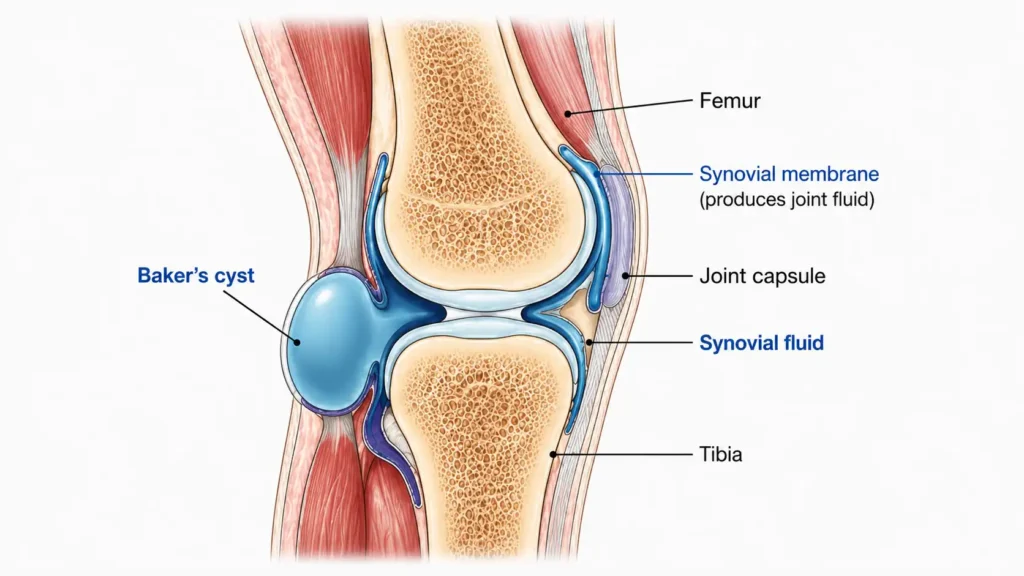
A Baker’s cyst is a fluid-filled swelling that forms behind the knee. It usually develops when the knee produces too much joint fluid. This fluid can move to the back of the knee and collect in a small sac, creating a lump or swelling.
A Baker’s cyst is also called a popliteal cyst. The word “popliteal” refers to the area at the back of the knee. You may see the phrase popliteal cyst Baker’s cyst in scan reports, online searches or medical notes. In most cases, both terms refer to the same condition.
Some people have a Baker’s cyst without much pain. Others feel pressure, tightness or discomfort, especially when bending or straightening the knee.
A Baker’s cyst is often linked with a problem inside the knee joint. This may include arthritis, cartilage damage, a meniscus tear or inflammation after an injury. So, while the lump is what you can feel, the cause is often deeper inside the knee.
Where Is a Baker’s Cyst Located
The usual Baker’s cyst location is at the back of the knee. It may feel like a soft lump or swelling behind the joint.
If you searched for bakers cyst location, you are likely trying to understand whether the swelling you feel is in the right place. A Baker’s cyst usually sits in the hollow area behind the knee. It may become more noticeable when you stand, straighten your leg or compare both knees.
How a Baker’s Cyst Is Linked to the Knee Joint
A Baker’s cyst is closely linked to the knee joint. It is not usually a separate skin cyst. It often forms because the knee joint is producing too much fluid.
This is why bakers cyst knee joint is an important search phrase. The cyst may be the visible or noticeable part, but the real issue may be arthritis, a meniscus tear, cartilage damage or another internal knee condition.
What Causes a Baker’s Cyst Behind the Knee
Many people search for what causes a Baker’s cyst because they want to know whether the lump itself is the main problem. In many cases, the cyst is a result of another knee issue.
The knee normally contains joint fluid, which helps the joint move smoothly. When the knee becomes irritated, inflamed or damaged, it may produce extra fluid. This excess fluid can collect at the back of the knee and form a cyst.
Common causes include the following.
- Knee osteoarthritis
- Rheumatoid arthritis
- Meniscus tears
- Cartilage damage
- Knee injury
- Ongoing inflammation inside the joint
- Swelling after previous knee surgery
What causes a Baker’s cyst behind the knee is usually linked to how the knee joint reacts to irritation. If the joint produces more fluid than usual, the extra fluid may move backwards and form a swelling.
Baker’s Cyst After Knee Replacement
A Baker’s cyst after knee replacement should be checked properly. Some swelling can happen after knee surgery, but a new or persistent lump behind the knee needs medical review.
There can be several reasons for swelling after knee replacement. These may include inflammation, fluid build-up, irritation around the joint or other issues that need assessment.
If you have had knee replacement surgery and notice swelling behind the knee, we recommend booking a review. We can assess the area, look at your symptoms and guide you on the safest next step.
What Causes a Baker’s Cyst to Flare Up
A Baker’s cyst may flare up when the knee becomes more inflamed. This can happen after long walks, sport, kneeling, squatting or standing for long periods.
A flare-up may cause more tightness, swelling or pain behind the knee. It may also make the knee feel harder to bend.
If flare-ups keep happening, it may mean the underlying knee problem has not settled. In that situation, we can help you understand what is driving the swelling and whether treatment is needed.
Are Baker’s Cysts Painful
Baker’s cysts can be painful, but not always. Some people only notice a lump behind the knee. Others feel aching, tightness, stiffness or pressure.
Many people search are bakers cyst painful because the symptoms can feel confusing. The answer depends on the size of the cyst, the pressure behind the knee and the problem causing the fluid build-up.
Common symptoms include the following.
- Swelling behind the knee
- A feeling of fullness or tightness
- Pain behind the knee
- Stiffness when bending the knee
- Discomfort after walking or standing
- Reduced knee movement
- Calf swelling if the cyst bursts
If the cyst is linked to arthritis or a meniscus tear, some pain may come from the knee joint itself. This is why a clear diagnosis matters.
How Long Can a Baker’s Cyst Last
How long can a Baker’s cyst last is one of the most common questions patients ask. The honest answer is that it varies.
Some cysts settle within weeks, especially if the knee irritation reduces. Others can last for months or keep returning if the underlying knee problem remains.
A Baker’s cyst linked to a minor strain may improve with rest, activity changes and simple care. A cyst linked to arthritis, cartilage damage or a meniscus tear may last longer.
There is no single recovery time that applies to everyone. Size, pain level, activity, age, knee health and treatment choice all matter.
Will Baker’s Cyst Go Away
Will Baker’s cyst go away depends on the cause. A small cyst with mild symptoms may improve on its own. However, it can return if the knee keeps producing too much fluid.
This is why treatment should look at the cause, not only the swelling. If arthritis or a meniscus tear is driving the fluid build-up, the cyst may reduce for a while and then come back.
Baker’s Cyst Recovery
Baker’s cyst recovery depends on the treatment used and the condition of the knee.
Simple cases may improve with activity changes, pain relief and physiotherapy. If aspiration or injection is used, recovery advice may include avoiding heavy activity for a short time. If surgery is needed for an underlying knee problem, recovery depends on the exact procedure.
A clear diagnosis gives you a better idea of what to expect.
Baker’s Cyst Treatments in the UK
If you are searching for baker’s cyst treatment UK, you may be trying to understand whether you need self-care, physiotherapy, drainage, injection or specialist knee treatment.
Baker’s cyst treatments can range from simple symptom control to more detailed knee care. The right option depends on your symptoms, the size of the cyst and the reason it developed.
Mild cysts may not need major treatment. If there is little pain and movement is normal, you may be advised to monitor it, adjust activity and manage swelling.
More painful or repeated cysts need closer assessment. This is especially true if the lump is growing, the knee keeps swelling or daily activity is affected.
Baker’s Cyst Treatment Without Surgery
Many patients do not need surgery. Non-surgical care may include the following.
- Rest from painful activity
- Ice for swelling
- Compression where suitable
- Elevating the leg
- Pain relief or anti-inflammatory medicine if safe for you
- Physiotherapy
- A steroid injection into the knee joint in selected cases, to reduce the inflammation causing the fluid build-up
- Aspiration or drainage in selected cases
Medication should be used safely, especially if you have stomach, kidney, heart or blood pressure problems, or if you take blood thinners. Speak to a GP, pharmacist or specialist before using anti-inflammatory medicines if you are unsure.
How to Treat a Baker’s Cyst
How to treat a Baker’s cyst depends on whether it is mild, painful, recurrent or linked to another knee condition.
For mild symptoms, simple care may be enough. This may include reducing activities that make symptoms worse and keeping the knee moving gently.
For symptoms linked to inflammation, treatment may focus on reducing swelling inside the knee. This may include physiotherapy, injection treatment or other knee care where suitable.
If the cyst is caused by a meniscus tear, cartilage problem or arthritis, treatment may need to focus on that underlying condition. Without this, the cyst may reduce for a while and then return.
Baker’s Cyst Behind the Knee Treatment
The right baker’s cyst behind the knee treatment depends on what is causing the swelling. Treating the lump alone may not be enough if the knee joint continues to produce excess fluid.
At London Knee Care, we look at your symptoms, knee movement, pain pattern and medical history. If needed, we may recommend imaging to confirm the cyst and check for arthritis, meniscus damage or cartilage problems.
If you are unsure what to do next, you can book an appointment with us and we can assess the swelling quickly.
Can You Drain a Baker’s Cyst
Yes, in some cases a clinician may drain a Baker’s cyst. This is called aspiration. It is usually done with a needle and may be guided by ultrasound.
Patients often search drain a Baker’s cyst because they want relief from pressure. Drainage may reduce swelling and discomfort, but it does not always stop the cyst from coming back.
If the knee continues to produce excess fluid, the cyst may refill. This is why aspiration is usually considered as part of a wider treatment plan, not a cure for every case.
Baker’s Cyst Drainage and Aspiration
Baker’s cyst drainage may be considered if the cyst is large, painful or limiting movement. It should only be done by a trained clinician.
You should never try to pop, squeeze or drain a Baker’s cyst at home. This can cause injury, infection or worsening symptoms.
Removing Baker’s Cyst
Removing Baker’s cyst is not usually the first treatment. Surgery to remove the cyst itself is uncommon and is usually only considered in selected cases.
If surgery is discussed, we usually need to look for the problem inside the knee that is causing the cyst. For example, if a meniscus tear is causing repeated swelling, treating that tear may be more important than simply removing the cyst.
What Happens If a Baker’s Cyst Pops
Some people describe this as a Baker’s cyst popped. The medical term is a ruptured Baker’s cyst.
When a cyst bursts, fluid can leak down into the calf. This may cause sudden pain, swelling, tightness or bruising in the calf area.
A ruptured Baker’s cyst can sometimes feel similar to a blood clot. This is why sudden calf symptoms should not be ignored.
What Causes a Baker’s Cyst to Burst
What causes a Baker’s cyst to burst is usually pressure inside the cyst. This can happen when there is a lot of fluid build-up or when the knee is irritated.
A burst cyst can be painful, but the main concern is that symptoms can look like other more serious conditions.
When Calf Swelling Needs Urgent Advice
Seek urgent medical advice if you notice any of the following.
- Sudden calf swelling
- Calf redness or warmth
- Severe calf pain
- New shortness of breath
- Chest pain
- Feeling faint or very unwell
These symptoms can be a sign of a blood clot, which needs same day medical assessment. Please do not wait to see if it settles. In the UK, call NHS 111 straight away if you notice sudden calf swelling, redness or pain, and call 999 immediately for chest pain, shortness of breath or feeling faint.
What Happens If a Baker’s Cyst Is Left Untreated
What happens if a Baker’s cyst is left untreated depends on the cause and severity.
Some cysts settle without major treatment. If symptoms are mild and the knee is working well, observation may be enough.
However, a cyst that keeps returning may mean the underlying knee problem is still active. Ignoring ongoing swelling can delay the right diagnosis.
Possible issues include the following.
- Ongoing pain behind the knee
- Stiffness or reduced movement
- Difficulty walking or exercising
- Repeated flare-ups
- Missed arthritis, meniscus tear or cartilage damage
- Rare rupture with calf pain and swelling
The cyst itself is not always the biggest concern. The more important question is why the knee is producing excess fluid.
If your swelling keeps returning, we can help you understand the cause and guide you on the next steps.
When Should You Seek Our Medical Consultation
You should seek a medical consultation if the lump behind your knee is painful, growing, returning or affecting movement. You should also get checked if symptoms started after an injury or knee surgery.
We recommend booking a knee specialist consultation if any of the following apply to you.
- A lump behind the knee that does not settle
- Swelling behind the knee that keeps returning
- Pain when bending or straightening the knee
- Stiffness after walking
- A known history of arthritis
- Locking, catching or giving way in the knee
- A possible meniscus tear
- A Baker’s cyst after knee replacement
- Calf swelling or sudden calf pain
- Unclear diagnosis after basic treatment
We can assess this quickly, check whether the lump is likely to be a Baker’s cyst and help you understand what this means. This can be reassuring because not every lump behind the knee is a Baker’s cyst.
If your symptoms are affecting your walking, sleep, work or activity, you do not need to keep guessing. You can contact us and we will guide you on the next step.
How We Diagnose a Baker’s Cyst
Diagnosis usually starts with your medical history and a physical examination. We will ask when the lump appeared, whether it changes with activity and whether you have pain, swelling, stiffness or instability.
We will also assess your knee movement, tenderness, swelling and signs of arthritis or internal damage.
Ultrasound for a Baker’s Cyst
An ultrasound scan can help confirm whether the lump is fluid-filled. It can also help guide aspiration if drainage is suitable.
MRI for Knee Joint Problems
An MRI may be useful if there are signs of a meniscus tear, cartilage injury or another internal knee problem. This is often important when the cyst keeps returning or when symptoms are not explained by examination alone.
X-Ray for Arthritis
An X-ray may be used if arthritis is suspected. It can show changes in the joint that may be contributing to swelling and fluid build-up.
A clear diagnosis helps you avoid unnecessary worry. It also helps us choose the treatment that best matches your knee problem.
Which Baker’s Cyst Treatment Is Right for You
There is no single best treatment for every Baker’s cyst. The right treatment depends on your symptoms, diagnosis, knee health and activity needs.
If Symptoms Are Mild
Simple care may be enough. This can include reducing painful activity, keeping the knee gently mobile and using pain relief where suitable.
If the Cyst Is Painful or Recurrent
We may consider imaging, physiotherapy, injection treatment or aspiration. The aim is to reduce symptoms and understand why the cyst is returning.
If Arthritis Is the Main Cause
Treatment may focus on managing arthritis and reducing joint inflammation. This may include activity advice, strengthening, injections or other knee arthritis treatments depending on severity.
If a Meniscus Tear Is the Main Cause
If a meniscus tear is causing swelling, locking, catching or repeated cyst formation, we may discuss treatment options for the tear. This may include non-surgical care or keyhole surgery in selected cases.
If It Happens After Knee Replacement
A Baker’s cyst after knee replacement needs careful assessment. We may check for swelling, implant-related issues, inflammation or other causes. Treatment depends on the findings.
Why Book a Baker’s Cyst Consultation With London Knee Care
If you are worried about a lump behind your knee, London Knee Care can help you move from worry to a clear plan.
We understand that a new lump, swelling or pain behind the knee can feel unsettling. You may not know whether to rest, see a GP, request a scan or book specialist care. We help you understand what is happening and what to do next.
Our approach is simple. We assess your knee, explain the likely cause and guide you through the treatment options that may suit your condition. We do not want you to feel rushed or confused. We want you to leave with clear answers.
Mr Raghbir Khakha leads our specialist knee care service. You can learn more about Mr Raghbir Khakha and his focus on knee conditions, arthritis, sports injuries, cartilage problems and complex knee care.
A consultation with us can help answer the following questions.
- Is the lump likely to be a Baker’s cyst?
- What is causing the fluid build-up?
- Do I need an ultrasound, MRI or X-ray?
- Can this be treated without surgery?
- Is aspiration or injection suitable?
- Is there arthritis, a meniscus tear or cartilage damage?
- What should I do if symptoms return?
If your knee swelling is painful, persistent or worrying, we can assess this quickly. You can book an appointment with us and take the next step towards a clear diagnosis. If you have questions before booking, you can also contact us and we will help you understand the simplest way forward.
FAQs About Baker’s Cyst Treatments
How Long Can a Baker’s Cyst Last?
A Baker’s cyst can last for weeks or months. Some settle with simple care, while others remain or return if the underlying knee problem is still present.
What Causes a Baker’s Cyst?
A Baker’s cyst is often caused by excess fluid in the knee joint. This can happen with arthritis, meniscus tears, cartilage damage, injury or inflammation.
What Causes a Baker’s Cyst Behind the Knee?
A Baker’s cyst forms behind the knee when extra joint fluid collects in that area. This often happens because the knee is irritated or inflamed.
Are Baker’s Cysts Painful?
They can be painful, but not always. Some people only notice swelling. Others feel tightness, stiffness or pain behind the knee.
How Do You Treat a Baker’s Cyst?
Treatment may include rest, activity changes, pain relief, physiotherapy, injection, aspiration or treatment for the underlying knee problem.
Can You Drain a Baker’s Cyst
Yes, some Baker’s cysts can be drained by a clinician. This should not be done at home. Drainage may help symptoms, but the cyst can return if the cause remains.
Will a Baker’s Cyst Go Away?
Some Baker’s cysts go away on their own. Others last longer or return, especially if arthritis or a meniscus tear is causing ongoing knee swelling.
What Happens If a Baker’s Cyst Is Left Untreated?
It may settle if symptoms are mild. However, ongoing pain or swelling may continue if the underlying knee problem is not treated.
Who Treats a Baker’s Cyst
A GP, physiotherapist, radiologist or knee specialist may be involved. We recommend a knee specialist review when symptoms persist, return or affect movement.
What Happens If a Baker’s Cyst Pops?
If a Baker’s cyst bursts, fluid may leak into the calf and cause sudden pain or swelling. Because this can look like a blood clot, urgent medical advice may be needed.
Book a Knee Consultation in London
Baker’s cyst treatments work best when the cause of the swelling is understood. If you have a lump behind your knee, pain, stiffness, swelling or symptoms that keep returning, we can help you get clear answers.
At London Knee Care, we assess your knee, explain what may be causing the cyst and guide you through suitable treatment options. You do not need to manage the worry alone or wait until the swelling becomes harder to live with.
If you want fast access to a knee specialist, a clear diagnosis and simple next steps, you can book an appointment with us. If you would prefer to ask a question first, please contact us and we will help you decide the most suitable next step.