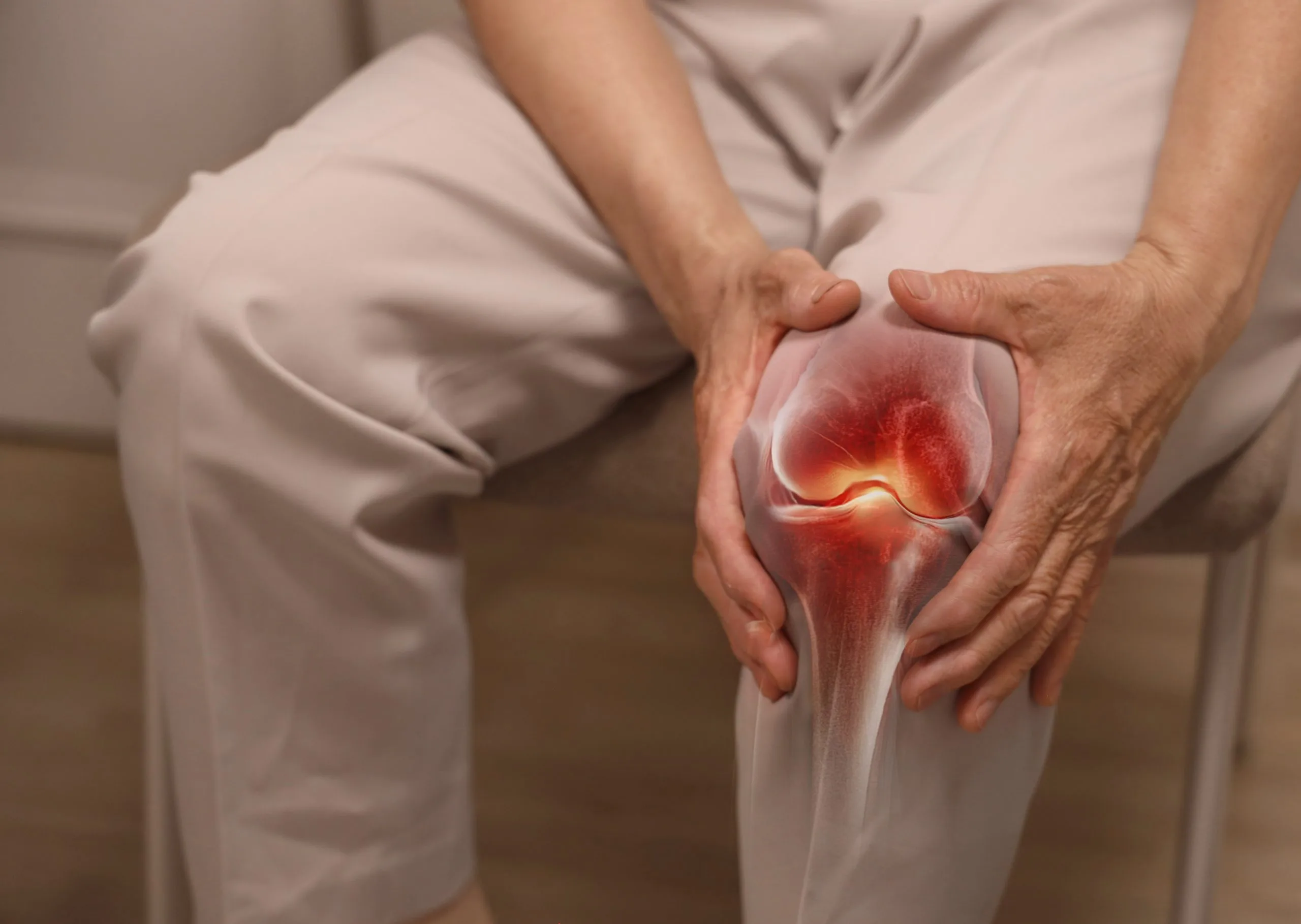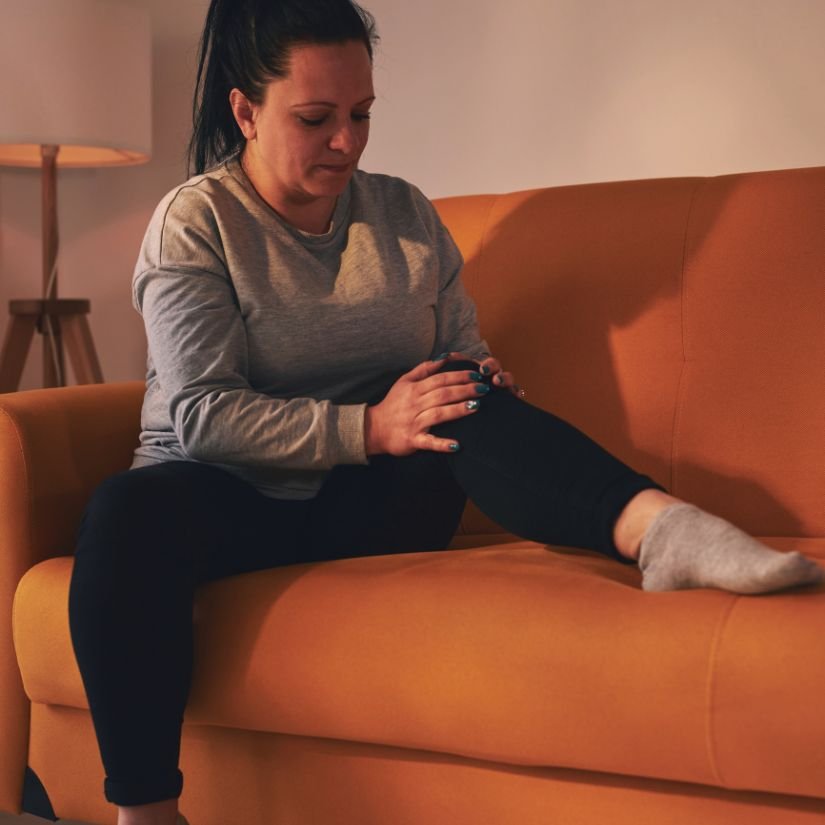
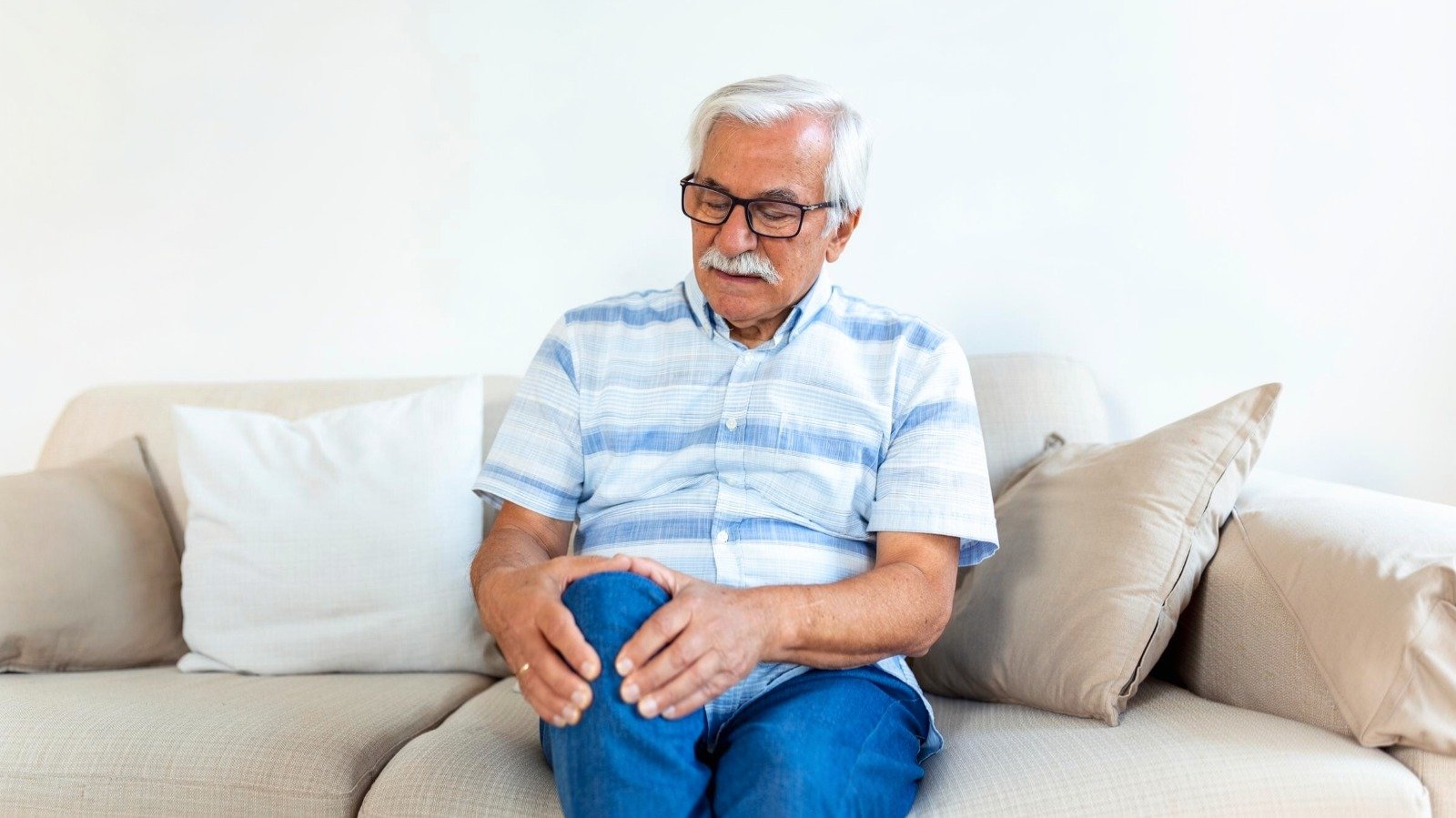
You stand up after a long meeting, a film or a train journey, and your knee feels stiff, achy or sore for the first few steps. Sometimes it eases quickly. Sometimes it lingers, or it starts to happen every time you sit for more than half an hour.
Knee pain after sitting for long periods is one of the most common complaints we see in the clinic. In most people it has a clear, treatable cause, usually involving the joint behind the kneecap or early wear of the knee cartilage. In this guide, we explain why sitting can make your knee hurt, which conditions are most often responsible, how we reach a diagnosis and what treatment options are available.
Why Does My Knee Hurt After Sitting for a Long Time?
Your knee hurts after sitting because bent knees press the kneecap (patella) firmly into a groove at the end of the thigh bone, and stillness stiffens the joint. The deeper the bend, the greater the pressure on the cartilage between these two surfaces. Hold that position for an hour or more and an already sensitive joint can become painful.
Stillness also plays a part. Joint fluid helps nourish and lubricate cartilage, and it circulates best when the knee moves. After a long period without movement, a knee affected by arthritis or irritation can feel stiff and “rusty” until it warms up again. The muscles and soft tissues around the knee also tighten, which adds to the stiffness you notice when you first stand.
What Is “Theatre Sign” Knee Pain?
Theatre sign, sometimes called moviegoer’s knee, is pain at the front of the knee that builds while sitting with the knees bent for a long time, such as in a cinema, theatre or aeroplane seat. It is a classic feature of patellofemoral pain. It usually eases once you straighten the leg or stand and walk around.
What Are the Most Common Causes of Knee Pain After Sitting?
Several conditions can cause knee pain or stiffness after prolonged sitting. The most common include:
- Patellofemoral pain (pain around or behind the kneecap)
- Knee osteoarthritis, including arthritis behind the kneecap
- Softening or wear of the cartilage under the kneecap (chondromalacia patellae)
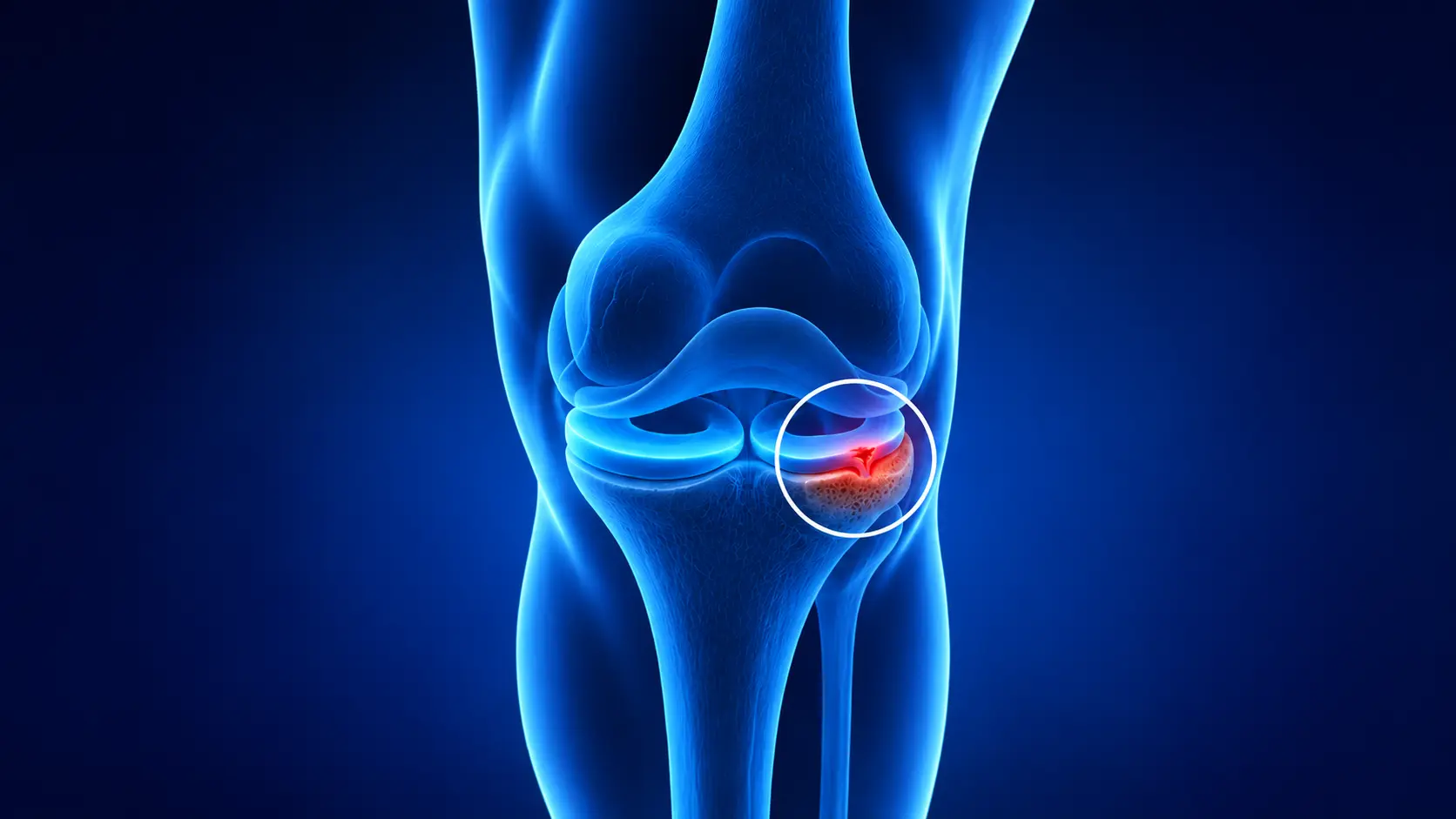
- Meniscal tears
- Tendon problems around the front of the knee
- Inflammatory arthritis, such as rheumatoid arthritis
- A Baker’s cyst at the back of the knee
Patellofemoral Pain and the Kneecap Joint
Patellofemoral pain is one of the most common causes of front-of-knee pain in teenagers, young adults and active people, and it is reported more often in women. You may feel a dull ache around or behind the kneecap that worsens with sitting, stairs, squatting and kneeling.
It often develops when the load through the kneecap joint exceeds what the joint can comfortably tolerate. Common contributors include a sudden increase in running or training, weak thigh and hip muscles, and the way the kneecap tracks in its groove. Most people improve with a structured exercise programme, although it can take weeks to months. If the kneecap feels unstable or has slipped out of place before, we may also look at kneecap instability as part of your assessment.
Knee Osteoarthritis and Stiffness After Rest
Knee osteoarthritis is a gradual breakdown of the smooth cartilage covering the joint surfaces. It becomes more common from middle age onwards, though earlier injuries can bring it on sooner. The NHS notes that osteoarthritis most often affects the knees, hips and small joints of the hands.
A key feature is stiffness after rest. Many people describe a knee that “seizes up” after sitting and loosens after a few minutes of walking. Morning stiffness is usually brief, often under 30 minutes. Over time, you may also notice aching after activity, swelling, grinding or creaking, and difficulty with stairs. Arthritis can affect the inner side of the knee, the outer side, or the joint behind the kneecap, and the pattern of pain often tells us which part is worn.
Kneecap Cartilage Wear (Chondromalacia Patellae)
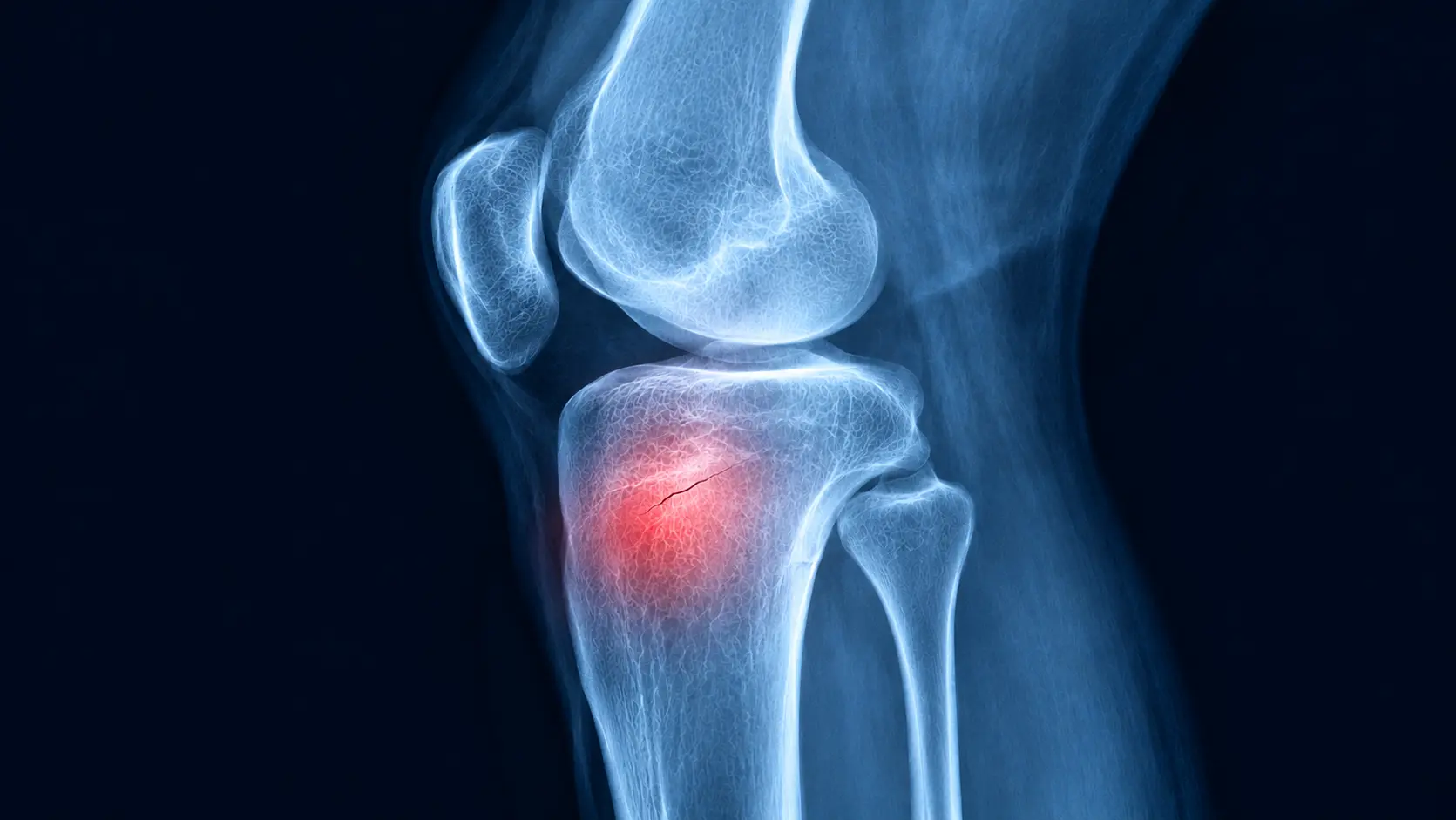
Chondromalacia patellae means softening or roughening of the cartilage on the underside of the kneecap. It produces symptoms very similar to patellofemoral pain, including discomfort with sitting and stairs, and sometimes a grating sensation. It can follow an injury, long-term kneecap maltracking or early wear. An MRI scan can show the cartilage directly, and in selected cases knee cartilage injuries need specialist treatment.
Other Causes to Know About
A meniscal tear may cause pain along the joint line, catching or locking, and discomfort when twisting or getting up from a low chair. Knee tendon injuries, such as patellar tendinopathy, typically cause pain just below the kneecap that can flare after sitting.
Inflammatory arthritis tends to cause longer morning stiffness, along with swelling and warmth that may affect several joints. A Baker’s cyst can create a tight, full feeling at the back of the knee when it is bent. Hip problems can also refer pain to the knee, which is why we examine the hip as well.
Where Is the Pain, and What Might It Mean?
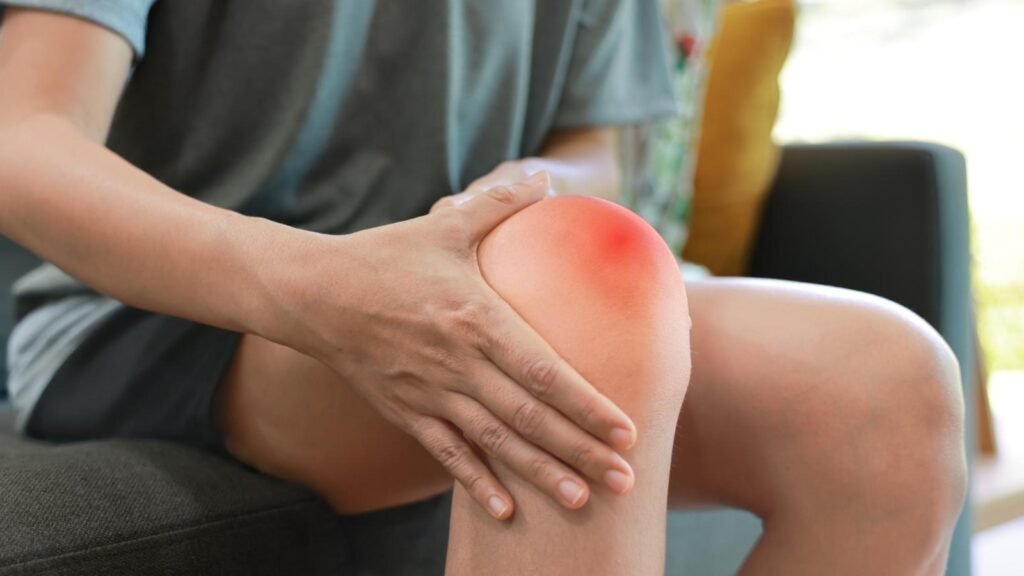
The location of your pain is one of the most useful clues. Pain at the front of the knee, around or behind the kneecap, most often points to the patellofemoral joint. Pain on the inner side is common with osteoarthritis and meniscal tears. The table below summarises the usual patterns.
| Where it hurts | Common causes | Typical clues |
| Front of the knee, around or behind the kneecap | Patellofemoral pain, kneecap cartilage wear, arthritis behind the kneecap | Worse on stairs, squatting and sitting with bent knees |
| Inner side of the knee | Osteoarthritis, medial meniscal tear | Joint-line tenderness, catching, stiffness after rest |
| Outer side of the knee | Outer joint compartment wear, lateral meniscus, iliotibial band | Pain on the outer joint line or outer thigh |
| Just below the kneecap | Patellar tendinopathy | Pain that flares with jumping, running or after sitting |
| Back of the knee | Baker’s cyst, hamstring problem | Tightness or fullness when the knee is bent |
These patterns are only a guide. Several conditions can overlap, which is why a proper examination matters more than any single symptom. Pain or swelling in the calf is different, because it can signal a blood clot and needs urgent attention, as we explain below.
Is Knee Stiffness After Sitting Normal or a Sign of Something Serious?
Mild stiffness that fades within a minute or two of walking, with no swelling and no effect on your daily routine, is common and usually not serious. It often reflects tight muscles or a kneecap joint that has been under pressure for a while. Simple movement breaks and strengthening exercises usually help.
Knee pain after sitting is more likely to need assessment when it is getting worse over weeks, takes longer to settle each time, or comes with swelling, giving way, locking or night pain. Stiffness lasting more than 30 minutes in the morning, or swelling in several joints, can point towards inflammatory arthritis. If any of this sounds familiar, get in touch with us and we can look at the cause.
When Should You Get Your Knee Assessed After Sitting Pain?
It is sensible to get in touch with us about knee pain after sitting if:
- The pain has lasted more than a few weeks despite rest and simple exercises
- Your knee swells, feels warm or looks different from the other side
- The knee locks, catches or gives way
- You struggle with stairs, kneeling or getting up from a chair
- Pain wakes you at night
- Stiffness lasts longer than 30 minutes each morning
Go to A&E or call 999 if you develop a hot, red, very painful knee with a fever, cannot put weight on your leg after an injury, or notice calf pain and swelling after a long flight or car trip, because this can be a sign of deep vein thrombosis.
How Do We Diagnose the Cause of Knee Pain After Sitting?
We diagnose the cause by listening to your history, examining both knees and your hip, and using imaging only when it will change the plan. Assessment at London Knee Care is led by Mr Raghbir Khakha, whose practice covers knee pain and osteoarthritis, kneecap dislocation and realignment, and meniscal problems.
Your Consultation and Examination
Diagnosis starts with your story. We ask when the pain started, where you feel it, what makes it better or worse, and how it affects your work, sport and daily life. Previous injuries, changes in activity and your general health all help build the picture.
We then examine both knees, looking at alignment, swelling, range of movement and muscle strength. We check how your kneecap moves and tracks, test the ligaments and meniscus, and examine your hip. In many cases, this is enough to make a confident working diagnosis.
Do You Need an X-Ray or MRI Scan?
Not everyone needs a scan. The NHS notes that osteoarthritis can often be suspected from age and symptoms alone, and that X-rays and blood tests are not usually necessary unless other causes need ruling out. Standing X-rays can still help us see joint space, leg alignment and wear behind the kneecap, and they help us plan treatment.
An MRI scan is helpful when we suspect damage to the cartilage, meniscus, tendons or ligaments, or when symptoms do not fit a clear pattern. Blood tests may be arranged if inflammatory arthritis is possible. We only recommend imaging when the result is likely to change your treatment, and we explain what the findings mean for you.
How Can You Ease Knee Pain When Sitting for Long Periods?
Small changes to how you sit and move often make a noticeable difference. The NHS advises avoiding staying in the same position for too long and taking regular breaks to move around. As a practical rule of thumb, rather than a research-proven interval, stand and walk for a minute every half hour or so.
- Straighten your legs from time to time instead of keeping your knees tightly bent
- Avoid sitting cross-legged or with your feet tucked under the chair
- Set up your desk so your hips are level with or slightly above your knees
- Choose an aisle seat on flights and at the cinema so you can stretch a leg out
- Keep up low-impact activity such as walking, cycling or swimming to keep the supporting muscles strong
If you are carrying extra weight, even modest weight loss reduces the load through your knees. These steps support your knee but do not replace an assessment, so if the pain keeps returning, we recommend getting in touch with us rather than managing it alone.
What Are the Treatment Options for Knee Pain After Sitting?
Treatment depends on the cause, the severity of your symptoms and what you want to get back to. For most people it begins with non-surgical care. The options we may discuss with you include:
- A structured physiotherapy and strengthening programme
- Activity changes and pain management advice
- Image-guided knee injections, including Arthrosamid® for suitable patients with osteoarthritis
- Joint-preserving surgery, such as knee osteotomy or knee distraction
- Knee replacement surgery for advanced arthritis
You can see our full range on the knee treatments page.
Physiotherapy and Exercise Therapy
Exercise is the foundation of treatment for both patellofemoral pain and knee osteoarthritis. A good programme strengthens the thigh and hip muscles, improves flexibility and gradually builds the knee’s tolerance to load, including positions such as sitting and squatting.
Progress is usually steady rather than immediate. Research trials in patellofemoral pain typically measure benefit over about three months, and some people take longer. Consistency matters, because symptoms can return if the exercises stop. Taping or a short period of reduced high-load activity, such as deep squats or running hills, can help calm symptoms in the early stages.
Knee Injections, Including Arthrosamid®
When osteoarthritis pain limits your ability to exercise, an injection may help. A steroid injection can reduce inflammation and give short-term relief, which can create a useful window to progress with rehabilitation. Its effect is temporary, and we do not recommend frequent repeated injections.
Arthrosamid® is a hydrogel injection for knee osteoarthritis, designed to cushion the joint and reduce pain. It is given as a single ultrasound-guided injection and may suit people who want to delay surgery or are not yet ready for it. Results vary between individuals, and we will discuss whether it is appropriate for your knee and what you can realistically expect.
When Is Knee Surgery Considered?
Surgery is not the first step for knee pain after sitting, and most people never need it. We consider surgery when symptoms stay significant despite a good trial of non-surgical treatment, or when there is a clear structural problem that is unlikely to settle on its own.
Joint Preservation Options for Earlier Arthritis
For younger, active people with arthritis affecting one part of the knee, a knee osteotomy can realign the leg and shift weight away from the worn area. Knee distraction is another joint-preserving option for selected patients. Both aim to delay the need for replacement, and they suit specific patients rather than everyone.
Knee Replacement for Advanced Arthritis
When arthritis is advanced and pain affects sleep, walking and quality of life, a partial or total knee replacement can be very effective. NHS guidance says full recovery can take several months or longer, and a partial replacement should recover sooner than a total one. We discuss the benefits, risks and expected recovery openly so you can make an informed decision.
Surgery for Kneecap, Cartilage and Meniscal Problems
Keyhole surgery may help when a torn meniscus causes locking or catching, or when there is a loose fragment of cartilage. It is generally not helpful for arthritis pain alone. For recurrent kneecap dislocation, kneecap stabilisation may be appropriate, and knee cartilage surgery can be considered for specific, well-defined cartilage defects.
How Long Does Knee Pain From Sitting Take to Improve?
Recovery time depends on the cause. Patellofemoral pain often improves over a few months with a consistent exercise programme, although some people take longer and symptoms can return if the exercises stop. Osteoarthritis is a long-term condition, so the aim is to control pain and keep you active, and many people manage well for years with the right combination of treatments.
If your knee is not improving as expected, the diagnosis deserves a second look rather than more of the same approach.
Frequently Asked Questions About Knee Pain After Sitting
Is Knee Pain After Sitting a Sign of Arthritis?
It can be, especially if you are over 45 and the stiffness eases after a few minutes of walking. In younger and active people, patellofemoral pain is the more common cause. An examination, and sometimes an X-ray, helps tell the two apart.
Why Do My Knees Hurt When I Stand Up After Sitting?
Standing up loads the kneecap joint while the knee is still bent, and after a period of stillness the joint and surrounding muscles are stiff. If the cartilage behind the kneecap is irritated or worn, this transition can be painful for the first few steps.
Should I Rest My Knee or Keep It Moving?
For most causes, gentle movement is better than prolonged rest. Regular movement breaks and strengthening exercises help the joint, whereas long periods of inactivity tend to increase stiffness.
Can Sitting at a Desk All Day Damage My Knees?
Sitting does not usually damage a healthy knee, but long periods with the knees bent can aggravate an existing problem, especially in the kneecap joint. A suitable chair height, leg room under the desk and frequent breaks all help.
Is Knee Pain After Sitting a Sign of a Meniscal Tear?
It can be, but a meniscal tear more often causes pain along the joint line, catching, locking or pain when twisting. If your pain is mainly at the front of the knee and eases once you move, a kneecap cause is more likely. An examination, and sometimes an MRI scan, confirms which it is.
This article is general information and does not replace a personal assessment. If you are worried about your knee, please get in touch with us.
Book a Knee Pain Assessment at London Knee Care
Mr Raghbir Khakha is a Consultant Orthopaedic and Specialist Knee Surgeon at London Knee Care in London. He has been in consultant practice since 2017, and his work covers knee problems from children’s knee injuries through to complex redo surgery, with a joint preservation approach that includes osteotomy. He is also Secretary of the British Association for Surgery of the Knee (BASK) and an honorary clinical lecturer at King’s College London.
If knee pain after sitting is starting to shape your day, we can help you find out why. We offer a thorough assessment, arrange imaging where it is needed, and explain your diagnosis in clear terms. We then guide you on the next steps, starting with the simplest effective treatment for your knee. To arrange an assessment, contact us. You can also learn more about our clinic, browse our knee conditions or return to the London Knee Care homepage.
- Address: 45 Queen Anne Street, London W1G 9JF
- Phone: 0207 046 8008
- Email: rk@os.clinic