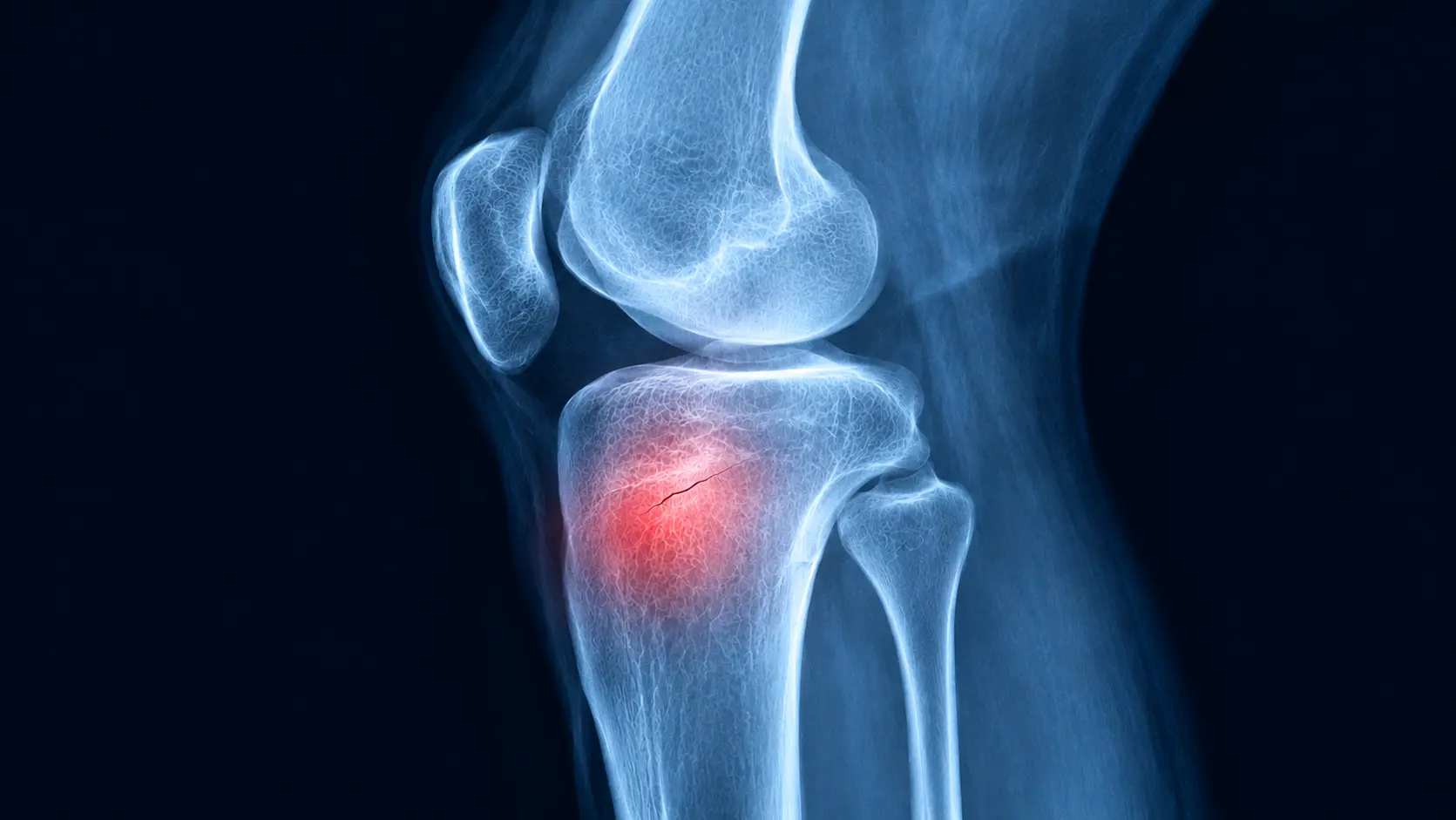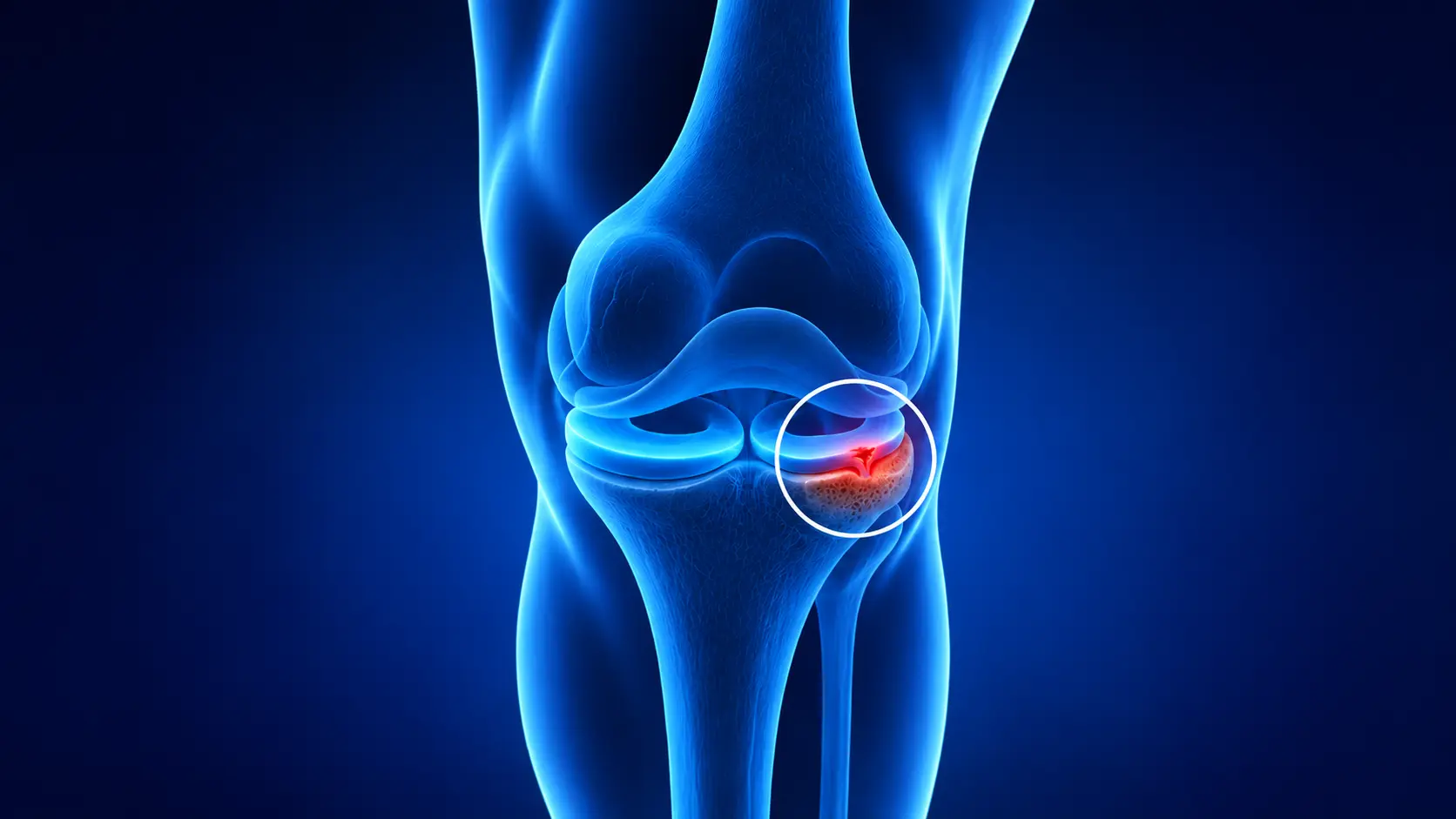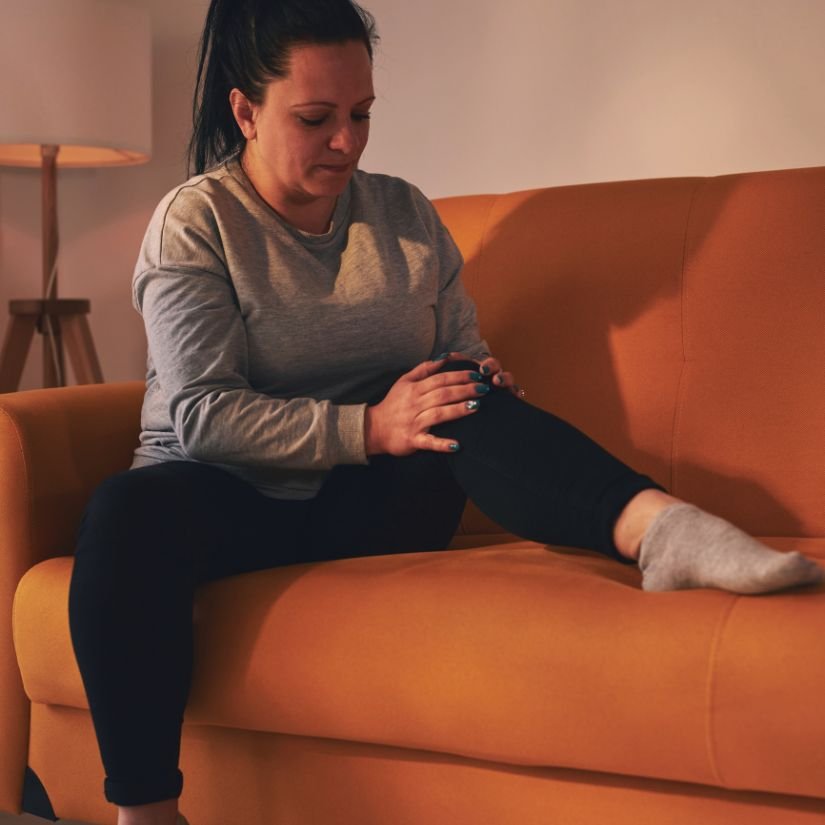
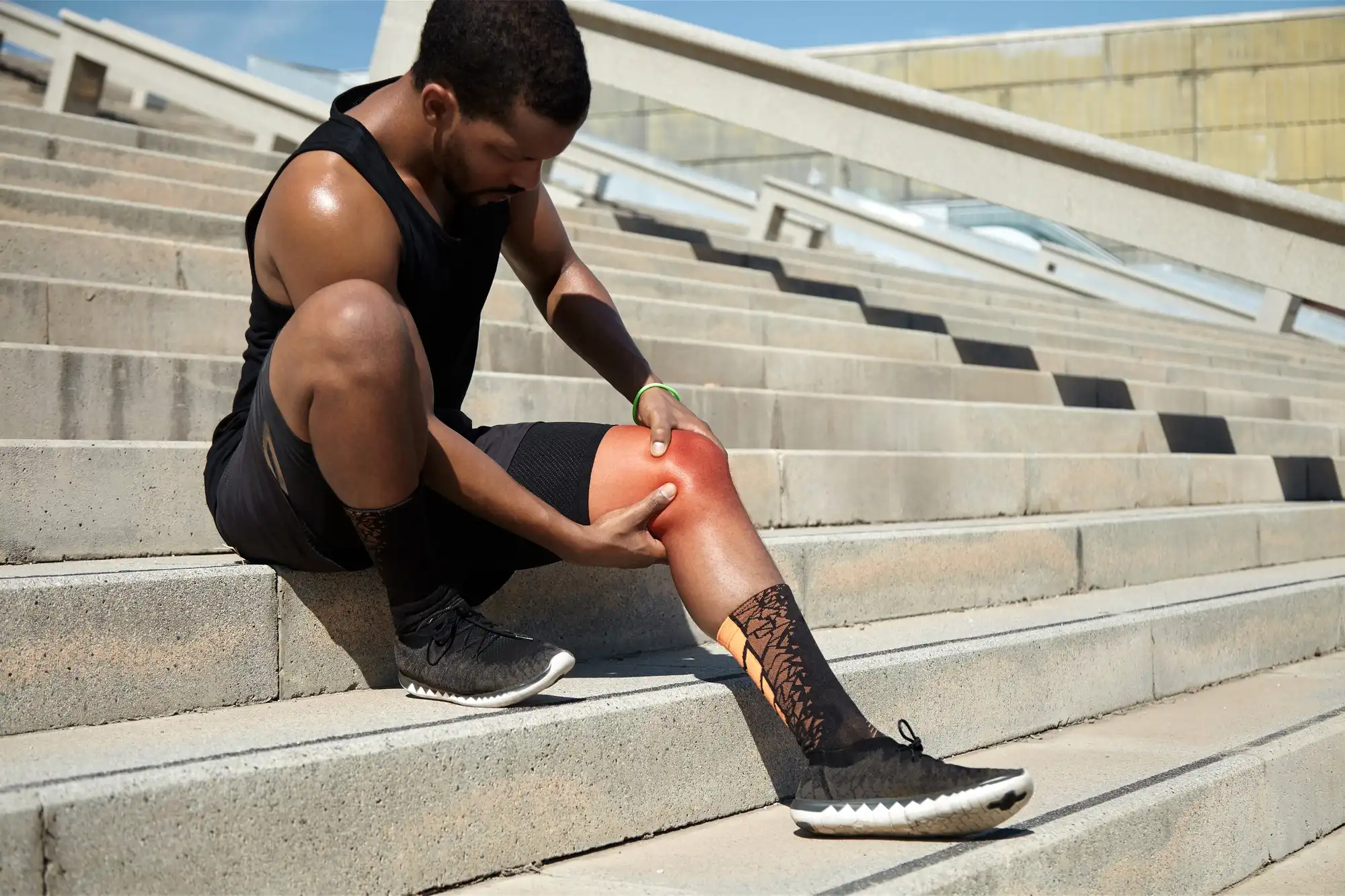
If you’ve noticed pain on top of your knee, right where your thigh meets your kneecap, it’s easy to assume it’s just general knee pain and try to push through it. But pain above the knees that sits specifically at the top edge of the kneecap, sometimes described as pain on top of knee cap, often has a more precise cause: the quadriceps tendon.
This tendon does a lot of work every time you walk up stairs, stand from a chair, squat, or straighten your leg. When it’s irritated or overloaded, top of knee pain is usually the first sign. In this guide, we’ll walk through what the quadriceps tendon does, how to tell quad tendon pain apart from other types of knee pain, what typically causes it, and when it’s time to see a specialist.
What’s at the Top of Your Knee? Meet the Quadriceps Tendon
Your knee is held together and powered by several tendons and ligaments, but two tendons in particular are responsible for most anterior (front-of-knee) pain: the quadriceps tendon and the patellar tendon.
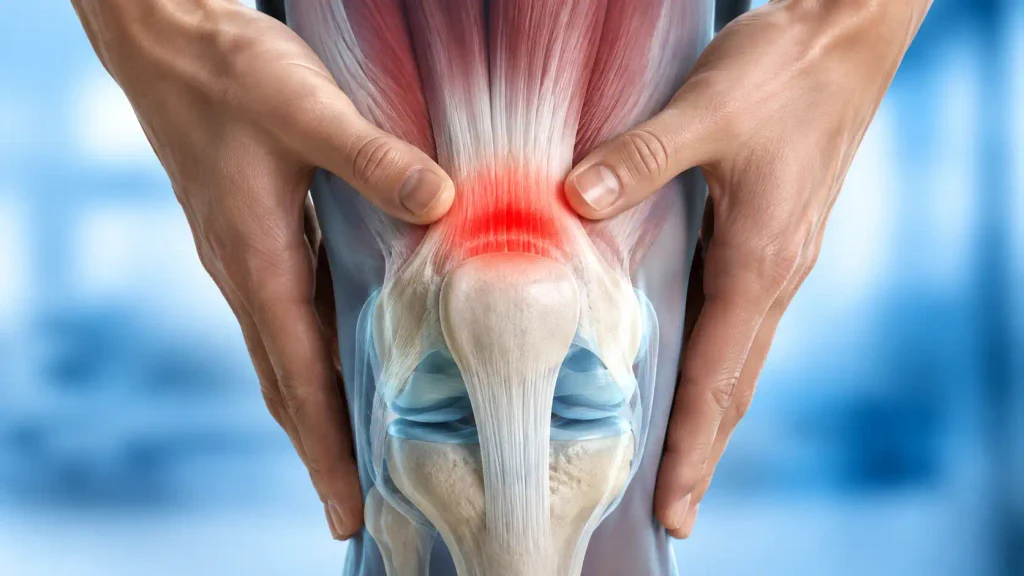
The quadriceps tendon connects the four quadriceps muscles at the front of your thigh to the top of your kneecap, known in medical terms as the superior pole of the patella. Every time you extend your knee, whether that’s kicking a ball, climbing stairs, or simply standing up, this tendon is transmitting force from your thigh muscles into your lower leg.
The patellar tendon, by contrast, sits below the kneecap and connects the patella to your shinbone. It’s a different structure entirely, and problems with it, often called jumper’s knee, tend to cause pain lower down, not at the top.
Because the quadriceps tendon sits directly above the kneecap, irritation or damage to it is one of the most common explanations for the knee tendon injury pain that patients describe as being “on top of” or “above” the knee, rather than behind it or below it.
Quad Tendon Pain vs Other Knee Pain: How to Tell the Difference
Knee pain gets described in a lot of overlapping ways, so it helps to be specific about location.
- Top of knee pain: usually the quadriceps tendon.
- Pain below the kneecap: usually the patellar tendon.
- Pain behind the knee: usually a hamstring or popliteal issue rather than either tendon. We’ve covered this separately in Back of the Knee Pain When Bent Could Be Your Hamstring.
- Pain above the knees that spreads into the thigh: can still be quad tendon-related, since the tendon blends into the quadriceps muscle belly, but if the pain is centred well up the thigh rather than at the kneecap, it’s worth having it examined rather than assumed.
Clinically, the distinction between quadriceps and patellar tendon pain matters because the two conditions, while similar in mechanism, are managed with slightly different loading strategies during rehabilitation. A 2019 clinical commentary in the Journal of Orthopaedic & Sports Physical Therapy makes this point directly: getting the location right isn’t a technicality, it changes the treatment plan.
Is It Quadriceps Tendonitis? Common Symptoms to Watch For
Quadriceps tendonitis, sometimes called quadriceps tendinopathy when it’s more chronic and degenerative rather than acutely inflamed, develops when the tendon is subjected to repeated stress faster than it can recover. The result is a fairly consistent pattern of symptoms:
- Tenderness directly at the top of the kneecap, where the tendon attaches
- A sharp pain on top of kneecap when pressing on it, or a duller ache after activity
- Pain when bending the knee deeply, often described as the top of knee hurts to bend
- Pain on top of knee when extending the leg, particularly against resistance, such as pushing up from a chair or a leg extension exercise
- Pain above the knee when bending that eases with rest, at least in the early stages
- Mild swelling around the top of the patella
- A feeling of weakness or reduced power when trying to push off or stand up quickly
When your quadriceps tendon hurts specifically at this attachment point, rather than diffusely through the thigh, it’s a reasonably strong signal that the tendon itself is under strain rather than the surrounding muscle. That said, none of these symptoms on their own confirm the diagnosis. Anterior knee pain has several possible causes, so a proper examination, sometimes supported by ultrasound or MRI, is the only reliable way to know for certain whether the quadriceps tendon is involved.
When Top-of-Knee Pain Shows Up During Specific Activities
Quad tendon pain rarely appears out of nowhere. It’s usually connected to a specific pattern of loading, which is often a useful clue.
Squatting: pain on top of knee when squatting is one of the more reliable indicators of quadriceps tendon involvement, because deep knee flexion puts the tendon under significant tensile load.
Running: pain on top of kneecap after running, or pain above the knee after running, tends to build gradually over several sessions rather than appearing after a single run, which points towards overuse rather than a one-off injury.
Cycling: top of knee pain cycling is less common than running-related pain, since cycling is generally a lower-impact activity and is often used as gentle cross-training during recovery. That said, high-resistance efforts, hill climbing, or a saddle set too low can still load the quadriceps tendon enough to cause symptoms.
Sport more broadly: jumping, kicking, and rapid changes of direction all load the tendon repeatedly. If this sounds like your training pattern, our page on knee sports injuries and trauma covers the broader picture, and our knee running injuries page goes into more depth on running-specific mechanics.
Why Does the Top of My Knee Hurt? Common Causes
If you’re asking yourself why does the top of my knee hurt, the underlying cause is usually one, or a combination, of the following:
- Overuse: a sudden increase in training volume, intensity, or frequency, without giving the tendon time to adapt
- Weak or imbalanced quadriceps muscles: if the muscle isn’t strong enough to absorb load, more strain gets transferred to the tendon
- Occupational demands: jobs involving frequent squatting, kneeling, or climbing put repetitive stress through the same structure
- Age-related tendon changes: tendons become slightly less elastic and receive reduced blood supply as we get older, which can make them more vulnerable to injury even with modest activity
- Biomechanical factors: poor movement patterns, tight surrounding muscles, or previous knee injuries can all shift extra load onto the quadriceps tendon
Quadriceps tendonitis affects a fairly wide age range. Younger, highly active people can develop it from training load alone, while people over 40 tend to be more susceptible even at lower activity levels, simply because the tendon itself has less capacity to absorb sudden stress.
Quadriceps Tendonitis vs a Torn Quad Tendon
This is the distinction that matters most, because the two conditions call for very different responses.
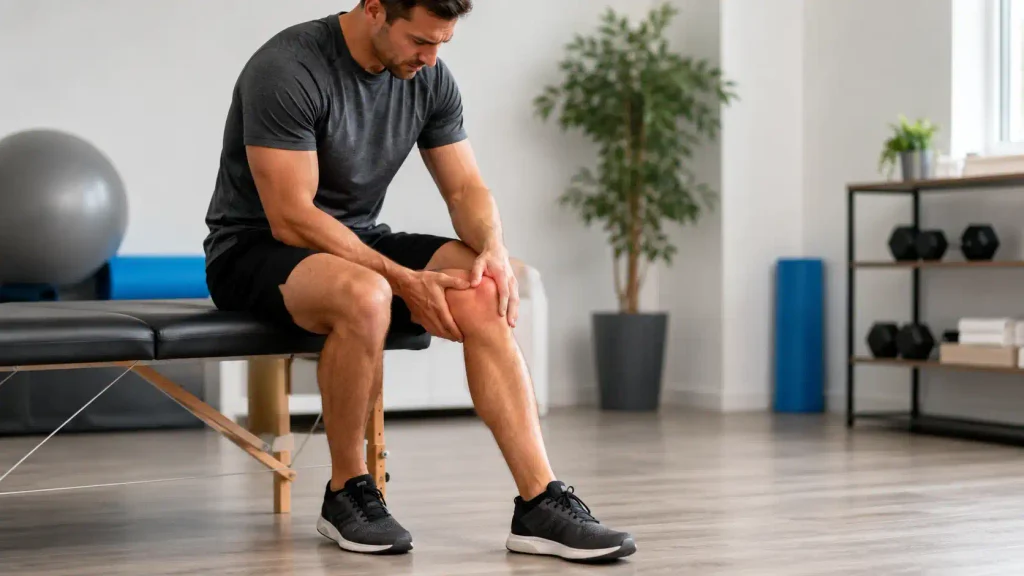
Quadriceps tendonitis develops gradually. Pain builds over days or weeks, you can usually still walk and bear weight, and while it’s uncomfortable, the knee generally remains functional.
A quadriceps tendon rupture is different, and it’s a genuine emergency rather than something to rest and monitor. Signs of a rupture include:
- A sudden popping or tearing sensation, often after a fall, a stumble, or a forceful contraction of the thigh muscle
- Immediate, significant pain and swelling
- Inability to straighten the knee or hold the leg up unsupported
- A visible dip or depression at the top of the kneecap, where the tendon has pulled away
- The kneecap appearing to sit lower than normal, sometimes described as “sagging”
- The knee buckling or giving way when trying to walk
If any of this happens, you should be seen the same day rather than waiting to see if it settles. A ruptured tendon that isn’t repaired promptly is significantly harder to treat well later on, so this is not a “wait and see” situation.
How Quadriceps Tendonitis Is Treated
For genuine tendonitis or tendinopathy, without a tear, treatment is almost always non-surgical and follows a fairly predictable path:
- Relative rest: avoiding the specific movements that provoke pain, without necessarily stopping all activity
- Ice and anti-inflammatories: useful for managing pain in the early, more acute stage
- Structured physiotherapy: starting with isometric holds, contracting the muscle without moving the joint, to help settle pain, then progressing to eccentric and heavy slow-resistance strengthening, which is what actually builds tendon capacity over time
- Gradual return to loading: reintroducing running, squatting, or sport-specific movement in stages, guided by how the tendon responds
Recovery timelines vary. A first-time, mild case often improves substantially within two to three months of consistent rehab. A longer-standing or recurring case can take four to six months, because the underlying tendon changes take longer to reverse. Regular review with a specialist, such as Mr Raghbir Khakha, helps confirm you’re progressing appropriately rather than just waiting and hoping.
Does Quadriceps Tendonitis Require Surgery?
For most people, no. Quadriceps tendonitis is a condition managed through rest, physiotherapy, and graded loading, and the majority of cases resolve without any surgical intervention.
Surgery becomes a consideration only in a smaller subset of cases: when symptoms are severe, have persisted despite several months of properly structured physiotherapy, and are significantly limiting daily function. In that refractory group, options can include procedures aimed at stimulating healing in the degenerated portion of the tendon, though this is a later-stage option rather than a first response.
The exception is a full quadriceps tendon rupture, which is a different condition altogether. A complete tear almost always requires surgical repair, ideally within two to three weeks of the injury, followed by a structured rehabilitation programme involving bracing, gradually increasing weight-bearing, and physiotherapy. Full recovery after rupture surgery typically takes six to twelve months. You can read more about the surgical and non-surgical options we offer on our knee treatments page.
When to See a Knee Specialist in London
You don’t need to wait for pain to become severe before getting it checked, but there are some signs that should move you from “keep an eye on it” to “book an appointment”:
- Pain that hasn’t improved after a couple of weeks of rest and reduced activity
- Swelling that keeps recurring
- Any weakness when trying to straighten the leg or bear weight
- Pain that’s progressively worsening rather than settling
- Any sudden popping sensation, visible deformity, or inability to straighten the knee, which needs urgent same-day assessment
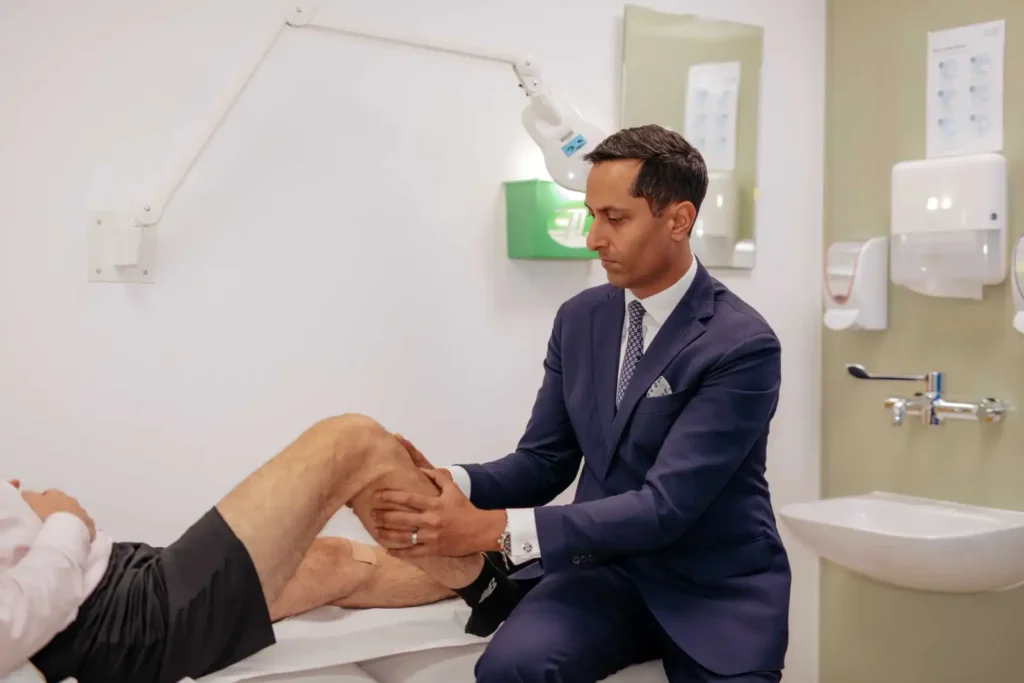
If you’re based in London and any of this sounds familiar, getting seen promptly makes a real difference to how quickly you recover and how much rehab you need. Mr Raghbir Khakha has performed over 5,000 knee procedures across more than 15 years of specialist practice, and every consultation at London Knee Care starts with a detailed clinical examination, followed by ultrasound or MRI imaging where needed, so you leave with a clear answer rather than a guess. You can find out more about our approach on our about page, or get in touch to arrange an assessment.
Get an Accurate Diagnosis at London Knee Care
Pain on top of the knee is common, but that doesn’t mean it should be ignored or self-diagnosed indefinitely. Left unmanaged, tendonitis can become a longer and harder problem to shift, and occasionally what feels like straightforward tendonitis turns out to be something that needs closer attention. Getting the right diagnosis early makes treatment simpler and recovery faster, whichever of the two it turns out to be.
London Knee Care offers private consultations with Mr Raghbir Khakha, an internationally recognised knee surgeon trusted by patients across the UK and abroad. If you’re dealing with persistent top of knee pain, book an appointment for an accurate diagnosis and a treatment plan built around your specific activity level and goals.
Frequently Asked Questions
Why does the top of my knee hurt?
Most commonly, it’s the quadriceps tendon, which connects your thigh muscles to the top of the kneecap and is under load every time you bend or straighten your knee. Overuse, weak quads, and age-related tendon changes are the most frequent contributing factors.
What does quadriceps tendonitis feel like?
Typically a tender, sometimes sharp pain right at the top of the kneecap, worse with bending, squatting, or straightening the leg against resistance, and often accompanied by mild swelling.
Can I keep exercising with quad tendon pain?
Often yes, in modified form. Low-impact activity is usually better tolerated than running or jumping, but continuing to train through sharp or worsening pain can prolong recovery. A physiotherapy assessment can help you work out what’s safe to keep doing.
Does quadriceps tendonitis require surgery?
Rarely. Most cases respond to rest, physiotherapy, and graded strengthening. Surgery is reserved for cases that don’t improve after several months of proper rehab, or for a complete tendon rupture, which is a different and more urgent injury.
How long does it take to heal?
A mild, first-time case often improves within two to three months. Chronic or recurring cases can take four to six months. A full rupture repaired surgically typically needs six to twelve months for a complete return to normal activity.