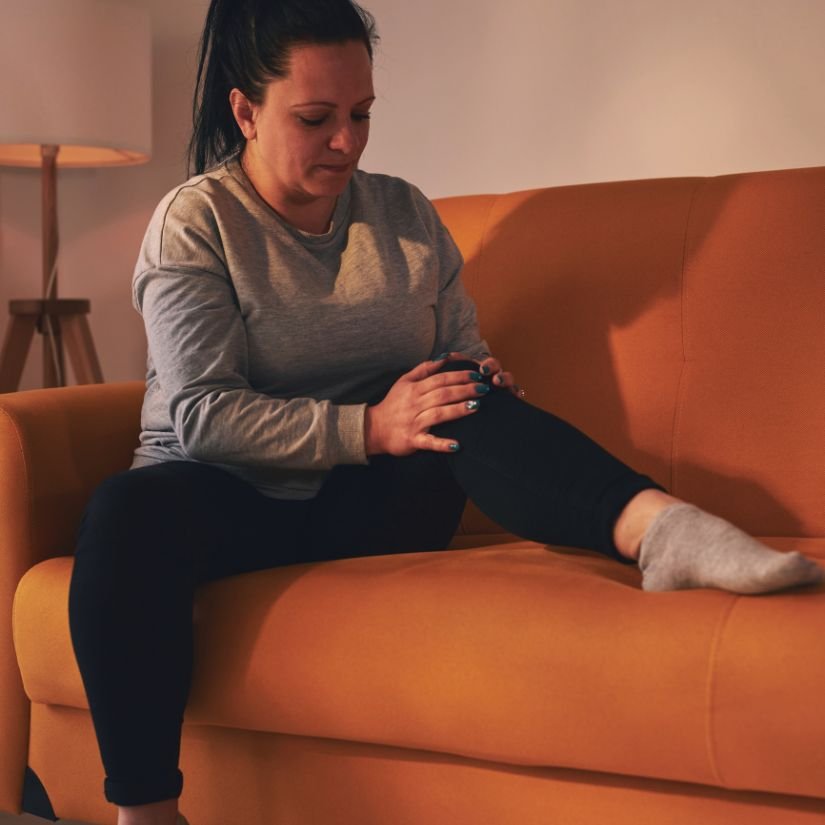
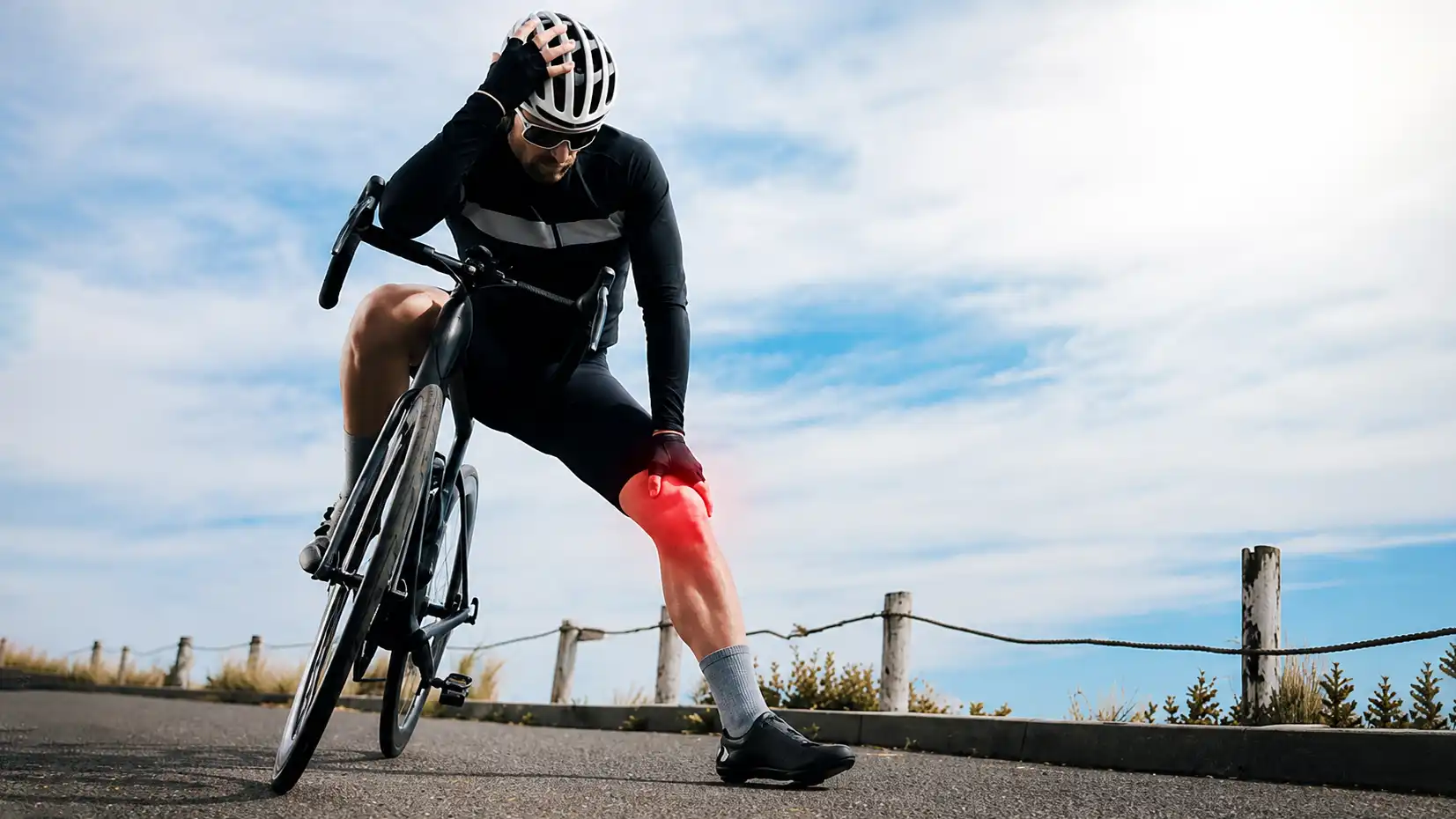
Anterior knee pain from cycling is pain at the front of the knee that shows up during or after a ride, and it’s one of the most common complaints cyclists bring to a physio or specialist. Most riders assume it will pass on its own, adjust their saddle a little, and keep training through it. That approach often makes things worse, because anterior knee pain from cycling usually has a specific, fixable cause, and ignoring it tends to turn a minor niggle into a recurring problem.
This guide explains what’s actually happening at the front of your knee, the bike-fit issues most likely to blame, how long it typically takes to settle, and when it’s worth getting checked properly rather than riding through it.
Where Is the Anterior Knee and What Does This Pain Feel Like?
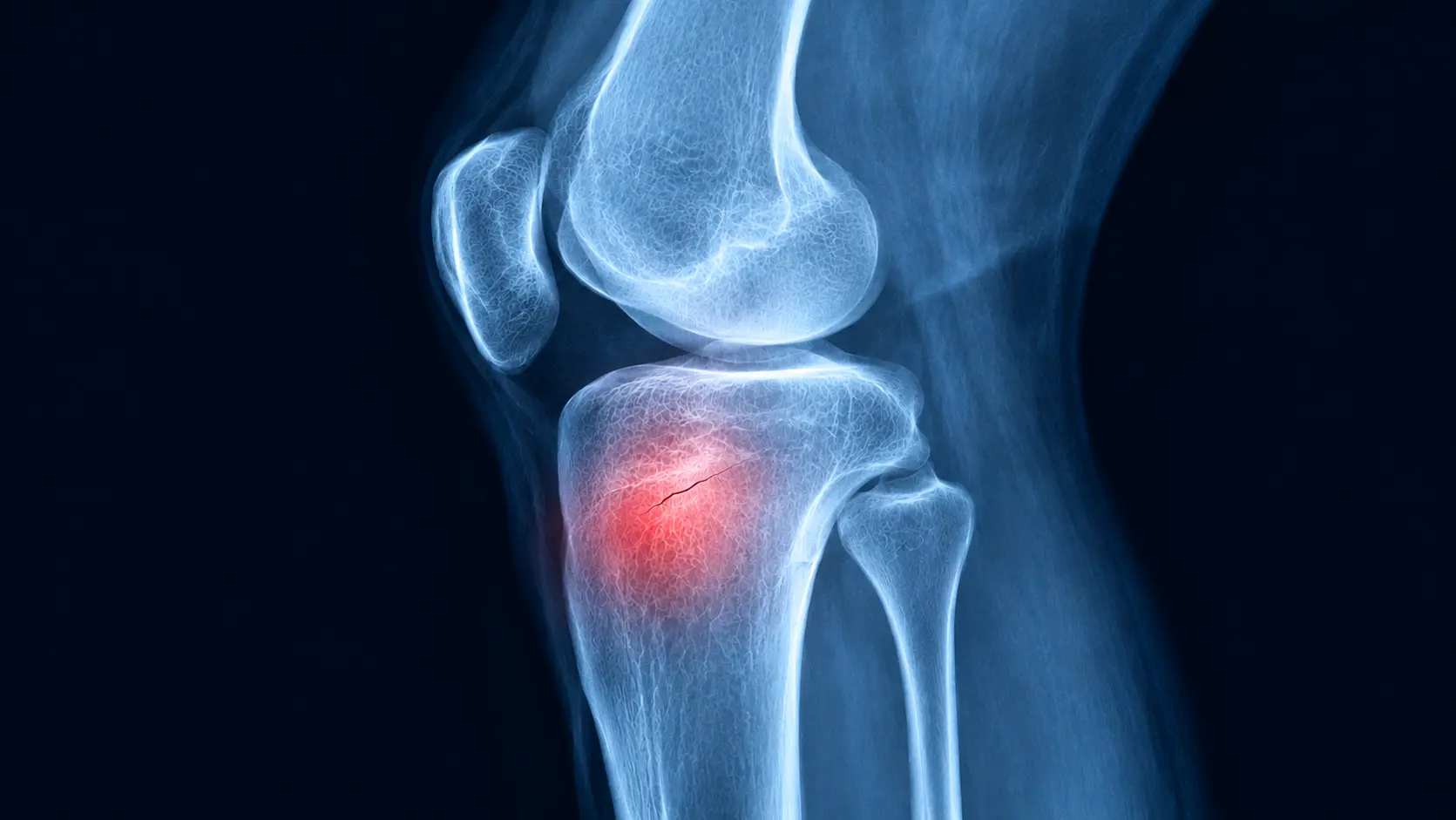
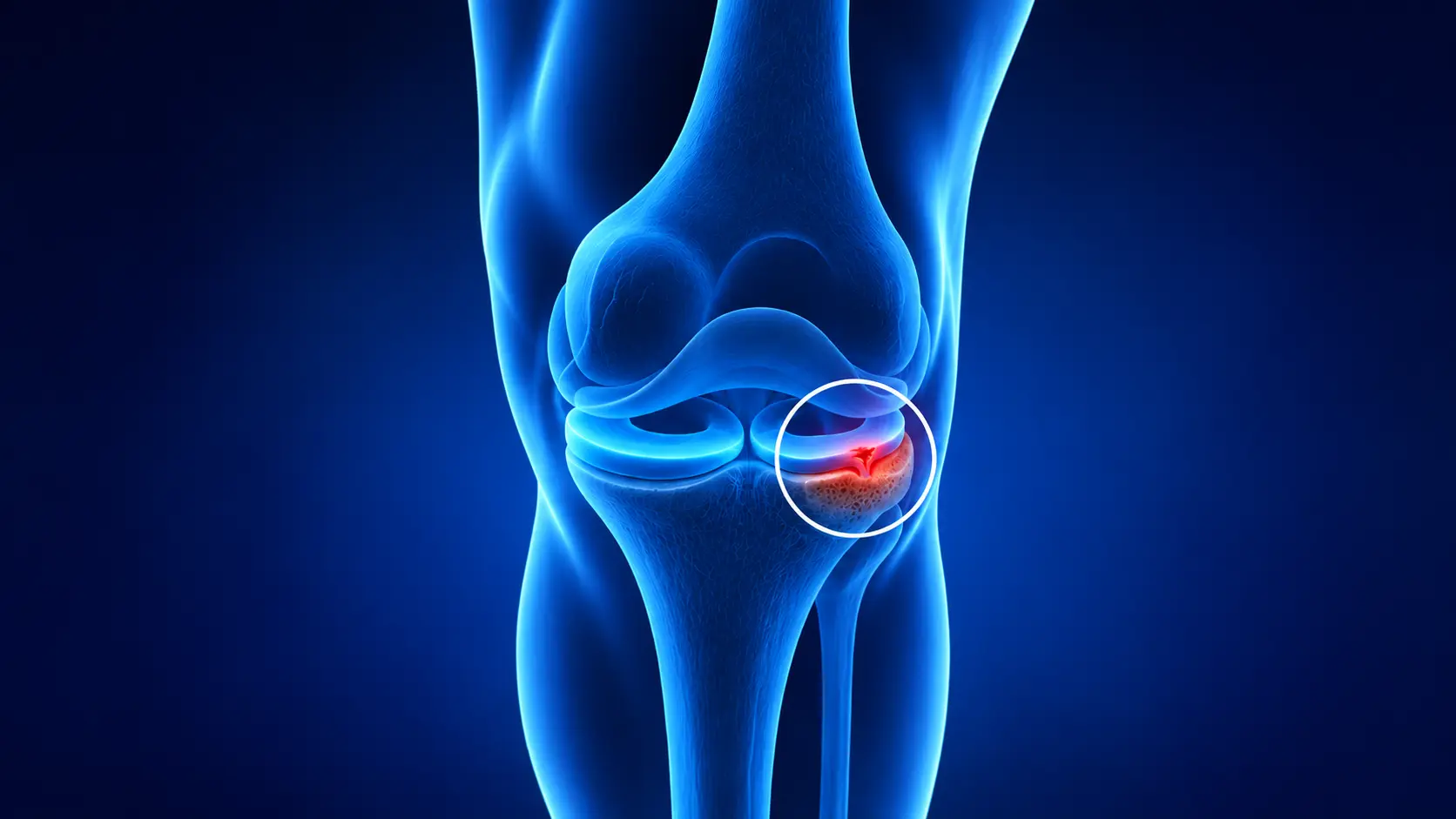
The anterior knee is simply the front of the knee, the area around and behind the kneecap. Pain here is usually described as a dull, aching sensation that builds during activities like climbing stairs, squatting, or pedalling, rather than a sharp, sudden pain from a specific injury. Anterior knee pain location is actually a useful clue on its own, pain sitting directly behind or around the kneecap usually points toward the joint itself, while pain lower down often points toward the tendon instead.
Anterior Knee Pain Syndrome Explained
Anterior knee pain syndrome isn’t one single condition, it’s a catch-all term covering several related problems at the front of the knee, most commonly patellofemoral pain, but sometimes patellar tendon irritation or kneecap instability as well. Clinically, it’s classed as either retropatellar (directly behind the kneecap) or peripatellar (around its edges). According to NHS Ayrshire and Arran’s patient guidance on patellofemoral pain, this pain is commonly caused by an imbalance or tightness in the muscles supporting the knee, which increases pressure through the underside of the kneecap, and it typically has no link to developing generalised knee arthritis later in life.
Why Do My Knees Hurt When Cycling? Common Bike Fit Causes
Anterior knee pain when cycling almost always traces back to how the bike is set up rather than anything wrong with the knee itself. Understanding the common causes of knee pain from cycling is usually the fastest route to fixing it, and getting the fit right resolves a large share of cases without any other treatment needed.
Saddle Height Knee Pain the Most Common Cause
A saddle set too low is the single most frequent cause of anterior knee pain in cyclists, since it keeps the knee more bent throughout the pedal stroke and increases strain on the structures at the front of the joint. Somewhat counterintuitively, a saddle set too high can also cause pain, through a different mechanism involving irritation of the fat pad beneath the kneecap. As a rough guide, when seated with your foot at the bottom of the pedal stroke, your leg should be almost, but not fully, straight.
Cycling Cleat Position Knee Pain
Cycling cleat position knee pain is one of the most common, and most fixable, causes of front-of-knee pain in cyclists. Cleats positioned too far forward push the knee into a position that adds stress to the front of the joint. Cleat rotation matters too, cleats angled so the toes point noticeably inward or outward can aggravate the iliotibial band along the outside of the thigh, which sometimes gets confused with anterior pain because both can flare during longer rides.
Q Factor Crank Length and Other Bike Fit Details
Beyond saddle height and cleats, a stance width (Q-factor) that’s too narrow for your hips, or a crank length that’s mismatched to your leg length, can both add subtle but persistent strain to the front of the knee. These factors matter less than saddle height and cleat position for most riders, but they’re worth reviewing if the more common fixes haven’t helped.
Could This Be Patellofemoral Pain from Cycling
Patellofemoral pain is the specific term for pain arising between the kneecap and the thigh bone, and it’s the leading cause of anterior knee pain in cyclists specifically. It develops when the kneecap doesn’t track smoothly against the thigh bone during pedalling, often due to weakness in the muscles that stabilise it, and it typically feels worse with sustained pedalling, climbing out of the saddle, or after long periods sitting with the knee bent.
Anterior Knee Pain in Athletes Are Cyclists at Higher Risk
Anterior knee pain is genuinely common across sport generally, not just cycling. It accounts for an estimated 25 to 40% of all knee complaints seen in sports medicine settings, and around 40% of adolescent athletes report it at some point, with a notably higher rate among women than men. Cyclists aren’t a uniquely high-risk group compared with runners or field-sport athletes, but the repetitive, fixed motion of pedalling for hours at a time makes bike fit a much bigger factor than it is in most other sports. For a broader look at how training and sport contribute to knee injuries generally, see our page on knee sports injuries and trauma, and for running-specific patterns, our guide to knee running injuries.
Training Load and Riding Habits That Make It Worse
A sudden jump in training load, more hours in the saddle, more hill climbing, or a big increase in intensity without building up gradually, is one of the most reliable triggers for anterior knee pain to appear or flare. Beginners are particularly prone to this, simply because their bodies haven’t yet adapted to sustained pedalling load, and long rides or repeated hill climbs ask a lot of the same small area of the knee, session after session.
Does Cycling Increase Knee Pain You Already Have
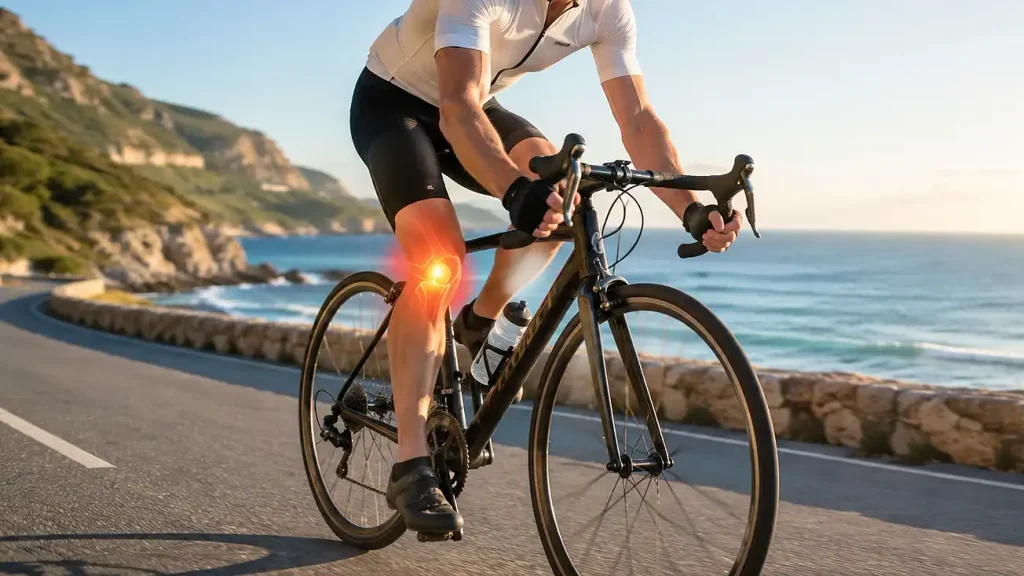
If you already have some degree of knee wear or a pre-existing joint issue, cycling itself is not usually the problem, it’s actually one of the better low-impact activities for knees generally. The issue tends to be sharp, sudden changes in intensity or duration, which can add stress to the patellofemoral joint and increase inflammation, according to NHS physiotherapy guidance. Steady, gradually progressed cycling is generally well tolerated even by people managing existing knee issues.
Anterior Knee Pain vs Other Types of Cycling Knee Pain
It’s worth distinguishing anterior knee pain from the other common cycling knee complaints, since the fix isn’t always the same.
- Anterior knee pain vs IT band pain: anterior pain sits at the front, centred around the kneecap, while IT band pain is felt on the outer side of the knee and often worsens specifically with repetitive bending, such as longer rides.
- Cycling knee pain vs running knee pain: the underlying conditions overlap heavily, patellofemoral pain affects both groups, but cycling pain is far more strongly tied to equipment setup, while running pain is more often linked to running volume, surface, and footwear.
- Patellofemoral pain vs patellar tendon pain: patellofemoral pain sits more diffusely around the kneecap, while patellar tendon pain is more localised just below it and tends to worsen sharply with jumping or explosive efforts rather than steady pedalling. If your pain sits specifically below the kneecap rather than around it, our post on pain on top of the knee and the quad tendon may be a closer match, and our page on knee tendon injuries covers tendon-specific causes in more depth.
How Long Does Anterior Knee Pain Last
Most cases improve within about six weeks once the underlying cause, usually a bike fit issue, is addressed and appropriate strengthening begins, though full recovery can take anywhere from six weeks to several months depending on how long the pain has been present and how consistently it’s managed. Roughly 95% of patellofemoral pain cases respond well to non-surgical treatment, and NHS physiotherapy data suggests most patients gain somewhere between 60 and 80% improvement with a structured exercise programme and some adjustment to riding habits. Recovery speed depends heavily on backing off the aggravating load early, staying consistent with strengthening work, and not rushing back to full mileage too soon.
How to Treat Anterior Knee Pain from Cycling
Anterior knee pain syndrome treatment works best when it addresses both the bike and the body, rather than just one or the other.
- Fix the bike fit first. Reviewing saddle height, cleat position, and fore-aft saddle position resolves a meaningful share of cases on its own.
- Strengthen the muscles that control the kneecap. Targeted quadriceps work, particularly the inner quad muscle (vastus medialis), alongside hip and glute strengthening, has good evidence behind it, since control of the knee’s side-to-side movement comes largely from the hip.
- Manage load sensibly. Reduce climbing volume or overall hours temporarily if symptoms are flaring, then rebuild gradually rather than returning to full training in one step.
- Consider a professional bike fit and physiotherapy assessment together, particularly if pain persists beyond a few weeks despite sensible adjustments.
So how to treat anterior knee pain long-term, rather than just easing a flare-up? The honest answer is consistency: most riders asking how to treat knee pain from cycling see the best results when they combine a proper bike fit with several weeks of targeted strengthening, rather than looking for a single fix. None of these approaches offer an instant result, and outcomes vary from person to person, but this combined approach is what the current evidence supports.
Should I Stop Cycling if My Knee Hurts
You don’t necessarily need to stop cycling altogether, but continuing to ride through sharp or worsening pain, rather than dialling back intensity, tends to prolong the problem. Mild, dull discomfort that eases with rest is generally safe to manage with adjusted training. Is knee pain from cycling serious? Usually not, but a few signs suggest it’s time to get it properly assessed rather than self-managing indefinitely: pain that hasn’t improved after a few weeks of sensible adjustments, swelling that keeps recurring, or pain that’s now present even off the bike during normal daily activities. If you’re unsure whether your saddle is too low, a simple check is whether your knee reaches close to full extension at the bottom of the pedal stroke without your hips rocking, a specialist or qualified bike fitter can assess this properly.
How London Knee Care Diagnoses and Treats Anterior Knee Pain in Cyclists
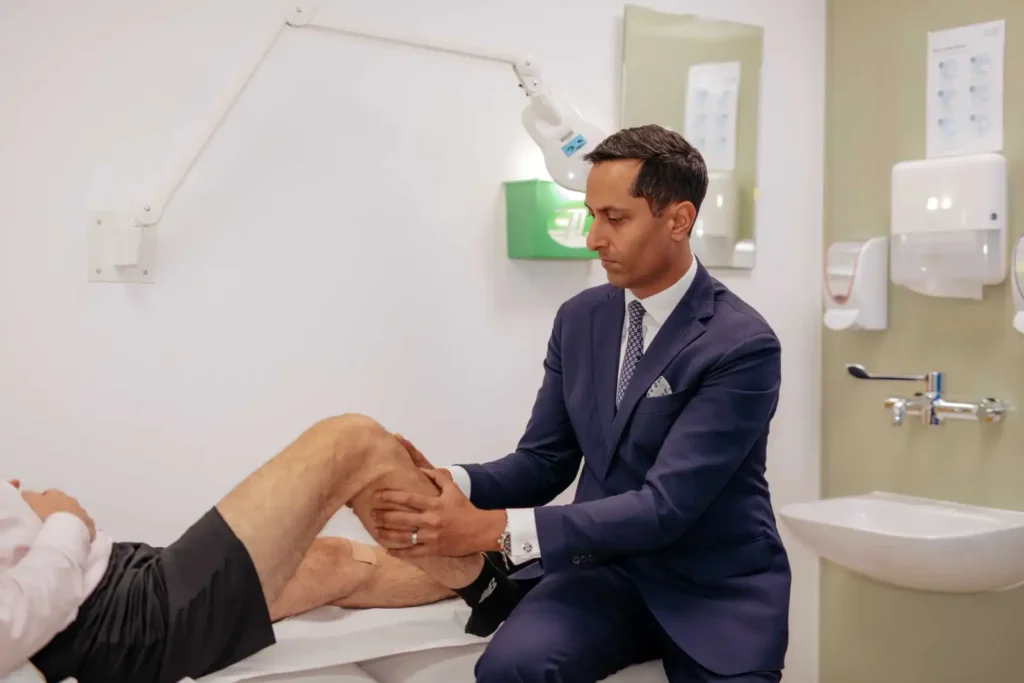
At London Knee Care, assessment starts with understanding your riding setup and habits alongside a full clinical examination, since bike fit and clinical findings together usually point clearly to the cause. Led by Mr Raghbir Khakha, an internationally recognised knee surgeon with over 15 years of specialist experience, treatment plans are built around your specific diagnosis, from straightforward physiotherapy and bike fit advice through to further investigation where symptoms don’t follow the expected pattern. You can read more about our full range of knee treatments and knee conditions we manage.
Book a Knee Assessment with London Knee Care
Anterior knee pain from cycling is common, usually fixable, and rarely a sign of anything serious, but getting an accurate diagnosis means you can address the actual cause rather than guessing at bike adjustments or pushing through discomfort indefinitely. If your knee pain hasn’t settled with the basics, you can book an appointment with Mr Raghbir Khakha, learn more about London Knee Care, or get in touch with any questions first.
FAQs About Anterior Knee Pain from Cycling
Where is the anterior knee?
The anterior knee is the front of the knee joint, the area in and around the kneecap. Pain here is typically felt during pedalling, climbing stairs, or after sitting with a bent knee for a while.
How long does anterior knee pain last?
Most cases improve within around six weeks once the cause is addressed, though full recovery can take longer, sometimes several months, depending on severity and how consistently it’s managed.
How do I treat anterior knee pain from cycling?
Start with a bike fit review, particularly saddle height and cleat position, alongside targeted quadriceps and hip strengthening. Most cases respond well to this combined approach without needing further intervention.
Why do my knees hurt after cycling?
Usually due to a bike fit issue, most often saddle height or cleat position, combined with a sudden increase in riding volume or intensity that the knee hasn’t yet adapted to.
Should I stop cycling if my knee hurts?
Not necessarily. Mild discomfort that eases with rest can often be managed by adjusting training load, but sharp or worsening pain, or pain that persists despite sensible changes, is worth getting assessed.
Can bike fit really cause knee pain?
Yes, bike fit is the leading cause of anterior knee pain in cyclists specifically. Saddle height and cleat position account for the large majority of preventable cases.