
Knee cartilage operation recovery time ranges from a few weeks to a year, depending on which cartilage was treated and how. After a meniscus is trimmed, most people are back at a desk within days and playing sport by around eight weeks. A meniscus repair usually means four to six months before full sport, and repairing the joint surface itself can take six to twelve months.
That spread surprises a lot of people, because “cartilage operation” sounds like one procedure. It is not. Below we explain the two kinds of knee cartilage and what each operation asks of you afterwards. We also cover when you can expect to work, drive and play sport again.
Knee Cartilage Operation Recovery Time Depends on Which Cartilage
Your knee has two different kinds of cartilage, and the one that was operated on sets your timeline. The menisci are two rubbery, C-shaped shock absorbers that sit between the thigh bone and the shin bone. The articular cartilage is the thin, glassy lining that covers the ends of those bones so they glide smoothly.
When people say they have “torn a cartilage”, they almost always mean a meniscus. Our page on meniscal tears in the knee explains how these tears happen. Damage to the joint-surface lining is a different problem, covered on our page about knee cartilage injury.
This distinction matters because cartilage operation knee recovery time follows the tissue, not the label. Trimming a meniscus removes a loose flap and asks little of the knee afterwards. Repairing a meniscus or the joint surface asks the tissue to heal, and healing tissue needs protecting. Our knee conditions section covers the wider range of problems we assess.
Recovery Time for Knee Cartilage Surgery by Operation Type
Recovery time for knee cartilage surgery falls into three broad bands. A meniscus trim is measured in weeks. A meniscus repair is measured in months. A joint-surface repair is measured in many months. The table gives typical figures from UK hospital guidance, though your own plan will depend on your knee and the work done.
| Operation | Crutches | Driving | Desk work | Manual work | Full sport |
|---|---|---|---|---|---|
| Meniscus trim | Short term, if at all | From about 1 week | 2 to 3 days, average 10 to 14 days | Up to 6 weeks | Around 8 weeks |
| Meniscus repair | About 2 to 4 weeks | Often 6 weeks or more | About 1 week | Up to 12 weeks | 4 to 6 months |
| Joint-surface repair | Around 6 weeks or more | Once walking without aids | Varies with weight-bearing limits | Depends on your job and weight-bearing limits | Around 5 months for contact sport, rehabilitation up to 12 months |
These are averages, not targets. Two people with the same operation can recover at different speeds. Age, fitness, the size of the tear and how closely the rehabilitation plan is followed all play a part.
Torn Knee Cartilage Surgery Recovery Time After a Trim
Torn knee cartilage surgery recovery time is shortest when the damaged part of the meniscus is trimmed away. This is called a partial meniscectomy. Because nothing needs to heal back together, there is usually no limit on how much weight you put through the leg.
A typical partial meniscectomy recovery timeline starts with short walks of five to ten minutes from around day three. Over the next week or so, normal daily activity returns. An exercise bike tends to feel comfortable at about two weeks, a cross trainer at four and a treadmill at six. Most people are back at their sport at around eight weeks. Meniscectomy recovery time is quicker, but the knee has lost some of its cushioning, which is part of the trade-off we explain further down.
Meniscus Repair Recovery and Why It Takes Longer
Meniscus repair recovery takes longer because the surgeon stitches the torn edges together and the tissue then has to knit. That only happens if the repair is protected in the early weeks.
UK hospital guidance commonly includes crutches for two to four weeks and a hinged brace that limits how far the knee bends for around six weeks. Deep squatting is avoided for twelve weeks. Twisting and impact work are kept out of the programme for the first two to three months. Full sport returns at around four to six months. Our page on meniscal surgery covers the operation itself, and our post on meniscal root tears explains the specific rehabilitation after a root repair.
When the Joint Surface Itself Is Repaired
Joint-surface repairs take the longest because new cartilage-like tissue has to form and mature. One common technique, microfracture, makes tiny holes in the bone beneath a worn patch so that healing cells can fill the gap.
That new tissue is fragile at first. A typical UK protocol keeps the foot touching the ground lightly for the first four weeks. Partial weight follows from weeks four to six, and full weight without crutches from around six weeks onwards. Light jogging begins at about twelve to sixteen weeks, and contact sport at around twenty weeks. Overall rehabilitation can take six to twelve months. Other joint-surface techniques follow their own timelines. Our page on cartilage surgery in the knee explains the options we offer
Knee Cartilage Keyhole Surgery Recovery Time in the First Two Weeks
Knee cartilage keyhole surgery recovery time starts well for most people, because the operation uses a camera and instruments passed through small cuts. The first two weeks focus on calming swelling, protecting the wounds and getting the knee moving.
Here is what the first fortnight involves for most people:
- Keeping the wounds clean and dry until they are checked, usually at around two weeks
- Raising the leg and using a cold pack wrapped in a cloth to ease swelling
- Starting the exercises your physiotherapist gives you on the day of surgery, little and often
- Short walks of a few minutes at a time, building up gradually
- Using crutches for as long as your plan says, which is longer after a repair than a trim
Swelling and some aching are normal during post knee arthroscopy recovery, and a few people feel stiff for longer than expected. Our page on knee keyhole surgery explains the procedure in more detail.
Back to Work, Driving and Sport After a Cartilage Operation
The recovery time after knee cartilage operation that most people care about is when normal life comes back. The honest answer is that milestones, not dates, decide it. Swelling needs to settle, the knee needs to bend and straighten comfortably and the thigh muscles need to be working again.
Two people searching the recovery time for cartilage operation on knee may get very different answers, and both can be right. Someone with a desk job and a trimmed meniscus may be back at work within days. A builder with a repaired meniscus may need three months before they can kneel and squat safely.
Returning to Work Depends on Your Job
Your job shapes your time off more than the operation does. Typical UK guidance looks like this:
- Desk or office work: often within two to three days after a trim and around a week after a repair, sometimes starting with a few hours from home
- Manual or physically demanding work: up to six weeks after a trim and up to twelve weeks after a repair
- Jobs with deep squatting or kneeling: up to three months after a repair, because deep bending puts the most strain on a healing meniscus
When You Can Drive Again
You can drive once you can walk without crutches, press the pedals firmly and do an emergency stop without hesitating. After a trim, that is from about one week. A simple test is to sit in the driver’s seat with the engine off and press each pedal hard. If it hurts, wait a day or two.
After a repair with movement restrictions, driving is off the table for at least six weeks. Let your insurer know you have had knee surgery before you get back behind the wheel. Start with short, local trips at quiet times, and build up to longer drives once your knee feels settled after each one.
Getting Back to Running and Sport
Running and sport come back in stages. Cycling usually comes first, then a cross trainer, then light jogging, then sport-specific drills and finally full training. After a trim, that sequence takes around eight weeks. After a repair it takes four to six months, and after a joint-surface repair contact sport waits until around five months.
Doing too much too soon is a common reason a recovery stalls. If running brings back swelling the next day, that is a sign to step back for a few days. Our page on knee running injuries covers running problems in more detail.
Planning time off work or a sporting season around a cartilage operation? Contact us and we can map out a timeline for your own knee.
Why a Slower Recovery Can Be the Better Choice
A meniscus repair takes longer to recover from than a trim, but it keeps the knee’s shock absorber in place. Keeping the meniscus may lower the risk of early arthritis, because the cushioning between the bones is preserved. A trim gets you back faster, but the part removed does not grow back.
That is why the quickest option is not always the best one for a younger or active knee. Repair is not suitable for every tear. The outer edge of the meniscus has a good blood supply and can heal, while the inner edge has much less and often cannot. Some repairs also fail to heal, and a further keyhole operation may then be needed to remove the torn fragment. Before agreeing to surgery, it helps to ask which operation is planned, whether a repair is possible and what happens if the surgeon finds something different on the day. The answers shape your recovery far more than the date in the diary. Our post on whether cartilage surgery relieves pain looks at outcomes in more depth, and our knee treatments section covers non-surgical options as well.
How We Decide Between Trimming and Repair
We decide between trimming and repair by looking at the type of tear, where it sits and how old it is. What you need the knee to do matters too. A detailed examination comes first, followed by an MRI scan, which shows the shape and position of the tear and the state of the joint-surface cartilage.
Mr Raghbir Khakha bases his practice on joint preservation and routinely performs meniscal repairs. Saving the meniscus is therefore weighed up wherever the tear allows it. The final decision is sometimes made during the operation, once the tear can be seen directly. We explain this possibility beforehand, so your recovery plan covers both outcomes.
Signs Your Recovery Needs Checking
Most cartilage recoveries are uneventful, but a few signs mean your knee should be seen promptly. Get in touch with us the same day if you notice any of the following:
- A hot, red and increasingly swollen knee, especially with a fever or feeling unwell
- Pain, swelling or tenderness in the calf
- Discharge, spreading redness or an unpleasant smell from a wound
- The knee locking, catching or refusing to straighten
- Pain that is getting worse rather than better after the first week
Ongoing stiffness that does not improve with exercises also deserves a review. Our post on arthrofibrosis explains why a knee can stay stiff after surgery and what can be done.
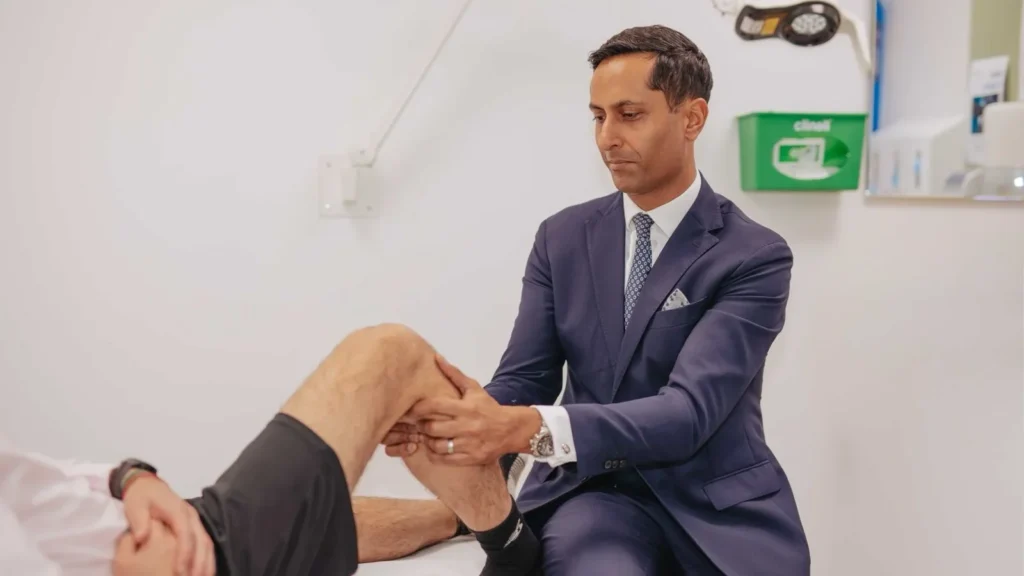
Book a Knee Cartilage Surgery Assessment at London Knee Care
Mr Raghbir Khakha is a Consultant Orthopaedic and Specialist Knee Surgeon at London Knee Care in London. He has been in consultant practice since 2017. His work is built around joint preservation, including meniscal repairs, ligament repairs and reconstructions, and osteotomy surgery. He also accepts referrals from other orthopaedic centres for complex primary and redo knee reconstructive surgery.
Whether you are weighing up a cartilage operation or recovering from one, we can assess your knee and review your scans. We then explain what your recovery should realistically look like. You can learn more about London Knee Care or start from our home page. From November 2026, we also run a Saturday acute knee clinic at Cromwell Hospital in London.
To arrange an appointment, contact us. If your knee becomes hot and swollen, your calf is painful or your wound looks infected, get in touch with us the same day.
- Address: 45 Queen Anne Street, London W1G 9JF
- Phone: 0207 046 8008
- Email: rk@os.clinic
Frequently Asked Questions About Knee Cartilage Operation Recovery Time
Can You Walk After Knee Cartilage Surgery?
Yes, most people walk soon after surgery. After a meniscus trim you can usually put full weight through the leg straight away. After a repair or a joint-surface operation, you will walk with crutches. You may also be told to limit the weight you put through the leg for several week.