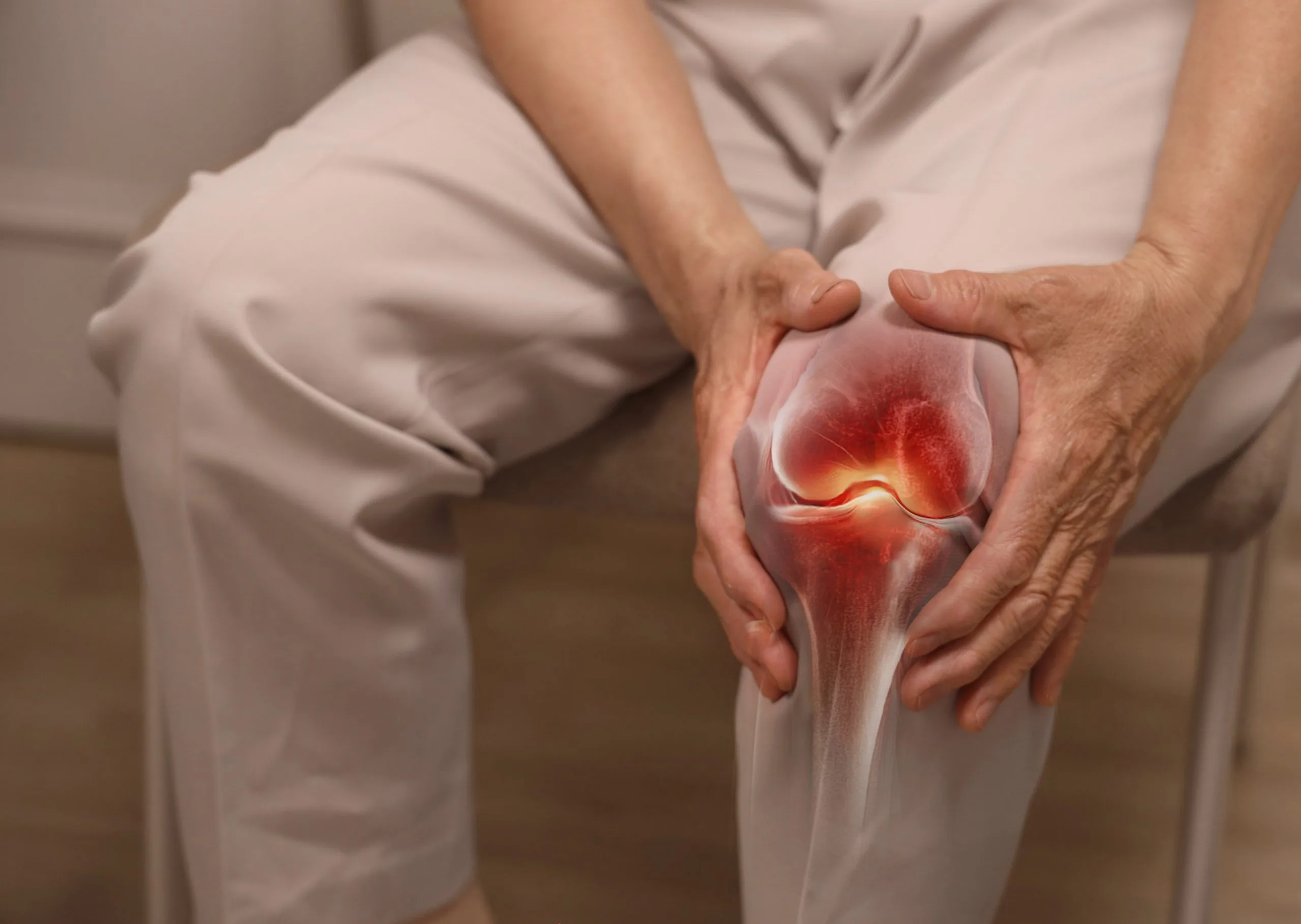

If you’ve been dealing with burning pain in knees that just won’t settle, it’s natural to assume it’s “just” arthritis or a strained muscle. But burning is a specific kind of pain, and it doesn’t always come from the joint itself. Sometimes a burning sensation in knee tissue points to a nerve that’s irritated, compressed, or damaged rather than a problem with bone or cartilage.
This guide walks through what nerve-related burning knee pain actually feels like, the most common causes, how it differs from arthritis or tendon pain, and when it’s worth getting checked properly. We’ll also cover realistic ways to manage it, because while nerve pain can be frustrating, most cases can be improved with the right approach.
What Does Burning Pain in Knees Actually Feel Like?
Burning pain in knees is usually described as a hot, stinging, or prickling feeling, rather than the dull ache of general joint pain or the sharp catch of a ligament injury. Patients often describe it as sore burning knees that feel warm to the touch even when there’s no visible redness.
Common ways people describe it include:
- A hot or stinging feeling rather than a dull ache
- A burning feeling in knee joint that comes and goes with activity
- Skin that feels sensitive to touch, even light touch
- A sensation that spreads slightly beyond the knee itself, into the shin or thigh
Is It a Burning Sensation in Knee or Something Sharper?
It helps to separate burning from other types of pain. A sharp, stabbing pain that happens with a specific movement, like twisting or bending, often points to a mechanical issue such as a meniscus tear or ligament strain. A knee burning sensation that’s more constant, or that comes with tingling or numbness, is more often linked to a nerve.
Neither pattern confirms a diagnosis on its own, but it’s a useful starting point before you speak to a specialist.
Burning Knee Pain With No Swelling. Why That Matters
One detail that’s often overlooked is whether there’s any swelling. Burning knee pain no swelling is actually a meaningful clue. Conditions like osteoarthritis, bursitis, or tendon inflammation usually come with some visible or palpable swelling around the joint. Nerve-related burning pain, on the other hand, frequently occurs with a perfectly normal-looking knee.
This doesn’t mean pain without swelling is always a nerve issue, but if you’ve been checking your knee and it looks completely normal despite ongoing burning discomfort, that’s worth mentioning to whoever assesses you.
Could Nerve Damage Be Causing Your Burning Knee Pain?
Burning pain in knee nerve damage happens when a nerve around the knee is compressed, irritated, or injured, rather than the joint structures themselves. Nerve pain in knee tissue tends to have a few extra features that joint pain doesn’t: tingling, numbness, or a pins-and-needles sensation alongside the burning.
Knee nerve pain can come from a few different sources, and it’s worth understanding the difference because the management approach isn’t identical.
Saphenous Nerve Entrapment and Burning Pain Under Kneecap
The saphenous nerve runs down the inner thigh and knee, and its infrapatellar branch specifically supplies the skin over and below the kneecap. When this nerve becomes entrapped, often at a point on the inner thigh called the adductor canal, it can cause burning pain under kneecap, along the inner knee, and sometimes down into the shin.
Saphenous nerve knee pain is a frequently overlooked cause of persistent inner knee pain, particularly after a direct blow to the area or previous knee surgery. It’s not the first thing most people think of, but for pain that hasn’t responded to typical rest-and-ice approaches, saphenous nerve entrapment is worth ruling out.
Diabetic Neuropathy and Peripheral Nerve Damage in the Knee
Diabetic neuropathy knee pain develops when consistently high blood sugar levels damage nerves over time. This is a form of peripheral neuropathy knee involvement, and it typically doesn’t stay isolated to one small area. It tends to affect the legs more broadly, often starting in the feet and moving upward, though the knee can certainly be part of that pattern.
Neuropathic knee pain from diabetes usually feels like burning, tingling, or numbness that’s fairly symmetrical, meaning it often affects both knees or both legs to some degree, rather than just one. If you have diabetes, or haven’t been tested but have risk factors for it, this is a cause worth discussing with your GP alongside our knee specialist review.
Pinched Nerve in Knee From Kneeling or Repetitive Pressure
Burning knee pain kneeling is a pattern many people recognise, particularly those who kneel a lot for work, such as tradespeople, gardeners, or parents of young children. Sustained pressure or repetitive kneeling can lead to a pinched nerve in knee tissue, most commonly affecting the same saphenous nerve branches mentioned above.
This kind of nerve entrapment knee pain is often more mechanical in nature, meaning it may ease somewhat with a change in kneeling posture, padding, or reduced frequency, though persistent cases still benefit from a proper assessment.

When Burning Knee Pain Shows Up at Specific Times or Movements
The timing and triggers of your pain can also help narrow things down.
Burning sensation in knee when bending often points to a structure that’s being compressed or stretched during that movement, which could be mechanical or nerve-related depending on exactly where the pain sits. Burning pain in knee when bending that’s focused on the inner side of the joint leans more toward a nerve cause; pain that’s more central and comes with a grinding feeling leans more toward the joint itself.
Burning sensation below knee, extending into the shin, is consistent with the saphenous nerve’s distribution, since this nerve runs down the inner lower leg. This is different from pain behind the knee, which usually points to a hamstring or popliteal issue rather than a nerve entrapment.
Burning sensation in knee at night, sometimes described as burning knee pain at night, is a pattern that’s classically associated with nerve pain generally. Nerve-related discomfort often becomes more noticeable when you’re lying still, without the distraction of daytime activity, and this applies to knee nerve pain as much as it does to nerve pain elsewhere in the body.
Burning Pain After Knee Replacement Surgery
Burning pain after knee replacement is more common than many patients expect. Research suggests that somewhere between 7 and 34% of patients experience some form of chronic pain following total knee replacement, with roughly 16 to 20% of all patients reporting persistent discomfort of some kind, according to a systematic review published in PMC.
Burning pain in knee after surgery often comes from nerve irritation during the procedure itself, since the surgical approach can affect small nerve branches, including the infrapatellar saphenous nerve, around the incision site. The encouraging news is that for most patients, numbness, tingling, and burning tend to settle or become confined to a smaller area within around three months, with most symptoms continuing to improve over two to six months. That said, recovery timelines vary from person to person, and it’s not a guarantee, so ongoing pain after this point is worth reviewing with your surgical team.
Why Do My Knees Feel Like They Are Burning? Common Causes Explained
If you’re asking why do my knees feel like they are burning, or wondering why does my knee hurt and feel like it’s burning, here’s a summary of what causes a burning feeling in your knees, based on how common each cause tends to be:
- Nerve entrapment or irritation, most often involving the saphenous nerve or its branches
- Diabetic or other peripheral neuropathy, from nerve damage linked to blood sugar or other systemic conditions
- Post-surgical nerve irritation, following knee replacement or other knee procedures
- Cartilage or ligament injury, where inflammation and tissue damage can cause a burning quality of pain alongside the more typical ache
- Arthritis or bursitis, where joint or bursa inflammation intensifies the sensation
- Location-specific conditions, such as patellofemoral pain syndrome (sometimes called runner’s knee), which can cause burning specifically under or around the kneecap, or iliotibial band syndrome, which causes burning more on the outer side of the knee
What cause burning sensation in knee symptoms in one person may be entirely different in another, which is exactly why self-diagnosis from a symptom list has real limits, and why an examination matters.
Burning Knee Pain vs Other Types of Knee Pain
It helps to see nerve-related burning pain alongside other common knee pain patterns side by side.
- Burning knee pain vs arthritis: arthritis pain is usually a deeper ache, often worse first thing in the morning or after rest, and typically comes with some stiffness and, over time, visible joint changes. Nerve pain tends to be more of a surface-level burning or tingling sensation, without the same morning stiffness pattern.
- Nerve pain vs joint pain in knee: joint pain generally worsens with weight-bearing and specific movements, while nerve pain can flare unpredictably, including at rest or at night.
- Burning knee pain vs muscle pain: muscle-related pain tends to respond to stretching and gentle movement, and often eases within a few days. Burning and tingling in knee tissue that persists despite rest is less typical of straightforward muscle strain.
If your pain is more about a sharp ache directly below the kneecap that worsens with squatting or running, that pattern is more consistent with a tendon issue, which we’ve covered separately in Pain on Top of Knee Could Mean Your Quad Tendon. If your discomfort sits at the back of the knee rather than the front or sides, our guide to Back of the Knee Pain When Bent Could Be Your Hamstring may be a better fit. And for pain that’s more about grinding, stiffness, or structural wear, our page on knee tendon injuries covers the mechanical side of anterior knee pain in more depth.

Is Burning Knee Pain Serious? When to See a Specialist
Is burning knee pain serious? Often it isn’t an emergency, but that doesn’t mean it should be left unchecked indefinitely, particularly if it’s affecting your daily life or getting worse.
It’s worth arranging an assessment if you notice:
- Numbness or tingling that’s spreading rather than staying in one small area
- Weakness in the leg, or a knee that feels like it might give way
- Burning pain that started after knee surgery and hasn’t improved after a few months
- Pain that disturbs your sleep on a regular basis
- Any burning sensation alongside known diabetes or blood sugar concerns you haven’t yet discussed with your GP
Can nerve damage cause burning knee pain that’s genuinely serious? In most cases, nerve-related knee pain is uncomfortable and disruptive rather than dangerous, but a small number of cases point to something that needs more active management, so it’s better to get it looked at than to assume.
How to Relieve Burning Knee Pain
How to relieve burning knee pain depends quite a lot on what’s actually causing it, so think of the following as general starting points rather than a complete treatment plan.
- Physiotherapy is usually the first-line approach for most causes of knee pain, nerve-related or otherwise. A physiotherapist can assess your movement patterns, identify what’s aggravating the nerve or joint, and build a plan around it.
- Reducing the specific trigger, such as prolonged kneeling or repetitive bending, can ease symptoms that are clearly linked to mechanical pressure.
- Over-the-counter pain relief, such as paracetamol or ibuprofen, may help with general discomfort, though these are less effective for nerve pain specifically than for joint or muscle pain.
- Prescription medication for nerve pain, such as gabapentin or pregabalin, is sometimes used for confirmed nerve-related pain, but these require a GP or specialist assessment first, they aren’t something to start on your own.
- Topical treatments, including lidocaine patches, can offer localised relief for some patients.
- Advanced options, such as nerve blocks, targeted injections, or peripheral nerve stimulation, exist for cases that don’t respond to conservative treatment, though these are generally considered after simpler approaches haven’t worked, and results vary between patients.
How do you treat nerve pain in the knee effectively long-term usually comes down to identifying the specific cause first. Treating the symptom without understanding the source tends to give short-lived relief at best.

How London Knee Care Diagnoses and Treats Nerve-Related Knee Pain
At London Knee Care, assessment starts with a detailed conversation about your symptoms, followed by a physical examination to establish whether your pain pattern fits a nerve, joint, or soft tissue cause. Where needed, this is supported by imaging such as ultrasound or MRI to rule out structural issues, or a referral for nerve-specific testing if entrapment or neuropathy is suspected.
Led by Mr Raghbir Khakha, an internationally recognised knee surgeon with over 15 years of specialist experience, the clinic builds treatment plans around your specific diagnosis rather than a one-size-fits-all protocol. You can read more about the full range of knee treatments and knee conditions we manage, from conservative physiotherapy-led approaches through to more advanced options where they’re genuinely needed.
Frequently Asked Questions
Why does my knee feel like it’s burning?
A burning sensation in the knee is often linked to an irritated or compressed nerve, most commonly the saphenous nerve, though it can also come from diabetic neuropathy, post-surgical nerve irritation, or inflammatory conditions like arthritis or bursitis. Why knee burning sensation happens in your specific case is best confirmed with an examination rather than guesswork.
Can nerve damage cause burning knee pain?
Yes. Nerve entrapment, diabetic neuropathy, and post-surgical nerve irritation are all recognised causes of burning knee pain, and they typically come with additional features like tingling or numbness that distinguish them from straightforward joint pain.
Is burning knee pain serious?
Usually not an emergency, but persistent, worsening, or spreading symptoms, particularly with numbness or weakness, are worth getting assessed rather than managed alone long-term.
How do you treat nerve pain in the knee?
Treatment depends on the cause, but commonly includes physiotherapy, activity modification, and in some cases prescription medication for nerve pain or topical treatments. More advanced options exist for pain that doesn’t respond to conservative care.
What does nerve pain in the knee feel like?
Typically a burning, stinging, or prickling sensation, sometimes with tingling or numbness, that can occur at rest as well as during activity, and doesn’t always come with visible swelling.
Book a Knee Assessment With London Knee Care
Burning pain in knees can have several different causes, and while it’s not always a sign of something serious, getting an accurate diagnosis makes a real difference to how effectively it can be managed. Rather than guessing at the cause or working through generic advice, a proper assessment can tell you what’s actually going on and what’s realistic in terms of treatment and timeline.
If you’re dealing with ongoing burning knee pain, you can book an appointment with Mr Raghbir Khakha, find out more about London Knee Care, or get in touch with any questions before booking.